What's inside
- Quick comparison: best TV mounts by situation
- Best overall: full-motion articulating mount
- Best budget: fixed low-profile mount
- Best tilting mount for straight-on seating
- Best for big screens and awkward walls
- How to choose: the numbers that decide it
- Decision matrix: match the mount to your room
- What wears out, and the mistakes that cause sag
- Frequently Asked Questions
- Quick comparison: best TV mounts by situation
- Best overall: full-motion articulating mount
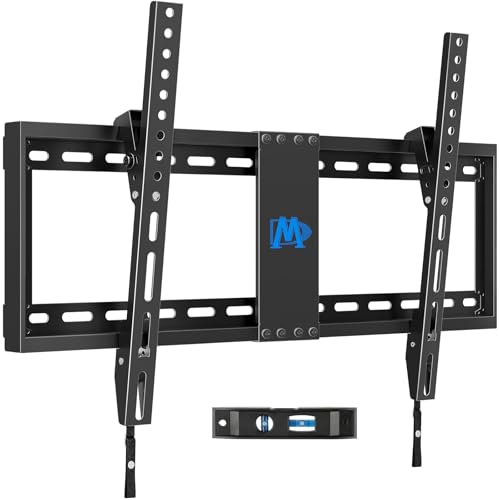
- Best budget: fixed low-profile mount
- Best tilting mount for straight-on seating
- Best for big screens and awkward walls
- How to choose: the numbers that decide it
- Decision matrix: match the mount to your room
- What wears out, and the mistakes that cause sag
- Frequently Asked Questions
As an Amazon Associate I earn from qualifying purchases. This post may contain affiliate links at no extra cost to you.
The best TV mount for most rooms is a full-motion articulating mount rated for your screen’s size and weight, installed into two wood studs or a concrete wall — it costs roughly $80–$220 and solves angled seating, corner walls, and glare in one purchase. If your seating is directly opposite the screen and never moves, a fixed low-profile mount at $20–$50 is cheaper, stiffer, and holds the TV about an inch off the wall. Everything else is a matter of matching five numbers: VESA pattern, TV weight, wall construction, the swivel angle you actually need, and the clearance behind the screen.
As an Amazon Associate we earn from qualifying purchases at no extra cost to you.


What we cover
- Quick comparison: best TV mounts by situation
- Best overall: full-motion articulating mount
- Best budget: fixed low-profile mount
- Best tilting mount for straight-on seating
- Best for big screens and awkward walls
- How to choose: the numbers that decide it
- Decision matrix: match the mount to your room
- What wears out, and the mistakes that cause sag
- Frequently Asked Questions
Our Top Picks
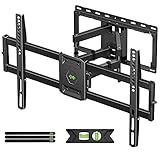
 Mounting Dream Full Motion TV Wall Mount forFor 32" to 70" TVs, 16" Studs11.16 PoundsCheck on Amazon

Quick comparison: best TV mounts by situation
| Pick | Best for | Key specs (typical class) | Price range |
|---|---|---|---|
| Full-motion articulating (Sanus, Echogear, VIVO class) | Most living rooms; angled or corner seating | 42–75 in screens; 90–110 lb capacity; VESA 200×200 to 600×400; extends 3–20 in; swivel ±45–90°; tilt +5°/−15° | $80–$220 |
| Fixed low-profile (Mounting Dream, Monoprice, VIVO class) | Budget builds and straight-on seating | 32–55 in screens; 80–100 lb; VESA 200×200 to 400×400; 1.0–1.5 in from wall; no articulation | $20–$50 |
| Tilting (Sanus, Kanto, Mounting Dream class) | Screens mounted above eye level; window glare | 37–70 in screens; 100–130 lb; VESA 200×200 to 600×400; 1.8–2.8 in from wall; tilt +5° to −12/−15° | $35–$90 |
| Heavy-duty full-motion (Kanto, Peerless-AV, Sanus class) | 75–85 in screens in high-traffic rooms | 60–90 in screens; 130–175 lb; VESA 400×400 to 800×400; extends 22–30 in | $150–$400 |
| Pull-down mantel mount (MantelMount class) | TVs stuck above a fireplace | 44–80 in screens; up to ~115 lb; drops 27–44 in from the wall plate; swivel ±30° | $200–$400 |
| Ceiling mount | Garages, gyms, rooms with no usable wall | 32–70 in screens; 90–110 lb; 20–40 in drop; combined tilt and swivel | $40–$150 |
Best overall: full-motion articulating mount
An articulating arm is the only type that fixes a bad room. If your sofa sits 30° off the screen’s centerline, or the TV has to tuck into a corner beside a bookshelf, a fixed mount leaves you watching at an angle permanently. Full-motion mounts in the 42–75 in class typically extend 3 in when pushed flat and 15–20 in when pulled out, with swivel stops at ±45° or wider.
Who it suits: renters and owners with off-axis seating, open floor plans, or a screen that needs to swing toward a kitchen or dining table. The trade-off: an articulating mount is the least rigid option — a long arm amplifies wobble during fast motion, and the collapsed depth of 2.5–3.5 in pushes the TV further off the wall than a fixed plate. You also need a stud or concrete behind the wall plate, since the arm multiplies the load on the fasteners.
Best budget: fixed low-profile mount
A fixed mount is a flat plate with two hooks, and there is very little to get wrong. At $20–$50 for the 32–55 in class, it holds the screen 1.0–1.5 in from the wall — the cleanest look available — and because nothing moves, there are no hinges to loosen over time. Capacity in this class runs 80–100 lb, well beyond the 26–35 lb a typical 55 in LED weighs per manufacturer spec sheets.
Who it suits: a bedroom, office, or main wall where everyone sits within about 20° of center. The trade-off: zero adjustment after installation. If you later rearrange the furniture, you’re moving the wall plate, which means patching drywall and finding studs again.
Best tilting mount for straight-on seating
Tilting mounts solve one specific problem: a screen whose center sits above seated eye level. They add a hinge that tips the bottom of the TV out, usually +5° up and −12° to −15° down, while staying only 1.8–2.8 in off the wall. That’s the compromise between a fixed plate’s rigidity and a full-motion arm’s flexibility — the TV never swings sideways, but you can kill glare from a window or correct for a high mount.
Who it suits: bedrooms, kitchens, and any wall where the TV lands 8–15 in higher than ideal. The trade-off: tilting puts the panel’s weight on two friction hinges. Those hinges are the first thing to sag, and they need re-tightening roughly once a year.
Best for big screens and awkward walls
Above 75 in, mount specs jump: 130–175 lb capacity, VESA plates up to 800×400, and arms thick enough to extend 22–30 in without flexing. Peerless-AV, Kanto, and Sanus all publish heavy-duty full-motion lines in this range, and the price climbs to $150–$400 — but a 85 in LED can weigh 85–110 lb, so the margin matters.
For a TV trapped above a fireplace, a pull-down mantel mount is the only honest fix. The MantelMount class of mounts holds 44–80 in screens up to roughly 115 lb and lowers the screen 27–44 in from the wall plate with a gas-spring assist, then swivels ±30°. It’s a $200–$400 answer to a mounting location that should never have been chosen, and it beats watching a screen 60 in off the floor.
How to choose: the numbers that decide it
1. VESA pattern
Measure the horizontal and vertical spacing of the four threaded holes on the back of the TV, in millimeters. That’s your VESA pattern, and it must fall inside the mount’s supported range. Typical pairings:
- 32–43 in screens: 200×200 mm
- 43–55 in: 200×200 to 400×200 mm
- 55–65 in: 400×400 mm
- 65–75 in: 400×400 to 600×400 mm
- 75–85 in: 600×400 to 800×400 mm
Most mounts cover a range with slotted plates, so a 400×400 mount will also accept 200×200. What you cannot do is stretch a 400×400 plate to 600×400.
2. Weight, with margin
Add the TV, the mount itself (10–25 lb for articulating models), a soundbar bracket, and any streaming hardware. Then pick a mount rated at least 1.25–1.5× the TV’s weight, not 1.0×. Capacity ratings assume a sound installation; margin absorbs the leverage of a long arm and the occasional bump.
3. Wall construction
Wood studs at 16 in on center are the default in North American homes, and nearly every wall plate is drilled for that spacing; 24 in on center exists and needs a plate wide enough to span it. Metal studs require a steel-stud kit and manufacturers typically cut the rated capacity significantly — check the manual rather than assuming. Concrete and brick need wedge or sleeve anchors, never drywall plugs. If there are no studs where you want the TV, choose a mount with a wide wall plate that spans two studs elsewhere, or switch to a ceiling mount.
4. The swivel angle you actually need (worked example)
When a TV rotates on a full-motion arm, its far edge swings back toward the wall. The clearance required is half the TV’s width multiplied by the sine of the swivel angle. Take a 65 in TV, roughly 57 in wide, so half-width is 28.5 in:
- 20° swivel: 28.5 × 0.34 ≈ 10 in of extension needed
- 30° swivel: 28.5 × 0.50 ≈ 14 in
- 45° swivel: 28.5 × 0.71 ≈ 20 in
So a 10 in arm on a 65 in screen binds at about 20°. If you want a true 45° swing toward the wall, buy a mount that extends at least 20 in. Only the side swinging toward the wall needs clearance; swinging away is free.
5. Clearance behind the screen
Budget for total depth, not just mount depth: panel thickness (1.5–3 in) plus mount depth (1.0 in fixed, 1.8–2.8 in tilting, 2.5–3.5 in full-motion collapsed). That determines whether the TV clears a mantel shelf, a light switch, or a recessed niche. Also confirm a recessed outlet or in-wall cable kit, because a screen that sits 1.5 in off the wall leaves no room for a plug sticking out.
Decision matrix: match the mount to your room
| Your situation | Recommended type | Why |
|---|---|---|
| Seating within 20° of center, one fixed layout | Fixed low-profile, $20–$50 | Rigid, 1.0–1.5 in depth, no hinges to sag |
| Seating 30–45° off axis | Full-motion, 15–20 in extension, $80–$220 | Needs 14–20 in of arm travel on a 65 in screen |
| Screen mounted 10–20 in above eye level | Tilting, −12° to −15°, $35–$90 | Corrects the angle without adding depth |
| 75–85 in TV, kids or a busy hallway | Heavy-duty full-motion, 130–175 lb, $150–$400 | Capacity margin for leverage and bumps |
| Only wall space is above a fireplace | Pull-down mantel mount, 27–44 in drop, $200–$400 | Brings the screen down to seated eye level |
| Metal studs, no accessible studs, or rental restrictions | Steel-stud kit, wide wall plate, or ceiling mount | Reduced capacity otherwise; spread the load |
What wears out, and the mistakes that cause sag
On a tilting mount, the friction hinges are the consumable — they loosen, the screen droops a degree or two, and a hex-key re-torque fixes it. On a full-motion mount, the pivot bolt and the plastic cable covers are the weak points; the arm itself rarely fails. Pull-down mantel mounts rely on gas springs, which fade over years and are usually replaceable parts rather than a reason to buy a new mount.
The installation mistakes that matter are consistent. Lag bolts driven into drywall instead of studs are the leading cause of a TV falling off a wall. Skipping the spacers on a thin OLED panel cracks the back housing or blocks the ports. Over-tightening the VESA screws into a shallow panel does the same damage. And mounting the screen so its center sits at 60 in off the floor — a common fireplace height — guarantees neck strain; seated eye level is typically 40–42 in, so aim for a screen center around 42–48 in.
Frequently Asked Questions
What VESA pattern does a 65-inch TV use?
Most 65 in TVs use a 400×400 mm VESA pattern, with some models at 400×200 or 600×400. Measure the hole spacing on your specific set rather than trusting the size class, because panels vary between brands and even between model years. A mount with slotted plates covering 200×200 to 600×400 will handle nearly any 65 in screen.
Can I mount a TV on drywall without studs?
No, not safely. Drywall anchors are not rated for the sustained load and leverage of a TV, especially on an articulating arm. If no stud is where you want the screen, use a mount with a wide wall plate that reaches two studs, or switch to a ceiling mount that ties into joists. Metal studs are a separate case and require a steel-stud kit with a reduced capacity rating.
How much does a full-motion mount extend, and will the TV hit the wall?
Collapsed, most full-motion mounts sit 2.5–3.5 in off the wall; extended, they reach 15–20 in in the 42–75 in class and 22–30 in in heavy-duty models. Whether the TV hits the wall depends on the math: half the TV’s width times the sine of the swivel angle. A 65 in screen needs about 14 in of extension for 30° and 20 in for 45°.
Is a tilting mount worth it over a fixed one?
It is if the screen’s center sits more than about 8 in above your seated eye level, or if a window reflects off the panel. Tilting costs $15–$40 more than fixed and adds roughly an inch of depth. If your TV is already at eye level and glare is not an issue, the fixed mount is the better buy because it has no hinges to sag.
How high should a TV be mounted?
Center the screen at seated eye level, which for most sofas is 40–42 in from the floor, putting the TV’s center around 42–48 in. Above a fireplace that height is usually impossible, which is why pull-down mantel mounts exist. A tilting mount is the cheaper compromise when the screen must sit high but not absurdly so.
Do curved or OLED TVs need a different mount?
The VESA pattern is the same, so any mount that fits the size and weight works. Two details matter: OLED panels are thin and often lighter, so use the supplied spacers and avoid over-tightening the VESA screws, and curved screens can sit unevenly against a flat wall plate, sometimes requiring longer spacers at the outer holes. Check the mount manual for curved-panel guidance before buying.