Key takeaways
- They look similar, cost about the same, and do genuinely different jobs. Here is which one to buy first if you can only buy one.
What's inside
As an Amazon Associate I earn from qualifying purchases. This post may contain affiliate links at no extra cost to you.
This is the question I get more than any other, usually from someone standing in a store holding two boxes that look almost identical. Short answer: buy the drill first, then buy the impact driver within a year, and stop pretending you will only ever need one.
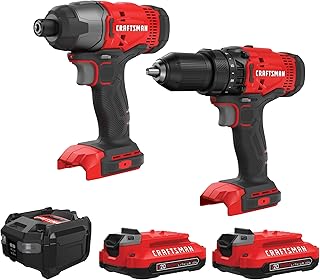
The confusion is fair. Same battery, same trigger, same grip, same shelf, often the same color. Two of the differences in the drill vs impact driver question are visible if you know where to look — the drill has a keyless chuck you can twist open, the impact driver has a stubby hex collet — and the one that matters is invisible, because it lives in the gearcase. One tool applies steady rotation. The other applies rotation plus a hammer, sideways, thousands of times a minute.
As an Amazon Associate we earn from qualifying purchases at no extra cost to you. Product prices and availability are accurate as of the date shown and are subject to change.




Long answer below.
| Feature | Drill/Driver | Impact Driver | |
|---|---|---|---|
| Chuck | Keyless, holds round + hex bits | 1/4″ | hex only |
| Clutch | Yes, adjustable | No (speed modes instead) | |
| Best at | Drilling holes, controlled driving | Long screws, lag bolts, speed | |
| Noise | Moderate | Loud | |
| Wrist strain on big screws | High | Low | |
| Can drill holes | Yes | Poorly |
What a drill does that an impact driver cannot
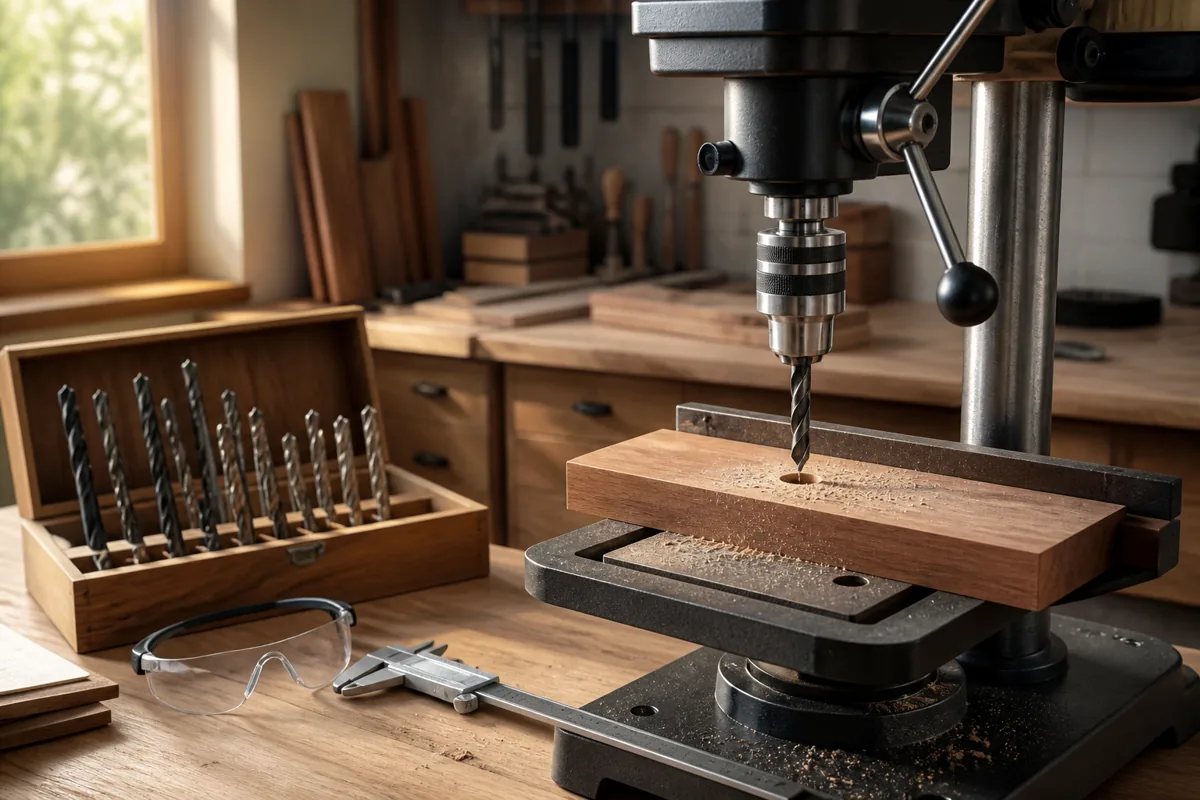
Hold round-shank bits. That covers twist bits, spade bits, hole saws, Forstner bits, mixing paddles and every other round thing you will ever want to spin. The adjustable clutch also lets you stop at a set torque, which is how you avoid burying a screw through thin material.
That chuck is the whole argument. A 1/2″ keyless chuck accepts a hole saw arbor, a reduced-shank auger, a countersink, a wire cup brush, a mud paddle. An impact driver’s collet accepts 1/4″ hex and nothing else. Hex-shank drill bits exist and they work, but you are shopping a small corner of a very large catalog, and hex spade bits and hole saw adapters chatter in an impacting collet instead of cutting cleanly.
The two-speed gearbox is the other half. Speed 1 gives you slow, continuous, high-torque rotation, which is what a big hole saw through a stud wants, or a Forstner bit in hard maple, or a bucket of thinset. Speed 2 is for small bits and clean holes. An impact driver has no equivalent, because its answer to resistance is always to start hitting things.
What an impact driver does that a drill cannot
Drive long fasteners without destroying your wrist. When a drill hits resistance, all that torque tries to spin the tool in your hand. An impact driver converts it into rapid rotational blows instead, so the screw goes in and your arm stays still. For decking, framing, ledger boards and lag bolts, it is not a nice-to-have, it is the right tool.
Each blow is brief, so the reaction never has time to twist the housing out of your grip. The side effect is noise, and it is real noise — wear plugs if you are driving all afternoon.
It also nearly eliminates cam-out. Because the bit is hammered down into the recess while it turns, it stays seated instead of climbing out and chewing the head. That is why fastener heads on a deck built with an impact driver look better than the same deck built with a drill, and why you burn through fewer bits — provided they are impact-rated bits, which is a separate rule I will come back to.
The criteria that actually decide it
Once you accept that both tools end up in the bag, the question stops being which type and becomes which one. This is the order I weigh things in.
Platform outranks tool
A drill is a two-hour decision. A battery platform is a ten-year one. Every tool you buy after this — impact driver, circular saw, recip saw, work light, inflator — either lives on that platform or brings its own charger and packs. Pick a major 18V/20V-class lineup that already sells the saws you might want in three years, then buy the best drill inside it. A slightly better drill on an orphan platform is the worse purchase.
Brushless, and where it earns its money
Brushless is worth paying for, and it is worth more on the impact driver, which spends its life near stall where a brushed motor dumps energy as heat. You get runtime, a shorter nose that fits between joists, and no brushes to replace. If the budget only covers one brushless tool, make it the impact driver.
On the drill: chuck, clutch, gearbox
Three things separate good from bad. A 1/2″ chuck with metal jaws rather than a 3/8″ chuck with plastic internals, because metal jaws still grip a bit that has started to slip. A clutch with a usable spread of settings and a positive detent instead of a vague dial. And a real two-speed mechanical gearbox. A metal gearcase and a side-handle mount tell you the tool was designed to be leaned on.
On the impact driver: control, not peak torque
The number on the box matters less than what happens in the first quarter inch of trigger travel. Cheap impact drivers are on/off: you squeeze and the screw is either driven or through the board. Look for three or more power modes, a self-tapping mode if you touch metal fasteners, a one-handed push-in collet, and an LED ring around the collet rather than a single light down on the foot that casts the bit’s shadow into your hole.
Batteries
Two packs, deliberately mismatched: a compact one for overhead and cabinet work, a bigger one for the day you drill forty holes. Compact 12V-class kits are genuinely excellent for cabinetry, furniture and anyone with shoulder or wrist trouble, and they are small enough that you actually carry them. They are the wrong call if a deck, a fence or a 4″ hole saw is anywhere in your future.
When these conflict, resolve in that order: platform, then chuck and clutch quality, then brushless, then capacity. You will keep feeding a mediocre tool on the right platform for a decade and abandon a brilliant one on the wrong platform inside two years.
What you get at each price band
Prices move, so think in tiers. Bottom tier is the bargain-bin or store-brand kit: brushed motor, 3/8″ chuck, one small pack, slow charger. It hangs shelves and assembles flat-pack furniture. It sags on the twentieth 3″ screw, and the battery dies long before the motor.
Middle tier is a brushless drill and impact combo from a major brand with two mid-size packs, a real charger and a bag. This is where the value sits, and where most readers should stop shopping — the gap up to the flagship line is far smaller than the gap down to the bargain bin.
Top tier buys you the all-metal 1/2″ chuck, more usable low-speed grunt, better heat management and electronics, extra modes and a hard case. Correct if the tools earn money or you regularly sink lag bolts and cut big holes. Overkill for one workbench.
Combo kit — drill plus impact driver
Buying both together is almost always cheaper than buying them separately, and you get the batteries and charger once. If you have any intention of owning both eventually, buy the combo.
Drill only, if you must pick one
A drill can do 90% of an impact driver’s work slowly and badly. An impact driver cannot drill a hole at all. That asymmetry decides the order.
Who each option suits
Buy the combo if you own a house, or have anything outdoors on the list, or already suspect you enjoy this kind of work. That is most people reading this.
Buy the drill alone if your work is shelves, blinds, flat-pack furniture, cabinet hardware and pilot holes, or if the budget is hard and you would rather have one good tool than two weak ones. Add the driver when a project makes you want it.
Buy the impact driver alone in exactly one situation: you already own a working drill and there is a deck, fence or subfloor in front of you. Otherwise skip it for now.
The buying order that makes sense
- ✔ 1. Brushless drill/driver with a 4Ah battery
- ✔ 2. Impact driver on the same battery platform
- ✔ 3. Impact-rated bit set
- ✔ 4. A second, larger battery
- ✔ 5. Then start thinking about saws
Bits sit above the second battery because bad bits cost you screws and knuckles today, while a thin battery only costs you a coffee break.
Common mistakes
- ✘ Buying an impact driver first and wondering why you cannot drill
- ✘ Buying two different battery platforms because each was on sale
- ✘ Using non-impact bits in an impact driver
- ✘ Buying a hammer drill when you actually needed a rotary hammer
Most of those disappear with two habits: settle the platform before you compare tools, and check the shank before you check the price. The bit one deserves spelling out. Non-impact bits do not merely wear faster in an impact driver, they shatter. Impact-rated bits use a more ductile steel and often a torsion zone that twists to absorb the blows instead of shearing off in the screw head. And treat torque figures as marketing: a tool with a big number and no low-speed control is worse in your hand than a modest one you can feather.
FAQ
Is a hammer drill the same as an impact driver? No. A hammer drill hits forward, along the bit axis, for masonry. An impact driver hits rotationally, for screws. And an impact wrench is a third thing again — square drive, for sockets and nuts.
Can I use an impact driver on cabinet hardware? Yes, on the lowest speed setting, carefully. A drill with a clutch is safer for soft brass, hinge screws and anything going into a finished surface, because the clutch stops before the fastener does.
Do I need both if I am just a homeowner? If you build anything outdoors — decks, fences, sheds — yes. If you are hanging shelves, a drill is enough.
Can I fit a chuck adapter to my impact driver and drill with it? For small bits in softwood, yes, in a pinch. The adapter adds length, runout gets sloppy, and the impacts eventually work the jaws loose. It is a jobsite workaround, not a reason to skip the drill.
The short version
Drill first. Impact driver second. Or buy the combo kit and skip the decision entirely, which is what most people should do.
Compare combo kit prices →