Key takeaways
- They look similar and confuse everyone. Here is the plain-English difference and why most people end up owning both.
What's inside
As an Amazon Associate I earn from qualifying purchases. This post may contain affiliate links at no extra cost to you.
Newbies always ask me: “Miller, do I need a drill or an impact driver?” They look like cousins, they run off the same batteries, they ride in the same bag, but they do different jobs, and once you get the difference you’ll understand why my kit has both.
The short version of impact driver vs drill: a drill makes holes and controls torque. An impact driver delivers torque and does not care about finesse. Everything below is a consequence of that one sentence, including which one you should buy first and which one would sit on your shelf.
As an Amazon Associate we earn from qualifying purchases at no extra cost to you. Product prices and availability are accurate as of the date shown and are subject to change.

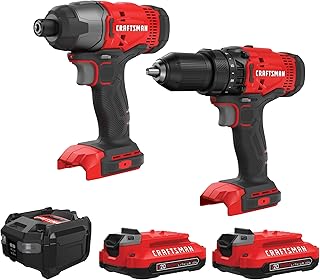


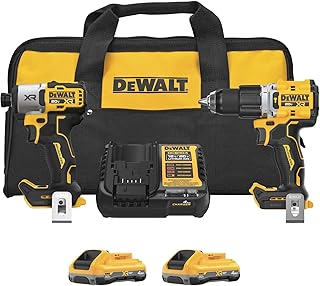


The Drill: Holes and Control
A drill has a keyless chuck that grips round bits, plus a clutch to control torque — perfect for drilling clean holes and driving delicate screws without stripping them.
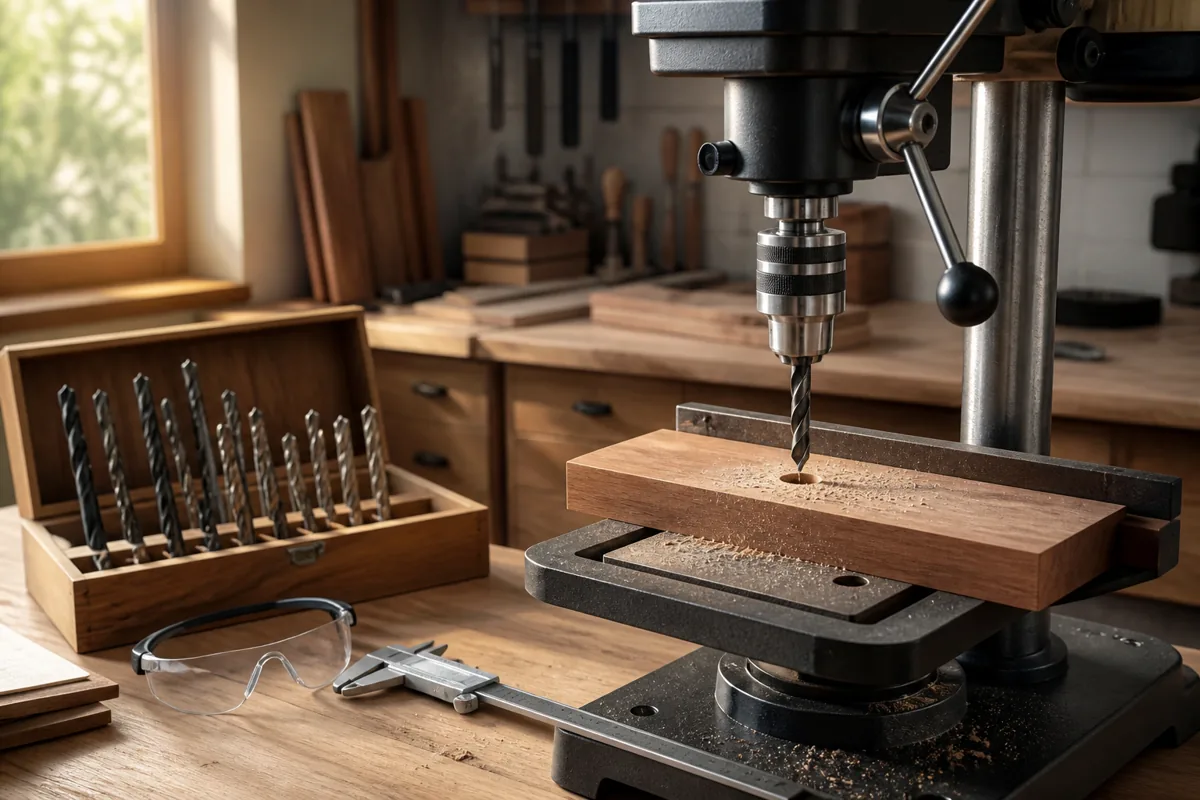
The chuck is why a drill stays relevant no matter what else is in the bag. Round shanks, hex shanks, brad points, spade bits, Forstner bits, hole saws, step bits, a mixing paddle for thinset: if the shank fits inside the jaws, the drill will spin it. Chuck capacity comes in 3/8″ and 1/2″ flavors, and that number, not the motor, is what caps the biggest bit you can mount.
The clutch is the other half, and it is the part nobody learns to use. Those numbers on the collar are not power levels, they are give-up levels: the drill quits turning once it reaches the torque you dialed in. That is how a brass hinge screw goes into soft maple with its head still intact, and how you seat the same screw to the same depth thirty times across a cabinet run. Set it low, test on scrap, and work up until the screw seats without the clutch chattering.
Then there is the gearbox. Two speeds give you a low range for big holes and heavy driving, where you want torque and time to react, and a high range for small twist bits in wood or metal, where speed is what cuts cleanly. If a model says hammer drill, it adds a forward chipping action for masonry, which is a completely different mechanism from an impact driver’s.
The Impact Driver: Raw Driving Power
An impact driver takes hex bits and adds rotational “impacts” — quick hammer-like bursts — that drive long screws and lag bolts a drill would choke on. It’s smaller, lighter, and unstoppable on big fasteners.
What most people miss is where the reaction force goes. In a drill, torque the fastener refuses to accept comes back up the handle and into your wrist, which is why a drill on a lag bolt tries to spin you instead of the bolt. An impact driver breaks the fastener loose with a rapid series of small hits, so that reaction never gets time to build. You can run one one-handed, overhead, off a ladder, all afternoon.
It also strips fewer heads than the racket suggests. Cam-out happens when the bit climbs out of the recess under steady pressure, and the hammering keeps re-seating the bit instead of letting it ride up and out. The catch is that all that power has no clutch behind it. The driver will happily snap a small screw, bury a fastener below the face of your trim, or twist the head off brass before you hear anything change. Trigger control is your only clutch.
Impact Driver
Compact, light, and it drives 3-inch screws like they’re going into butter. Once you drive a deck’s worth of screws with one of these, you’ll never fight a drill for it again.
- ✔ Drives long screws effortlessly
- ✔ Compact & light
- ✔ No stripped heads
- ✔ Great for decks & framing
- ✘ Not for precise pilot holes
- ✘ Loud impacts
- ✘ Hex bits only
How to Weigh the Buying Criteria
The torque figure on the box is the least useful spec in the store. Brands measure it differently and none of them measure it the way your screws do. Here is the order I actually shop in.
- Battery platform first, tool second. You are buying into a family of packs, chargers and future tools. Pick a platform your local store stocks and that carries the other tools you will eventually want, then buy whichever drill or driver lives on it.
- Brushless over brushed when the budget allows: more runtime per charge, less heat, longer motor life, usually a shorter and lighter tool.
- Head length and weight. A short driver head fits between joists and inside cabinets. That matters more every single day than a torque rating you would use twice a year.
- Chuck quality on the drill. Metal jaws, a firm ratcheting bite, and a bit that runs true. Chuck a long bit at the display, spin it slow, and watch the tip: you want a tiny circle, not a visible orbit.
- A clutch range you can use. Meaningful low settings beat a collar that jumps straight from nothing to wreck it.
- Trigger feel. Both tools live or die on how finely you can feather them. Squeeze one before you pay if you get the chance.
- Kit contents. Two batteries beat one, plus a charger you can live with, a case you will actually carry, a belt hook, and a light that points where the bit is.
When those conflict: platform beats everything, brushless beats raw specs, and size beats torque unless you build decks for a living. The 12-volt class is the right call for cabinets, electrical, furniture and overhead work. The 18/20-volt class earns its extra weight on framing, decks and large-diameter holes.
What Changes at Each Price Band
Entry level
Brushed motors, one gear or a rough two-speed box, sloppy chucks, small packs, and a clutch that behaves like two settings pretending to be twenty. Fine for shelves and flat-pack furniture a few times a year. It will not enjoy a deck.
Mid tier
Where most people should land. Brushless motors, a proper metal chuck, real two-speed gearing, a driver with a short head and selectable speed modes, decent batteries, a case. The jump from entry to mid is far bigger than the jump from mid to pro.
Professional tier
You are paying for durability and service, not miracles: better bearings and seals, smarter electronics, dust and drop resistance, and a repair network that will genuinely fix the thing. Worth it if the tool feeds you or lives in a truck. Overkill if it lives in a closet.
Mistakes I See Over and Over
- Standard bits in an impact driver. Regular insert bits shatter under impacts. Buy impact-rated bits and save the others for the drill.
- Skipping pilot holes in hardwood, near board ends, or with long screws, then blaming the tool for split wood and snapped fasteners.
- Leaving the drill clutch on max forever, which turns a precision tool into a bad impact driver.
- Small, soft or machine screws with the impact. Brass, trim screws and anything threading into metal belong to the drill.
- Precise holes through the driver’s collet. There is play in there by design, so the bit wanders and the hole comes out oversized.
- Two battery platforms because each was on sale. Now you own two chargers, two sets of tired packs and no spares that fit anything.
- No hearing protection. Impacts are loud in the way that costs you quietly, over years.
Who Each One Suits
Buy the drill first
Hanging things, boring holes, assembling furniture, light electrical, general repairs: the drill handles nearly all of it and can drive screws in a pinch. If you will only ever own one, own this one.
Buy the impact driver first
If the next project is a deck, fence, subfloor, framing or ledger board, buy the driver and borrow a drill for pilot holes. Anyone whose wrist already complains should start here too.
Skip one
Drive a dozen screws a year and an impact driver is a toy you will not appreciate. Already own a corded drill you like? Buy the bare-tool driver on your chosen platform rather than a whole second kit.
FAQ
Can an impact driver drill holes?
Yes, with hex-shank bits, and it is fine for rough holes in framing lumber. It is simply worse at it: no clutch, no low gear, more collet play, and a hammering action that tears the exit side. Anything that has to be clean, round or accurately placed goes in the drill.
Do I really need impact-rated bits?
For the driver, yes. They use tougher steel and often a torsion zone that absorbs shock instead of passing it to the tip. Standard bits work right up until one snaps off inside the recess of a screw you now cannot remove.
Is a hammer drill the same as an impact driver?
No. A hammer drill hammers forward, along the bit, to punch into masonry. An impact driver hammers around, in rotation, to turn fasteners. Different mechanism, different job, and neither replaces the other.
Can I use an impact driver on lug nuts?
Not properly. That is an impact wrench’s job, with a square drive and much more torque. An adapter might break a nut loose on a good day, and it will never tighten anything to spec. Final tightening belongs to a torque wrench either way.
Miller’s Take
Drill for holes and finesse; impact driver for driving power. Most folks buy a combo kit with both and never look back. Round it out with a solid bit set and you’re ready for anything.
If money is tight, take the mid-tier combo kit on a platform you can grow into over a premium version of one tool. Two capable tools sharing batteries will get more work done in your hands than one great tool and an empty spot in the bag where the other should be.