What's inside
As an Amazon Associate I earn from qualifying purchases. This post may contain affiliate links at no extra cost to you.
What we cover
Short answer
For a few holes in ordinary brick each year, a regular hammer drill is usually the sensible buy—especially if you already own one. Fit it with a sharp masonry bit, use the hammer setting, and drill at a steady pace. A rotary hammer is faster and less tiring in hard brick or concrete, but it costs more, weighs more, and can be excessive for putting up a shelf.
The useful dividing line isn’t a fixed number of holes. It’s how hard the masonry is, how large the holes need to be, and whether the hammer drill is making progress without overheating or wearing you out.
As an Amazon Associate we earn from qualifying purchases at no extra cost to you.



What the two tools do differently
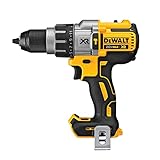
A hammer drill spins the bit while a pair of toothed plates make it vibrate rapidly along its axis. The hammering is relatively light, and you need to push the drill against the wall to keep it working. That’s generally enough for small holes in brick and mortar.
A rotary hammer uses a piston mechanism to deliver stronger blows to the bit. It does more of the impact work itself, so you don’t need to lean on it as hard. Many rotary hammers use SDS-Plus bits, which slide into the chuck and move slightly as they’re struck. Ordinary round-shank masonry bits won’t fit unless you have a compatible chuck adapter.
Neither tool is a substitute for checking what’s behind the wall. Avoid drilling where electrical cables or plumbing may run, and don’t drill into structural masonry without knowing what the hole will affect.
Quick comparison
| Factor | Hammer drill | Rotary hammer |
|---|---|---|
| Best fit | Occasional small holes in brick or mortar | Repeated drilling, hard masonry, or larger holes |
| Effort | Needs firm, steady pressure | More impact from the tool; less pushing required |
| Typical hole task | Small anchor holes, often around 1/4 inch | Anchor holes and larger holes, depending on tool and bit |
| Bits | Usually standard round-shank masonry bits | Often SDS-Plus; check the tool’s chuck and bit system |
| Trade-off | Cheaper and more versatile for routine drilling | Faster in tough masonry, but bulkier and costlier |
When a hammer drill is enough
Choose a hammer drill if you’re installing a few small plastic wall anchors, curtain brackets, or a lightweight shelf into sound brick. For common anchors with holes around 1/4 inch (6 mm), a decent cordless hammer drill and a fresh masonry bit are often perfectly adequate. Mortar joints are softer than brick, but use them only if the fixing instructions and the load allow it; a joint can crumble or provide a weaker hold.
Use a drill with a hammer mode, not an impact driver. An impact driver’s rotational impacts help drive screws, but they don’t replace the axial hammering a masonry bit needs to cut brick. A hammer drill can still drive screws in its normal drill or driver setting, making it a useful general-purpose tool. Browse cordless hammer drills if you need one tool for both light masonry drilling and ordinary household jobs.
For a handful of holes, plugging a corded tool into an outlet may be cheaper than buying another battery platform. If you already own compatible cordless batteries, though, the convenience of a cordless drill may outweigh the cost of a bare tool.
When a rotary hammer earns its keep
A rotary hammer makes sense when a hammer drill stalls, the masonry is unusually hard, holes are larger than your drill handles comfortably, or the job involves many holes. On a longer run, the difference in speed and hand effort can be substantial. It is also the better choice for routine drilling into concrete, where a small hammer drill may progress slowly and put more strain on the tool and operator.
Don’t buy one just because its impact rating looks impressive. Check the stated drilling capacity in concrete, the bit system, tool weight, and whether you need hammer-only mode for light chipping. For occasional anchor holes, a compact SDS-Plus tool is generally more appropriate than a large SDS-Max machine. Compare cordless SDS-Plus rotary hammers if you’ve found that a hammer drill is too slow for your walls.
A rotary hammer can be rough on small or brittle masonry. It may chip the brick face or enlarge a hole if you force the bit, use the wrong size, or let the tool wander. Start square to the wall and use the mode and bit intended for drilling, not chiseling.
Technique matters more than extra power
Use a sharp masonry bit that matches the anchor manufacturer’s specified hole diameter. A bit that is too small makes the anchor difficult to insert; one that is too large can leave the fixing loose. Check the required depth too. Mark the bit with tape or use a depth stop, allowing room for dust at the bottom of the hole.
Hold the drill square to the wall and start slowly to stop the bit skidding. On brick, drilling into the body of a sound brick is often preferable to the mortar joint for a secure fixing, but keep well away from edges: drilling near an edge can split or spall the brick. Follow the anchor instructions if they specify a location or minimum edge distance.
Let the bit cut rather than bearing down with your full weight. If progress slows, withdraw the bit periodically to clear dust. Stop if the bit becomes very hot, the drill smells hot, or the hole stops deepening. Continuing to force a dull bit can overheat the tool, damage the bit, and produce a ragged hole that won’t hold an anchor. Wear eye protection, and use hearing protection for sustained drilling.
A practical buying decision
If you’ll drill only a few small holes in brick, start with the hammer drill you own—or buy a basic one if you need a general-purpose drill anyway. Upgrade to a rotary hammer when the hammer drill is repeatedly slow, the masonry defeats it, or the job has enough holes that the reduced effort matters. For one awkward project, borrowing or renting a rotary hammer may cost less than buying and storing one.
If a correctly sized sharp bit still struggles in brick, that’s a useful signal to change tools, not to push harder. But if the drill makes steady progress and the anchors fit snugly, a rotary hammer won’t improve the result enough to justify its price for occasional work.