What's inside
As an Amazon Associate I earn from qualifying purchases. This post may contain affiliate links at no extra cost to you.
What we cover
The short answer
For most lag screws driven into wood, an impact driver is the easier tool to use. Its short bursts of rotational force help turn a large screw without making your wrist resist the twist. A drill can do the job too, and it may be the better choice when you need careful speed control or are working with smaller lags.
The tool matters less than using the right pilot hole, bit, and technique. A lag screw driven into a hole that is too small can split the wood, overload the tool, or snap. A hole that is too large can leave the threads with too little wood to grip.
As an Amazon Associate we earn from qualifying purchases at no extra cost to you.


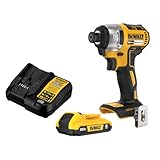
Impact driver vs. drill
| Factor | Impact driver | Drill/driver |
|---|---|---|
| Driving force | Rotational impacts help with long or large lags | Steady torque; may stall or twist your wrist |
| Control | Can be abrupt, especially at high speed | Usually easier to start slowly and stop precisely |
| Chuck | Typically accepts 1/4-inch hex-shank bits | Usually has a three-jaw chuck for round or hex shanks |
| Best fit | Repeated, larger fasteners and tight access | Occasional lags, pilot holes, and more delicate work |
An impact driver is not the same as a hammer drill. A hammer drill adds forward blows for drilling masonry; an impact driver adds rotational blows for turning fasteners. Neither feature removes the need to drill a proper pilot hole in wood.
When to use each tool
Choose an impact driver if you have several long lags to install, are fastening dense lumber, or want to avoid the reaction torque a drill can send into your hand. For a homeowner buying one tool mainly for framing and fastening, a cordless impact driver kit is a practical category to consider.
A drill/driver is fine for a few smaller lags, particularly when you already own one. It gives you a trigger, clutch, and chuck that are useful for controlled work. For occasional projects, there is little reason to buy an impact driver just to install a handful of screws if your drill can handle them safely.
Large lags are a different matter. A 3/8-inch or 1/2-inch lag driven deeply into dense wood can be hard on a drill, especially if the pilot hole is undersized. If the drill stalls, the tool may twist suddenly. Stop rather than forcing it; enlarge the pilot hole or use an impact driver.
Pilot holes and bits matter
Check the screw maker’s instructions when available. As a starting point, the pilot hole through the threaded portion should be close to the lag’s root diameter—the diameter of the solid core between the threads—not the full outside thread diameter. In softer wood, a somewhat smaller pilot may work; in hardwood or near an edge, use a larger one within the maker’s guidance. If unsure, test in scrap of the same wood.
For example, a nominal 3/8-inch lag has threads wider than its core, so a 3/8-inch pilot would usually be too large for the threaded section. Do not rely on a one-size-fits-all chart: actual screw dimensions and wood species vary. A pilot hole that is too small raises driving force and splitting risk. One that is too large reduces thread engagement, so the screw may pull out more easily.
For a lag going through a fixture before biting into wood, drill a clearance hole through the fixture so the screw threads do not bind there. Some installations also need a shallow counterbore or washer for a flush, supported head. Use a sharp wood drill bit set with enough length for the required depth, and clear chips if the hole is deep.
Many impact drivers use a 1/4-inch hex collet. Choose a correctly sized, impact-rated socket adapter or hex-shank driver bit for the lag head. A loose fit can round the head or let the bit slip. A drill can hold a wider range of bit shanks, but it still needs a bit rated for the fastener and a secure chuck.
A safer way to drive lag screws
Mark the location and check that the screw will not hit wiring, plumbing, or the far side of the work. Drill straight and deep enough for the threaded section; avoid drilling so deep that the screw loses useful engagement. Keep the work clamped or supported, especially near an edge.
Start the screw by hand or at low speed to keep it square. With an impact driver, use a moderate trigger and short bursts near the end. With a drill, start slowly and keep both hands on the tool. Stop when the head seats firmly against the washer or workpiece. Continuing after it is seated can strip the wood, crush the surface, or break the screw.
Use a lower-speed setting if your drill has one, and set the clutch cautiously—but do not assume the clutch is a reliable torque limit for a large lag. If the driver slows sharply, the screw stops advancing, the wood begins to crack, or the bit starts slipping, back out and diagnose the cause. Common fixes are a better-aligned pilot hole, a larger pilot, a cleared hole, or a fresh driver bit.
What to buy for the job
If you are choosing between tool categories, a cordless drill/driver kit is the more versatile first purchase for general home work: it drills pilot and clearance holes and drives smaller fasteners. Pick an impact driver instead if your work regularly involves structural screws, long lags, or many fasteners in a row. If you already own a drill, add an impact driver only when the drill’s limits are a recurring problem.
Whichever tool you use, match the pilot hole to the screw and wood, keep the bit seated, and stop before the head is overdriven. Those choices prevent more failures than buying a more powerful tool.