What's inside
- Best Smart Thermostats for Old Homes: Choose by Wiring and Heating System
- Shortlist by situation
- Compare the practical fit, not just the app
- First identify the system and its wires
- C-wire options—and what they do not solve
- Heat-only and millivolt systems need extra care
- Choose by project and ownership needs
- Budget for the whole installation
- Bottom line
- Best Smart Thermostats for Old Homes: Choose by Wiring and Heating System
- Shortlist by situation
- Compare the practical fit, not just the app
- First identify the system and its wires
- C-wire options—and what they do not solve
- Heat-only and millivolt systems need extra care
- Choose by project and ownership needs
- Budget for the whole installation
- Bottom line
As an Amazon Associate I earn from qualifying purchases. This post may contain affiliate links at no extra cost to you.
What we cover
- Best Smart Thermostats for Old Homes: Choose by Wiring and Heating System
- Shortlist by situation
- Compare the practical fit, not just the app
- First identify the system and its wires
- C-wire options—and what they do not solve
- Heat-only and millivolt systems need extra care
- Choose by project and ownership needs
- Budget for the whole installation
- Bottom line
Best Smart Thermostats for Old Homes: Choose by Wiring and Heating System
The best smart thermostat for an old home depends first on the heating system: for a conventional 24-volt furnace or boiler, the ecobee Smart Thermostat Essential is a flexible pick if you can provide a C-wire or use its included power extender; for a heat-only system, choose a model explicitly rated for that wiring; and for millivolt heat, use a compatible low-voltage relay rather than connecting a standard smart thermostat directly.
“Old home” can mean anything from a 1920s house with a two-wire boiler thermostat to a renovated home with modern forced-air equipment. The thermostat’s age or appearance matters less than the control voltage and terminals at the existing thermostat and heating appliance. Check those before buying.
As an Amazon Associate we earn from qualifying purchases at no extra cost to you.


Shortlist by situation
- Best flexible choice for many 24-volt systems: ecobee Smart Thermostat Essential. It works with many conventional heating and cooling setups and includes an ecobee Power Extender Kit for certain installations without a C-wire. Confirm compatibility with your exact equipment and wiring before purchase.
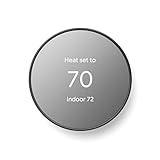
- Best for a simpler, familiar interface: Google Nest Thermostat. It can work without a dedicated C-wire in some compatible systems, but that does not make it a universal no-C-wire solution. Heat-only and older equipment need a careful compatibility check.
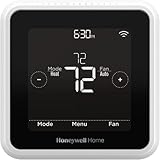
- Best for conventional systems where reliable power is the priority: a compatible Honeywell Home T-series thermostat. Several models support common 24-volt systems, but features and power requirements vary by model. Check the exact model’s wiring guide; do not assume every T-series model supports heat-only or millivolt systems.
- Best for millivolt heaters: a smart thermostat paired with a correctly sized isolation relay. Most mainstream smart thermostats are designed for 24-volt control, not the small voltage generated by a millivolt heater. The relay keeps the two control circuits appropriately separated.
Compare the practical fit, not just the app
The table compares useful buying considerations rather than promising universal compatibility. Model revisions and regional versions can differ, so check the manufacturer’s current compatibility checker and installation manual.
| Option | Typical system fit | No-C-wire approach | Best suited to | Important limit |
|---|---|---|---|---|
| ecobee Smart Thermostat Essential | Common 24-volt heating and cooling systems | Included Power Extender Kit may support eligible systems | Owners who want scheduling and connected controls on a conventional system | Not a direct solution for millivolt controls; verify heat-only wiring and equipment type |
| Google Nest Thermostat | Many compatible 24-volt systems | May operate without a C-wire on some installations | Owners who prefer simple scheduling and Google Home integration | Compatibility without C-wire depends on the system; check for power or cycling issues |
| Compatible Honeywell Home T-series model | Varies by exact model; commonly includes 24-volt systems | Model-dependent; some installations require a C-wire or adapter | Buyers who want a conventional thermostat layout and broad model choice | “T-series” is not one wiring specification—check the specific model number |
| Smart thermostat plus isolation relay | Potentially suitable for millivolt equipment when correctly engineered | Relay addresses control compatibility, not necessarily thermostat power | Owners of gas wall heaters, fireplaces, or other millivolt appliances | Relay coil voltage, contact rating, and thermostat power must all match |
These figures are system specifications rather than dimensions or capacities: “24 volts” and “millivolts” describe different control circuits, and they are not interchangeable. Smart thermostat dimensions and included accessories vary by model and revision; measure the wall opening and check the product’s current installation sheet if fit or trim coverage matters.
First identify the system and its wires
- Turn off power to the heating equipment. Use the furnace or boiler service switch or circuit breaker. A thermostat may use low voltage, but accidental shorts can damage a control board.
- Photograph the existing connections before removing anything. Record the terminal labels and which wire is attached to each. Wire color alone is not a reliable guide.
- Read the equipment label or manual. Look for control voltage and system type: conventional furnace or boiler, heat pump, electric baseboard, millivolt wall heater, or another setup. If the label is unclear, ask an HVAC technician to identify it.
- Check both ends of the cable if possible. A spare unused conductor may be tucked behind the thermostat or connected at the furnace or boiler. It becomes a usable C-wire only when correctly connected at both ends.
- Match terminal functions, not colors. A wire labeled C at the thermostat is useful only if it actually connects to the equipment’s common terminal. Never assume a wire is C because it is blue or black.
C-wire options—and what they do not solve
A C-wire provides a continuous return path for power on many 24-volt systems. Smart thermostats often need steady power for Wi-Fi, displays, and sensors. If your cable has a spare conductor, connecting it correctly at both ends is usually the cleanest option.
If there is no spare conductor, the manufacturer’s power adapter may work on supported equipment. ecobee’s Power Extender Kit, for example, is designed for eligible conventional systems without a dedicated C-wire. Other manufacturers offer model-specific adapters or power accessories. Follow the wiring diagram for the exact thermostat and heating equipment.
A power adapter is not a universal fix. It may not suit every boiler, zone-valve arrangement, heat pump, or control board, and it does not convert millivolt wiring into 24-volt wiring. Some thermostats can draw power through existing control wires, but compatibility varies; symptoms of a poor match can include a thermostat that disconnects, reboots, or causes heating to switch on and off unexpectedly.
Heat-only and millivolt systems need extra care
A two-wire heat-only system often has terminals marked R and W, with no C-wire. Some smart thermostats support this arrangement with a specified adapter or compatible power method; others require a common wire or do not support that equipment. Confirm support for your exact heating configuration—not just “furnace” or “boiler” in a compatibility list.
Millivolt appliances, including some gas wall heaters and fireplaces, use a small voltage produced by a thermopile. A typical smart thermostat expects a different control arrangement and may fail to switch the heater reliably or may be damaged if connected incorrectly. A properly selected isolation relay can let a compatible smart thermostat control the heater, but the relay must match the appliance circuit, and the thermostat still needs a suitable power source. Have an HVAC professional specify or install this setup if you cannot verify the ratings and wiring.
Also stop and check before replacing a thermostat on electric baseboard heat, line-voltage equipment, or a multi-zone boiler. Many low-voltage smart thermostats cannot directly control these systems. Line-voltage thermostats may involve hazardous mains wiring and require a purpose-built control or professional installation.
Choose by project and ownership needs
| Your situation | Practical choice | Why |
|---|---|---|
| 24-volt furnace or boiler, C-wire present | Any compatible model, including ecobee, Google Nest, or a suitable Honeywell Home model | Steady thermostat power is simpler when a verified common wire is available |
| 24-volt system, no C-wire, comfortable following wiring diagrams | A thermostat with an approved, system-compatible power adapter | Can avoid running new cable when the equipment and thermostat support the adapter |
| Two-wire heat-only boiler or furnace | A model whose documentation explicitly supports heat-only operation and your power arrangement | “Works with a furnace” does not guarantee compatibility with every two-wire setup |
| Millivolt heater or uncertain wiring | Professional compatibility check; relay if specified | Prevents mismatched control voltage and unreliable switching |
Budget for the whole installation
Smart thermostats commonly range from about $100 to $250, with premium models sometimes costing more. A compatible adapter may be included or may add roughly $20 to $50; a relay and professional labor can raise the total. These are broad market ranges, not quotes. If the existing wire is unusable or the equipment needs a control upgrade, ask for an installation estimate before buying.
After installation, verify that the thermostat calls for heat and stops calling when the set temperature is reached. Watch the system through a full heating cycle. Short cycling, unexpected heating, or repeated power loss is a reason to turn the system off and recheck compatibility—not to keep swapping wires while it is energized.
Bottom line
For a typical 24-volt old-home system, start with the wiring and choose a thermostat whose documentation confirms your heat-only or heating-and-cooling setup. The ecobee Smart Thermostat Essential is a strong flexible option where its included power extender is supported; Google Nest and compatible Honeywell Home models are alternatives when their exact wiring requirements fit. For millivolt heat, do not connect a standard smart thermostat directly: confirm a relay-based solution and thermostat power plan before purchase.