What's inside
As an Amazon Associate I earn from qualifying purchases. This post may contain affiliate links at no extra cost to you.
Fastening screws in narrow framing corners is less about maximum torque than physical access. A full-size impact driver may have enough power, but its motor housing can hit the adjoining stud before the bit reaches the screw. The best tool for this work is compact, controllable, and paired with the right bit and adapter.
As an Amazon Associate we earn from qualifying purchases at no extra cost to you.



What we cover
What Makes a Good Corner Impact Driver
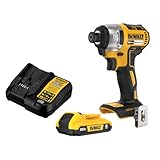
Look for a cordless impact driver with a short nose-to-back measurement, a narrow grip, variable-speed control, and at least two or three speed modes. A compact 12-volt impact driver is often easier to position than an 18- or 20-volt model, especially when the corner opening is only 3 to 4 inches wide. It will usually drive common framing and cabinet screws, but it may slow down on long structural screws.
A compact 18- or 20-volt driver gives you more reserve for 3-inch screws, ledger fasteners, and dense lumber. The trade-off is weight and bulk. In a tight corner, an extra inch of tool length can matter more than an extra 500 inch-pounds of advertised torque.
For this job, a good starting point is a compact 12-volt brushless impact driver if most screws are 1-1/4 to 2-1/2 inches long. Choose a compact 20-volt brushless impact driver when you regularly drive longer screws or work in hardwood and engineered lumber.
Size and Power Trade-Offs
| Driver type | Best use | Advantages | Limitations |
|---|---|---|---|
| Compact 12-volt | Cabinet framing, blocking, trim, light framing | Smallest body, low fatigue, good control | Less reserve for long or large screws |
| Compact 18/20-volt | General framing and longer fasteners | More power and longer runtime | Heavier and sometimes too long for tight corners |
| Right-angle impact driver | Access where a straight driver cannot line up | Reaches around obstructions | Usually heavier, less balanced, and more expensive |
| Standard impact driver with right-angle adapter | Occasional restricted access | Uses a tool you may already own | Adapter length and flex reduce control |
Published torque numbers are poor predictors of corner performance. They are often measured under conditions that do not resemble driving a screw into framing. A driver that fits squarely against the work and lets you keep the bit aligned will outperform a stronger tool that forces you to work at an angle.
The Bit and Holder Matter
Use impact-rated driver bits. Standard chrome or brittle drill-driver bits can twist, chip, or snap under the repeated blows of an impact mechanism. A magnetic bit holder can add 2 to 3 inches of reach, which is useful when the driver body must stay outside the corner. The drawback is that every added connection introduces some flex and wobble.
For common construction screws, use a short impact-rated Phillips, square, or Torx bit that matches the screw head exactly. A bit that is too long can make the setup harder to control. It also increases the chance that the bit will bend when the driver is not held perfectly square.
When access is extremely limited, a 1/4-inch hex impact-rated right-angle adapter can solve the geometry problem. Do not assume every right-angle adapter is suitable for impact use. A drill-only adapter may fail quickly, especially with long screws or high speed. Check its stated impact rating and keep the fastener size within that rating.
How to Drive Screws in a Narrow Corner
Mark the screw location first and drill a pilot hole when the wood is prone to splitting. For typical softwood framing, a pilot hole around 1/8 inch is useful for many smaller screws; larger structural screws may require the manufacturer’s specified clearance and pilot-hole sizes. A pilot hole reduces starting force and makes it easier to keep the bit centered.
Set the driver to its lowest speed or lowest power mode. Start the screw slowly with the tool in line with the fastener. Once the threads are established, increase speed only if the bit remains seated. Let the impact mechanism work rather than leaning hard into the tool. Excessive pressure can cam-out the head, strip the bit, or push the screw off the layout mark.
Stop when the screw head is flush or at the specified depth. Driving another second after the head seats can sink it too far, crush the surface, or strip the screw. For structural screws, follow the manufacturer’s embedment and washer requirements instead of relying on appearance.
Common Failure Modes
Bit cam-out: This usually means the bit profile is wrong, the bit is worn, or the tool is not square. Replace the bit before increasing torque.
Stripped screw heads: Low-quality fasteners and excessive speed are common causes. Torx and square-drive screws generally resist stripping better than Phillips screws, but only when the bit fits fully.
Broken adapters: A long adapter used like a pry bar can twist or fracture. Keep the driver aligned with the adapter and support the adapter near the fastener when possible.
Overdriving: High-power drivers can bury a screw head before you react. Use a low setting for the first few screws, then adjust based on the actual wood and fastener.
When a Cheaper Driver Is Enough
A brushed compact driver or a basic 12-volt kit is fine for occasional corner work, short wood screws, and light repairs. You do not need a premium brushless tool to install blocking, attach trim cleats, or assemble small framing sections. Spend the difference on quality impact bits and a reliable right-angle adapter if restricted access is the real problem.
Brushless construction becomes worthwhile for frequent use, repeated long screws, better runtime, and more consistent speed control. Buy into a battery platform you already use when possible. A bare tool is only a bargain if you already own compatible batteries and a charger; otherwise, the complete kit price is the meaningful comparison.
Before buying, measure the tightest opening, including the space behind the screw head. Then compare the driver’s actual length, battery height, and bit-holder reach. For most narrow framing corners, a compact impact driver with a short impact-rated bit is the simplest solution. Use a right-angle setup only when the straight tool physically cannot line up.