We research everything we recommend. When you buy through our links, we may earn a commission. As an Amazon Associate we earn from qualifying purchases.
4 Best Hole Saws for Pipe Notching (November 2026)
Bi-metal and carbide hole saws for pipe notching compared by tooth material, cutting depth and size range, so your fishmouth joints fit tight first time.
Bi-metal and carbide hole saws for pipe notching compared by tooth material, cutting depth and size range, so your fishmouth joints fit tight first time.
As an Amazon Associate I earn from qualifying purchases. This post may contain affiliate links at no extra cost to you.
Notching tube is the hardest cut a hole saw ever makes. The saw meets a curved wall at an angle, so only part of the rim bites at first, the teeth hammer in and out of the cut, and on steep joints the saw still has to finish through the far wall without wandering. That is why the real decision is not the size printed biggest on the box. It is tooth material that survives interrupted cuts in your metal, enough cutting depth for the angle, and an arbor setup that stays put in a notcher or drill press.
OUR TOP PICK
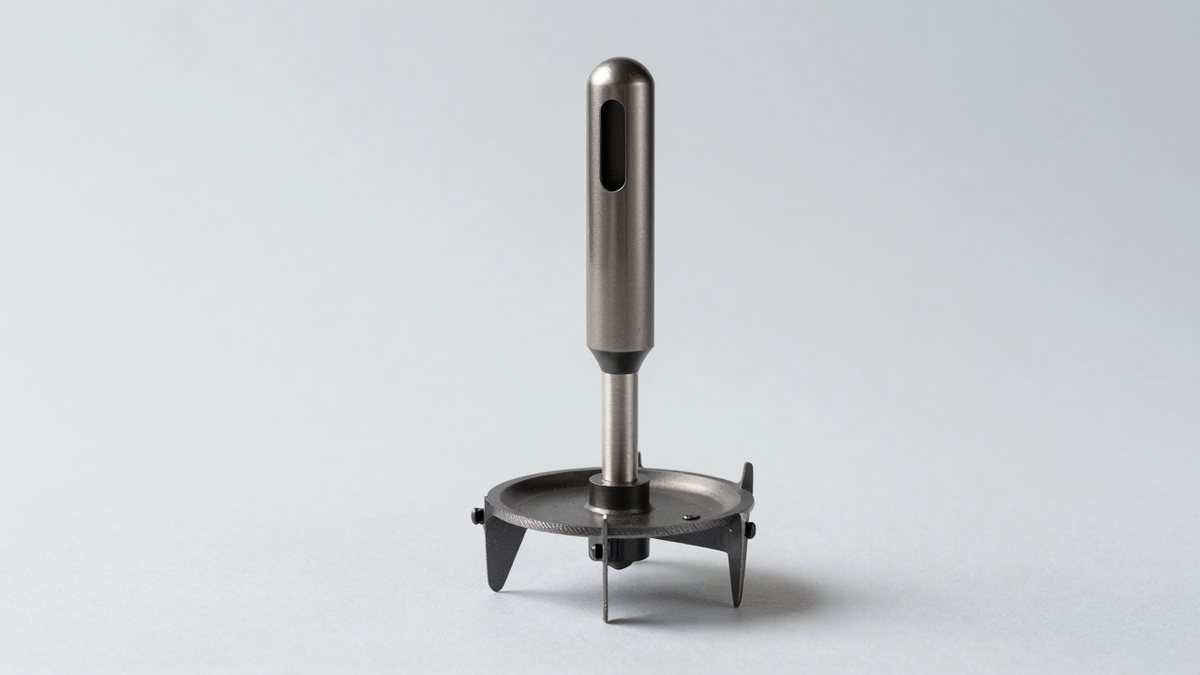
Starrett Bi-Metal Deep Cut Hole Saw with Arbor, 1-1/16 inch (ADCH0116)
This guide is for roll cage and chassis builders, exhaust and handrail fabricators, and home shops fitting tube for the first time. Every pick below was chosen from its Amazon listing by the things that decide a notch: tooth material, the metals and tube work the maker states it can cut, cutting depth, the sizes actually in the box, and how the arbor handles the plug left inside the saw.
As an Amazon Associate we earn from qualifying purchases
Product
Best for
Key spec from title
Starrett Bi-Metal Deep Cut Hole Saw with Arbor, 1-1/16 inch
Repeat notches in one tube size
2-inch cutting depth, fitted arbor included
Spyder 11-Piece Bi-Metal Hole Saw Kit
Several tube sizes and fast plug removal
Rapid Core Eject arbor system
dashap 27PCS TCT Carbide Hole Saw Kit
Stainless and hard metal tube
Tungsten carbide teeth, 5/8 to 3-15/16 inch
EZARC 16Pcs Bi-Metal Hole Saw Set
Mild steel notching across common sizes
M42 bi-metal with 8 percent cobalt
How to Choose
Match the Saw Diameter to the Tube It Joins
The saw size follows the tube your notched piece butts against, not the piece you are cutting. A fishmouth wraps the outside of the receiving tube, so if a 1-1/2 inch brace joins a 1-3/4 inch main hoop, the notch is cut with a 1-3/4 inch saw. Get this backwards and the joint gaps no matter how clean the cut is. Before buying a kit, list the outside diameters you actually join, including odd sizes like 1-5/8 inch, and check them against the sizes printed on the box one by one.
Pick Tooth Material for Your Metal
Plain bi-metal teeth handle mild steel tube well and cost the least to replace, which matters because notching is an interrupted cut that chips teeth. M42 bi-metal with cobalt added, like the EZARC set below, holds an edge longer in abrasive or harder stock. Tungsten carbide teeth are the step up for stainless and chromoly, where bi-metal can glaze and dull quickly; the dashap kit is listed for cutting holes in stainless steel plate and aluminum alloy metal tube. Match the tooth to the hardest metal you notch regularly, not the easiest.
Check Cutting Depth Against Your Steepest Angle
A notch cut at an angle travels a longer path through the tube than a straight cut, and the saw must stay engaged until it breaks through the far wall. Standard kit saws are often under 2 inches deep; the EZARC set states a cutting depth of 1.89 inches, while the Starrett Deep Cut is built with a full 2-inch depth that its listing says improves cutting performance on tubes where the saw needs to pass through both sides. Shallow saws on steep joints bottom out, rock on the rim, and leave a ragged lip to grind away.
Sort Out the Arbor, Pilot and Machine First
Most bench tube notchers accept standard hole saws on a threaded arbor and are driven by an ordinary 1/2 inch hand drill, so thread and shank fit matter more than brand. On a curved tube surface a pilot bit can skate before the rim seats, which is why notcher frames and drill press vises earn their keep. Plug removal is the other hidden cost: after every notch, a disc of tube wall sits inside the saw. Eject-style arbors like Spyder’s Rapid Core Eject push that plug out with a button press instead of a screwdriver fight.
The 4 Best Options
Starrett Bi-Metal Deep Cut Hole Saw with Arbor, 1-1/16 inch (ADCH0116)
Top Pick
Starrett Bi-Metal Deep Cut Hole Saw with Arbor, 1-1/16 inch (ADCH0116)
Best for: repeat notching of one main tube size in a notcher or drill press.
Cutting diameter: 1-1/16 inch
Cutting depth: 2 inches (51 mm)
Construction: bi-metal with abrasion resistant high-speed steel teeth
Fabricators who notch one tube size all week are exactly who this single saw is built for. Starrett’s Deep Cut line pairs high-speed steel teeth with an alloy backing that resists tooth breakage, and the 2-inch depth is made for tube work where the cut has to pass through both walls. The listing states it suits solid materials and tubes with a wall thickness greater than 1/8 inch, and the fitted arbor is included, so it mounts straight into a notcher or drill press and starts cutting.
Spyder 11-Piece Bi-Metal Hole Saw Kit (600886)
Runner-Up
Spyder 11-Piece Bi-Metal Hole Saw Kit (600886)
Best for: fabricators notching several tube sizes who want fast plug ejection between cuts.
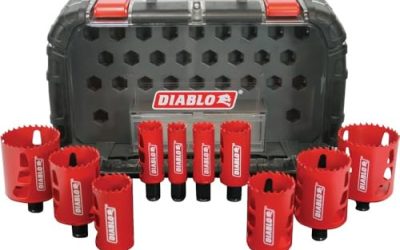
Hole saws included: 3/4, 7/8, 1-1/8, 1-1/2, 2, 2-1/8 and 2-1/2 inch
Construction: bi-metal steel with variable tooth pitch geometry
Arbors: Hex8 and Hex10 Rapid Core Eject arbors
Pilot bits: Hex8 and Hex10 high-speed steel pilot bits
This kit suits shops whose work jumps between tube sizes in a single day. Seven bi-metal saws cover the common run from 3/4 inch to 2-1/2 inches, and the variable tooth pitch geometry is listed for cutting metals as well as wood and plastics. The real time saver is the Rapid Core Eject arbor system: after a cut, a button press and a pull back on the saw ejects the plug, which matters when you are clearing a sharp-edged tube disc after every single notch. Two arbors and two pilot bits are included in a hard case.
When the tube is stainless or hard alloy and bi-metal saws keep dulling, carbide is the practical answer, and this is the widest carbide range in this guide. The tungsten carbide tipped teeth are listed for cutting holes in 3 mm stainless steel, 15 mm iron plate and 15 mm aluminum alloy metal tube, and the 23 saws run from 16 mm up to 100 mm, which covers everything from small brace tube to large-diameter pipe. The kit includes drill bits and hex keys in a storage case, and the maker advises adding coolant for best performance in metal.
EZARC 16Pcs Bi-Metal Hole Saw Set (B0F28ZQKC2)
EZARC 16Pcs Bi-Metal Hole Saw Set (B0F28ZQKC2)
Best for: home shops and occasional cage work in mild steel across several tube sizes.
Tooth material: M42 bi-metal with 8 percent cobalt
Hole saws: 10 sizes from 3/4 inch to 2-1/2 inches (19 to 64 mm)
home shops and occasional cage work in mild steel across several tube sizes.
Watch out for
the maker positions these saws for thin metal, so thick-wall chromoly will wear them faster than a carbide set, and the depth is a little under the Starrett’s full 2 inches.
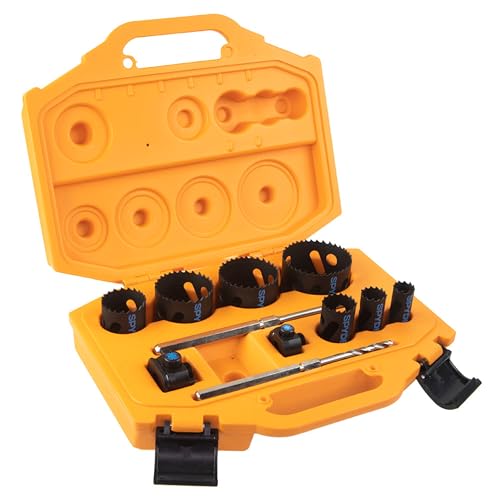
This is the straightforward way to cover the common notching sizes in mild steel without buying saws one at a time. The ten saws are M42 bi-metal with 8 percent cobalt, a harder tooth blend than plain high-speed steel, and they run from 3/4 inch to 2-1/2 inches, including the 1-3/4 inch size the Spyder kit skips. A 4/6 TPI variable tooth pitch and open eject slots help clear chips and limit heat build-up, and the box carries both 3/8 inch and 7/16 inch arbors, pilot drills, an installation plate and a hex key in a latched case.
Safety Checks Before You Notch
Clamp the tube in the notcher frame or a machine vise before every cut, and never hold a tube by hand against a spinning hole saw; the moment the teeth grab, an unsecured tube spins with the saw. Run larger diameters in steel at low drill speed with steady feed pressure, and use cutting oil or coolant on metal, as the carbide kit’s listing itself advises, since dry high-speed cutting overheats teeth and work-hardens stainless. Clear chips and the cut plug with a brush, not your fingers, and wear eye protection against the sharp disc left inside the saw. Note that the Starrett listing carries a California Proposition 65 warning about cobalt metal powder, another reason to keep dust and swarf under control.
Which One Fits Your Situation
You Notch the Same Cage Size All Week
Buy the Starrett Deep Cut in your main diameter and stop swapping saws. Its full 2-inch depth and tube-focused listing make it the cleanest tool for repeated fishmouths in one size, and a single dedicated saw stays sharper than a kit saw that also gets lent to hole-cutting jobs in sheet and wood.
Your Jobs Jump Between Tube Sizes
The Spyder kit earns its bench space when a handrail, exhaust and cage all land in the same week. Seven sizes cover most joins, and the eject arbor keeps the rhythm going when you are clearing a plug after every notch instead of stopping to pry one out with a screwdriver.
You Work in Stainless or Chromoly
Go straight to the dashap carbide set. Bi-metal teeth glaze quickly in stainless and dull fast in chromoly, while the carbide teeth are listed for stainless plate and metal tube work. Run it slowly with coolant, and accept the millimetre size steps as the trade for teeth that survive the material.
You Are Setting Up a First Home Shop
The EZARC set covers the sizes a first cage or bumper project needs, including 1-3/4 inch, with arbors and pilots already in the case. It keeps the starting cost of the tooling sensible while you learn speeds and feeds on mild steel, and individual pro saws can be added later in the sizes you use most.
Common Mistakes
Sizing the saw to the tube being notched instead of the tube it joins, which guarantees a gappy fishmouth.
Running a large saw at full drill speed in steel, cooking the teeth blue in a single cut.
Cutting stainless or chromoly dry, with no cutting oil or coolant to carry the heat away.
Holding the tube by hand or in a loose clamp, so the saw grabs and spins the workpiece.
Picking a shallow kit saw for a steep-angle notch, then forcing it when it bottoms out before breaking through the far wall.
Frequently Asked Questions
What size hole saw do I need to notch 1-3/4 inch tubing?
Match the saw to the tube the notched piece joins. If a 1-3/4 inch tube is being fitted against another 1-3/4 inch tube, use a 1-3/4 inch saw. The EZARC set includes that size; the Spyder kit does not, so builders using that kit would need a separate 1-3/4 inch saw for cage work.
Can I notch tube with a hand drill instead of a tube notcher?
Yes, and most bench notchers are themselves powered by a 1/2 inch hand drill turning a standard hole saw. Freehand drilling is the hard version: the pilot can skate on the curved surface and the angle is hard to repeat. A notcher frame or a drill press with the tube clamped in a vise holds the angle and the workpiece steady.
Why do my hole saws dull so quickly in steel tube?
Heat and speed are the usual cause. A notch is an interrupted cut, so teeth slam in and out of the wall and overheat when the drill runs fast or the cut is made dry. Slow the drill down for larger diameters, keep steady feed pressure, use cutting oil, and move to cobalt bi-metal or carbide teeth for stainless and chromoly.
Will these saws fit my tube notcher?
In most cases yes. Common bench notchers accept standard hole saws on threaded arbors, and the kits here use widely compatible arbors; Spyder states its saws also fit universal arbors. Check your notcher’s arbor thread and shaft size against the arbor in the box before ordering, especially with the single Starrett saw and its fitted arbor.
M
Miller the Driller Editorial Team
We compare specs, warranty terms, long-term owner feedback and street pricing before anything earns a spot. Rankings are never paid.
Affiliate disclosure. As an Amazon Associate we earn from qualifying purchases at no extra cost to you. Prices accurate as of the date shown.
Compare the best long hole saws for deep cuts through wood, metal and plastic. Five bi-metal kits ranked by cutting depth, size range and mandrel system.



 EZARC 16Pcs Bi-Metal Hole Saw Set (B0F28ZQKC2)