Key takeaways
- What I look for in a contractor-grade 20V cordless drill, from chuck runout and clutch feel to battery platform lock-in and real drilling technique.
What's inside
As an Amazon Associate I earn from qualifying purchases. This post may contain affiliate links at no extra cost to you.
Most guys shopping for the best 20v cordless drill for contractors are looking at the wrong number. They compare inch-pounds of torque on the box, buy the biggest one, and then spend the next two years fighting a drill that’s too heavy for overhead work and has a chuck that lets a 1/2-inch auger bit walk out of the jaws by lunchtime. Torque is the easy spec to print. It is not the spec that decides whether the tool is still on your truck in three years.
I’ve been drilling holes for a living long enough to have opinions about chuck jaws. What actually matters on a contractor drill is chuck grip and runout, clutch predictability, how the electronic brake behaves, whether the trigger gives you real control down at the bottom of the speed range, and whether the battery platform you’re buying into covers the rest of the tools you need. Get those right and the torque figure sorts itself out. Below is how I’d shop it, plus the technique that makes a mid-range drill outperform a big one in the wrong hands.
As an Amazon Associate we earn from qualifying purchases at no extra cost to you. Product prices and availability are accurate as of the date shown and are subject to change.


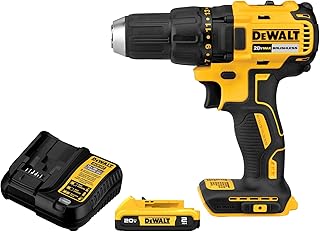

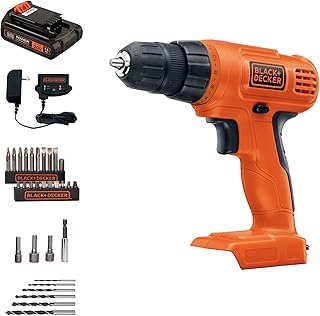

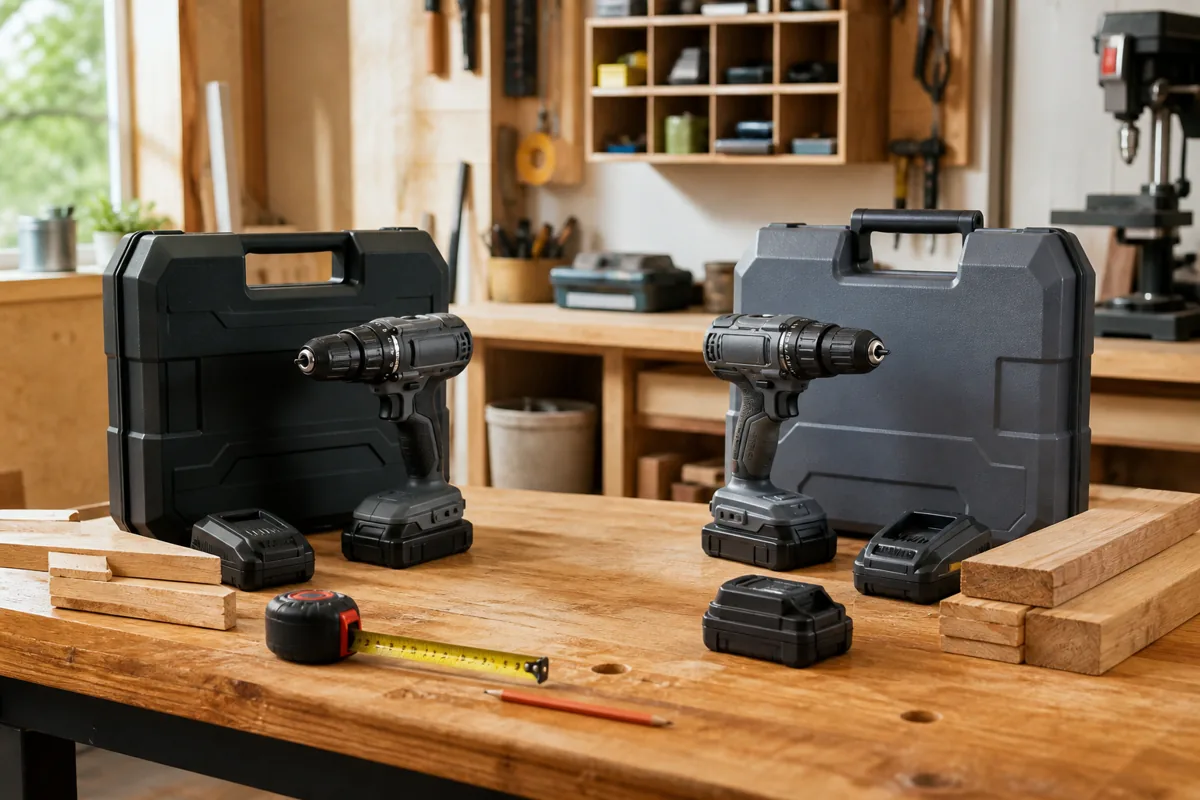
Quick comparison: what tier of 20V drill fits your work
Voltage naming is marketing. A “20V max” pack and an 18V pack are the same lithium chemistry counted differently, so DeWalt 20V, Milwaukee M18 and Makita LXT are all competing in the same class. The real split is between compact brushless, full-size hammer drill, and stall-torque monster.
| Tier | Best for | Trade-offs | Typical price band | ||
|---|---|---|---|---|---|
| Compact brushless drill/driver | Cabinet install, trim, electrical rough-in, overhead | Less stall torque, usually no hammer mode | Low to mid hundreds as a bare tool or small kit | ||
| Full-size brushless hammer drill | General contracting, tapcons into block, mixed-material days | Heavier, longer nose, more fatigue overhead | Mid hundreds for a two-battery kit | ||
| High-torque “ | stall killer” | drill | Self-feed bits, hole saws, augers in framing | Heavy, will wreck your wrist if it grabs, needs the side handle | Upper end of the drill range |
| Right-angle or stub drill | Joist bays, stud cavities, under sinks | Specialist, not a daily driver | Similar to a compact kit |
If you only get one, the full-size brushless hammer drill is the honest answer for most contractors. It handles wood, steel and the occasional masonry anchor without a second tool. If you already own an impact driver for fasteners, and most of us do, you can drop to a compact drill and be happier all day.
The specs that actually decide it
Chuck. A 1/2-inch all-metal ratcheting chuck with a carbide-jaw grip is the difference between a drill you trust and one you curse. Cheap chucks show two failures: bit slip under torque, and runout, where the bit tip wobbles in a visible circle. Runout is what turns a 3/8-inch hole into an oval and what snaps small twist bits. Spin the chuck empty and watch the jaws; then chuck a long bit and eyeball the tip. This is a five-second check that tells you more than a spec sheet.
Clutch. Contractors need a clutch that repeats. Twenty-plus settings sound nice, but what you want is consistent slip at the same setting all day, and a clutch that disengages crisply instead of chattering through the fastener. If you set screws into melamine or hang cabinets, a mushy clutch will cost you more money in blown-out material than the drill cost.
Two-speed gearbox with usable low range. Low gear on a good drill should be genuinely slow, in the neighborhood of a few hundred RPM, with strong low-end control from the trigger. That’s where hole saws, self-feed bits and large augers live. A drill that only feels alive above half trigger is useless for big-diameter work.
Brake and clutch electronics. Modern brushless drills have anti-kickback sensing that cuts power when the tool detects rotation of the body. It is genuinely useful with self-feed bits, and it does not replace the side handle. Use both.
Weight and nose length. Measure your actual work. If your day includes drilling above your head into joists or setting anchors in ceilings, every ounce past three pounds bare compounds. Compact drills with short heads get into stud bays that a full-size unit cannot.
Full-size brushless 20V hammer drill kits
This is the tier I’d buy if the drill has to do everything. Look for a metal ratcheting chuck, two speeds, an included side handle and at least one higher-capacity battery in the kit. Buying the kit is usually cheaper than a bare tool plus batteries bought separately, even if you already own packs.
Why the battery platform matters more than the drill
You are not buying a drill. You are buying a battery ecosystem, and that decision follows you for a decade. Before you pick a model, count the tools you’ll want on that platform: impact driver, recip saw, circular saw, work light, vacuum, maybe a rotary hammer. Then look at what your crew already carries, because shared packs and shared chargers on a job site save real time.
Practical points on packs. Compact 2.0Ah packs are for balance and overhead work. Mid packs in the 4Ah to 5Ah range are the daily drivers for most drilling. High-capacity packs make a drill nose-heavy and are better suited to saws, though they help if you’re running large hole saws all afternoon. Also check whether the platform’s newer high-output packs are backward compatible with the tools you already own, because that varies by brand and generation.
The well-known contractor lines here are DeWalt’s 20V MAX XR, Milwaukee’s M18 FUEL and Makita’s 18V LXT, plus Bosch and Metabo HPT if your local supply house leans that way. Any of them will do the work. Choose on service availability, what your crew runs, and which one has the specialty tools you actually need.
- ✔ Brushless motors give longer runtime and better heat tolerance under sustained drilling
- ✔ Metal ratcheting chucks hold big bits without slip
- ✔ Two-speed gearboxes let one tool cover twist bits and 4-inch hole saws
- ✔ Platform lock-in means one charger and one pack family across a whole truck
- ✘ Kit pricing tempts you into batteries you don’t need
- ✘ High-torque models are genuinely dangerous without the side handle
- ✘ Heavier full-size drills punish overhead work
- ✘ Switching platforms later means eating the cost of your existing packs
Technique that makes any 20V drill perform like a better one
Half the complaints I hear about cordless drills are technique problems wearing a tool’s name.
Match speed to bit diameter. Small twist bits in steel want high speed and light pressure. Big hole saws and self-feed bits want low gear and slow, steady feed. As diameter goes up, RPM comes down. Running a 2-1/8-inch hole saw at high speed is how you burn the teeth off it and cook the drill’s electronics.
Pressure, not force. A sharp bit wants enough pressure to keep cutting and no more. If you’re leaning on it, the bit is dull or you’re in the wrong gear. In steel, use cutting oil and keep the chip curling; if you’re making dust instead of chips, you’re rubbing, not cutting, and you’re work-hardening the hole.
Pilot holes. For lag screws, drill the pilot to roughly the shank diameter of the screw, not the thread outside diameter, and go a touch larger in dense hardwood or when you’re close to an edge. For spade and self-feed bits, a small pilot keeps the lead screw from wandering when you start on a curved or painted surface.
Back out to clear chips. In deep holes, especially with augers in wet framing, pull back every inch or two to clear the flutes. Packed flutes are what causes a bind, and a bind in a high-torque drill is what breaks wrists.
Start slow, seat the bit. Feather the trigger to score the surface before committing. On tile, metal and finished surfaces this is the whole game. A center punch or a strip of painter’s tape stops the walk.
Side handle and stance. With large bits, always use the auxiliary handle, keep your elbow tucked, and stand so a kickback rotates the tool away from your body rather than into a ladder rail. Let go of the trigger the instant it grabs.
Compact 20V brushless drill/driver
If you run an impact driver for fasteners, a compact drill is the smarter daily tool. Short nose, lighter in the hand, and far less fatiguing in ceilings and cabinets. Pair it with a 2.0Ah pack for balance and keep a bigger pack in the bag for hole-saw work.
Choosing the best 20v cordless drill for contractors by trade
Electricians: compact brushless drill plus a right-angle or stub drill for joist bays. Low-speed control matters more than peak torque, and you’ll be running self-feed bits, so anti-kickback earns its keep.
Framers and remodelers: full-size hammer drill, mid-size pack, side handle installed permanently. You’ll hit block and concrete often enough that hammer mode saves a trip to the truck, though anything past a handful of large anchors belongs to a dedicated rotary hammer.
Cabinet and finish installers: clutch quality above all, plus a good chuck for small bits. Runout ruins hinge-cup and shelf-pin accuracy. Consider a second body so one stays set up with a countersink.
Plumbers and HVAC: low gear and stall torque for big hole saws through plates and joists, but plan on a right-angle tool for tight cavities. Bring more batteries than you think you need; hole saws drain packs fast.
Deck and fence work: a drill for pilots and an impact for the lags. Trying to do both with one tool is how you end up with sheared screw heads and a hot drill.
FAQ
Is 20V better than 18V? No, they’re the same class of tool. 20V max counts peak cell voltage and 18V counts nominal voltage on the same lithium-ion chemistry. Compare motor type, chuck quality, gearing and battery capacity instead, and ignore the number on the sticker.
Do I need a hammer drill or a rotary hammer? A hammer drill handles occasional small anchors in block and brick. If you’re setting anchors in poured concrete all day, or drilling anything past about 1/2 inch, get an SDS rotary hammer. A hammer drill will do it, slowly, and it will wear out doing it.
Should I buy the kit or the bare tool? Buy the kit if you’re new to a platform, because kit pricing on batteries and charger is usually better than buying them separately. Go bare tool only when you already have several healthy packs of the right capacity on that platform.
The drill that stays on your truck is the one that fits your hand, holds a bit straight, and shares batteries with everything else in your bag. Pick the platform first, buy the tier that matches your actual work, and spend the leftover money on good bits. Dull bits make expensive drills feel cheap.
Check prices on Amazon →