Key takeaways
- Head length beats torque ratings in tight spots, so here's how I pick a compact impact driver and the technique that makes a small tool punch above its size.
What's inside
As an Amazon Associate I earn from qualifying purchases. This post may contain affiliate links at no extra cost to you.
Nine times out of ten, the tool that lets me down in a tight spot is not underpowered. It is too long. I have knelt inside a sink cabinet with a full-size driver, cocked the bit fifteen degrees off axis because the housing hit the side panel, and watched a good screw head strip out. That is the whole case for the best compact impact driver you can get your hands on. Not more torque. A shorter nose, less weight out front, and a tool you can hold square to the fastener.
Trouble is, compact has become a marketing word. Some tools wearing the label are a quarter inch shorter than the standard model, and some 12V sub-compacts are so small they stall on a 3-inch structural screw. Here is how I sort the classes, the specs I actually read, and the technique that makes a small driver behave like a big one.
As an Amazon Associate we earn from qualifying purchases at no extra cost to you. Product prices and availability are accurate as of the date shown and are subject to change.

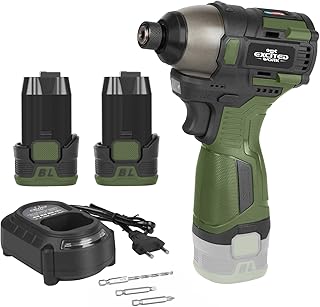


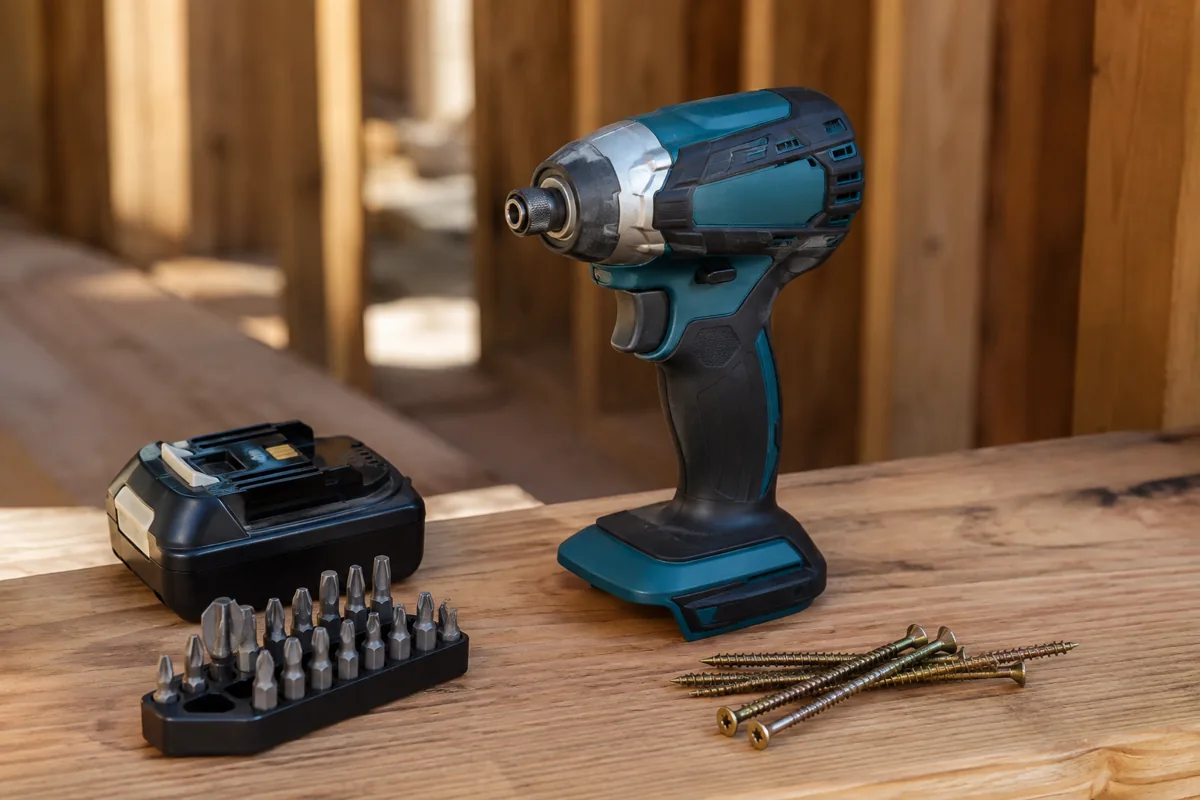
Compact Impact Driver Classes at a Glance
| Class | Typical Head Length | Power Feel | Where It Shines |
|---|---|---|---|
| 12V sub-compact | About 5 inches or less | Light to moderate | Cabinets, hinges, device boxes, furniture |
| 18V or 20V compact brushless | Roughly 4.5 to 5.5 inches | Moderate to strong | Decking, subfloor, remodeling, all-day driving |
| 18V or 20V standard brushless | Roughly 5.5 to 6.5 inches | Strong to very strong | Ledger boards, long structural screws, lag work |
| Right-angle or offset driver | Very short nose, wide body | Light | Joist bays and corners where nothing else fits |
Head length is the number that changes your day. An inch off the nose is the difference between setting a hinge screw straight and setting it crooked. Fit beats output more often than anyone admits.
What Makes the Best Compact Impact Driver Worth Carrying
Head length. It is the one honest compact spec, and manufacturers publish it. At or under about 4.75 inches is genuinely short for an 18V tool. Sub-compact 12V bodies go shorter still and carry less weight out front, which you feel when you are driving overhead.
Brushless motor. Not a luxury on a small tool. Brushless is shorter for the same output, runs cooler, and stretches a small battery. DeWalt XR, Milwaukee FUEL, Makita LXT and Ryobi HP all use them. Given a brushed compact and a brushless compact at similar money, the brushless tool wins on nose length alone.
Real speed and torque modes. Two speeds works. Three plus a self-tapping mode is better, because the lowest setting is what saves you when you are seating a #6 screw in a face frame. A driver with only one gear will snap brass and split trim.
Light and belt hook. Three LEDs around the chuck beat one at the base, because your own hand throws the shadow inside a cabinet.
12V Sub-Compact Impact Drivers
If most of your driving happens in cabinets, hinges, device boxes and furniture, a 12V sub-compact will out-work a bigger tool because it simply fits. Treat it as a companion to an 18V driver, not a replacement.
Torque Ratings, Speed, and What Reaches the Screw
Advertised torque comes off a lab bench with a hard joint and a fresh pack. Read it as a class marker, nothing more. A compact 18V or 20V brushless driver will sink 3-inch deck screws in softwood all day and will drive lags slowly if you pre-drill. A 12V sub-compact sits well below that. A standard-size driver sits above it, and that headroom mostly shows up on long fasteners in dense material.
Trigger feel matters more to me than the number. A good compact driver lets you hold roughly fifteen percent trigger and creep a screw in without the hammer mechanism engaging at all. My routine is low mode for the first quarter inch so the screw starts straight, high mode through the middle, then easing off as the head approaches the surface. That last move is what keeps trim from dimpling and heads from twisting off.
18V and 20V Compact Brushless Impact Drivers
This is the class most people should buy. It covers decking, cabinet installs, subfloor and general remodeling, and it shares batteries with your drill. Match the platform you already own before you compare anything else.
Bits, Pilot Holes, and Where Cam-Out Really Comes From
Impact-rated bits, kept short. A hex bit that is not impact rated can shatter. A 1-inch or 2-inch insert bit in a magnetic holder gives you a torsion zone that absorbs the hammer blows. Long 6-inch power bits flex and wander, so save them for deep recesses.
Push harder and straighter than feels necessary. Most cam-out is under-pressure, not over-torque. Every blow lifts the bit slightly, and if you are not loading it into the recess it climbs out and chews the head. Body weight behind the tool, wrist locked, bit square. If you cannot get square, switch to the shorter tool or a right-angle attachment instead of forcing it.
Pilot holes, still. Coarse deck screws in softwood need none. Pilot anything within 2 inches of an end or edge, pilot hardwood every time at roughly the shank diameter minus the threads, and pilot plus countersink for flat heads that have to sit flush. A little wax on the threads in oak or hard maple cuts driving torque noticeably and saves screw heads.
Battery Platform and Kit Choices
Buy the platform, then the tool. If your drill is a FUEL, a bare-tool compact driver on that same battery beats starting a second charger collection. Pack size matters too. A 2.0Ah battery keeps a compact tool compact, while a 5.0Ah brick makes a sub-compact bottom-heavy and defeats the purpose. I keep the small packs on the driver and save the big ones for the drill and the saw.
- ✔ Fits cabinets, joist bays and appliance nooks where standard drivers bind
- ✔ Lighter nose means less wrist fatigue on overhead and repetitive work
- ✔ Better bit control, so fewer stripped heads and less rework
- ✔ Usually available as a bare tool on a platform you already own
- ✘ Slower on long structural screws and lag work
- ✘ Small batteries mean more swaps on a big deck day
- ✘ 12V sub-compacts can stall in dense hardwood and thick steel
- ✘ Compact housings run warmer under sustained heavy load
Compact Impact Driver Kits With Two Batteries
New to a battery system? A two-battery kit almost always beats a bare tool plus a separately purchased pack. Look for two compact batteries rather than one large one, and add an impact-rated bit set to the same order.
Frequently Asked Questions
Is a compact impact driver strong enough to build a deck? For deck boards, framing screws and approved structural screws in joist hangers, a compact 18V or 20V brushless driver handles it. For 6-inch structural screws or lag bolts, pre-drill and accept a slower pace, or reach for a standard driver or an impact wrench.
Do I still need a drill? Yes. The 1/4-inch hex chuck and the hammering action make an impact driver poor at clean holes and clumsy with spade bits, hole saws and brittle material. Drill for holes, driver for fasteners.
12V sub-compact or 18V compact if I can buy only one? The 18V or 20V compact, nearly every time. It reaches most of the same places and it will not run out of headroom when the job grows. Add a 12V later for cabinet and service work.
Get the nose length down, keep a torsion holder and impact-rated bits in the pouch, and pre-drill when the wood asks for it. A compact driver handles nearly everything the big one does, with a lot less fighting.
Check prices on Amazon →