Key takeaways
- A practical look at what impact driver torque ratings actually mean on the job, and how to choose the right class of driver without stripping every screw you touch.
What's inside
As an Amazon Associate I earn from qualifying purchases. This post may contain affiliate links at no extra cost to you.
Every few weeks somebody asks me for the impact driver with highest torque, like there is a single trophy winner sitting on a shelf somewhere. I get the instinct. Torque is the one number the box shouts at you, and more sounds better. But I have spent enough years with a driver hanging off my belt to tell you that the highest advertised in-lb figure and the best driver for your work are frequently two different tools.
Here is the honest situation. The top-tier 18V and 20V max drivers from the major brands have converged hard. They all sit in the same rough neighborhood now, and the spec sheets get there using different measurement methods that nobody publishes in full. So the useful question is not which one has the biggest number. It is which torque class you actually need, and whether that tool can put the power down without snapping heads off your fasteners.
As an Amazon Associate we earn from qualifying purchases at no extra cost to you. Product prices and availability are accurate as of the date shown and are subject to change.


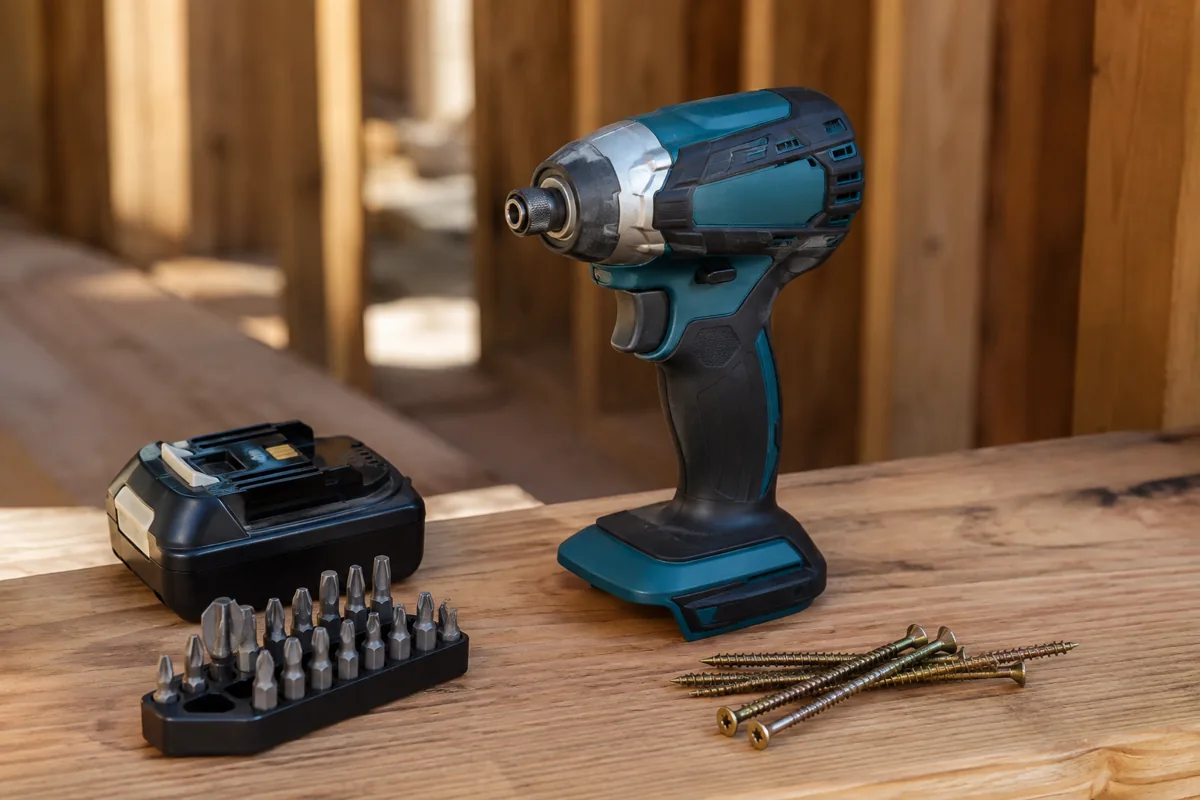
What Torque Ratings Really Mean on an Impact Driver
An impact driver does not deliver torque the way a drill does. A drill applies smooth rotational force and stalls when it runs out. An impact driver spins until it meets resistance, then a hammer and anvil mechanism starts whacking the output shaft rotationally, thousands of times a minute. The rated torque figure describes a peak spike inside that hammering cycle, not something the tool holds continuously.
That matters for two reasons. First, peak numbers can be measured in ways that flatter the tool, so cross-brand comparisons are shakier than they look. Second, and more practically, a fastener does not care about the peak spike alone. It responds to impacts per minute, how quickly the tool ramps up, and how well the mechanism transfers energy instead of bouncing. I have used drivers with lower paper ratings that sank a long structural screw faster than higher-rated ones, purely because they hammered smarter.
The other thing worth understanding: torque you cannot control is a liability. Above a certain point, extra power mostly means you strip a Phillips head faster, cam out of a bit, or twist a deck screw in half. Which is why the drivers I actually reach for have good trigger feel and real speed modes, not just a headline figure.
Torque Classes and Who Each One Suits
Rather than chase individual models, sort the market into classes. This is how I think about it when somebody hands me their budget.
| Class | Rough torque range | Chuck and size | Best suited to | What it struggles with |
|---|---|---|---|---|
| Subcompact 12V | Roughly 900-1,400 in-lb | 1/4 in hex, very short nose | Cabinets, electrical boxes, furniture, overhead work | Long structural screws, big lags |
| Standard 18V/20V | Roughly 1,700-2,200 in-lb | 1/4 in hex | General remodeling, decks, framing screws | Rusted bolts, sustained heavy fastening |
| High-torque 18V/20V | Roughly 2,000-2,300 in-lb, 4-speed | 1/4 in hex, longer body | Deck builds, ledger screws, timber screws | Tight cabinet interiors, delicate trim |
| Impact wrench territory | 3,000 in-lb and well beyond | 1/2 in square drive | Lags, bolts, automotive, structural hardware | Anything needing a hex bit and finesse |
Notice where the line sits. If you genuinely want the biggest torque number money can buy, you have wandered out of impact driver territory and into mid-torque and high-torque impact wrenches. Those use a square drive for sockets, not a 1/4 inch hex collet. People chasing raw grunt for lag bolts and structural connectors often buy the wrong tool category entirely, then wonder why their brand-new driver stalls in a 6 inch lag.
High-Torque 18V Brushless Impact Driver
The flagship brushless drivers from DeWalt XR, Milwaukee FUEL, Makita LXT and Bosch land in the same performance band, so buy into whichever battery platform you already own. Look for four speed modes and a self-tapping screw mode rather than the biggest printed number, because that is what saves fasteners. Kits with two batteries are usually better value than a bare tool plus a separate battery.
Why the Impact Driver With Highest Torque Is Not Always the Right Buy
I keep three drivers in rotation and the high-torque one is not the one I grab most often. It is heavier, longer at the nose, and it is genuinely aggressive on small fasteners. When I am hanging cabinets or setting hinges, that length means bumping the face frame and that power means broken screws.
Weight and length are the trade you make for grunt. A subcompact 12V driver might be an inch and a half shorter and around half the weight of a big high-torque unit. Spend a day driving screws overhead into blocking and you will feel every ounce of that difference in your shoulder. There is also the noise. Impact drivers are loud, and the powerful ones are louder for longer because you are asking them to hammer through heavier resistance. Wear plugs, seriously.
- ✔ Sinks long structural and timber screws without stalling
- ✔ Handles rusted or seized fasteners better than a standard driver
- ✔ Four-speed modes let you dial back for small screws
- ✔ Brushless motors run cooler under sustained heavy loads
- ✘ Heavier and longer, which hurts in tight or overhead work
- ✘ Easy to snap screw heads or strip bits if you stay in high gear
- ✘ Costs noticeably more than a standard-torque driver
- ✘ Still not a substitute for an impact wrench on big lag bolts
Technique: Getting Full Torque Without Wrecking Fasteners
Power without technique just makes expensive noise. A few things I do without thinking anymore, which will get more out of whatever driver you buy.
Pilot holes are not optional in hardwood or near edges. For hardwood, I drill a pilot roughly the diameter of the screw’s shank minus the threads, and for softwood I go slightly smaller so the threads still bite. Within a couple inches of the end of a board, drill the pilot regardless of species. A high-torque driver will happily split the wood before it stalls, because splitting takes less force than stopping that motor.
Start slow, finish slower. On a four-mode driver I begin in mode one or two to get the screw seated straight, jump to mode three or four for the long pull, then drop back down for the last half inch. That last stretch is where heads snap and where you blow through your finish surface.
Push straight, and push harder than feels natural. Cam-out is mostly an axial pressure problem, not a torque problem. Keep the driver in line with the fastener axis and lean into it. A wobbling driver chews the recess, and once the recess is chewed no amount of torque helps you.
Use impact-rated bits and replace them. Regular driver bits are hardened for twisting, not for thousands of shock cycles, and they shatter. Impact-rated bits are formulated to flex slightly instead. For big fastening jobs I also like a bit holder with some torsion relief built in, which noticeably extends bit life. And match the tip properly: a #2 Phillips in a #1 recess strips instantly, no matter what your driver is rated for.
Know when to switch tools. Structural screws over about 4 inches, lag bolts, and anything with a hex head belong to an impact wrench with a socket, or at minimum a hex adapter on a serious driver. I have seen people burn out a good driver in an afternoon trying to do a wrench’s job with it.
Mid-Torque 1/2 in Impact Wrench
If your actual goal is maximum torque for lag bolts, ledger fasteners, trailer hardware, or automotive work, buy a mid-torque impact wrench instead of the biggest driver. The square drive takes sockets, the output is in a whole different league, and mid-torque units are far more manageable than the full-size high-torque monsters most people do not need.
How to Choose Without Overthinking It
Start with the battery platform. Whichever brand’s batteries are already in your shop wins, because the performance gap between flagship brushless drivers is smaller than the cost of a second charger and battery ecosystem. If you are starting fresh, all four of the big names make a driver that will outlast most homeowners.
Then pick the class honestly based on your worst regular job, not your rarest one. If ninety percent of your work is cabinets, trim, and electrical, a subcompact will make you happier every single day. If you build decks and fences, get into the high-torque class. If you are pulling suspension bolts, you need a wrench.
Finally, check the boring details: how bright and useful the LED is, whether the belt hook mounts on your side, how the collet feels with a gloved hand, and whether the kit includes a charger and two decent-capacity batteries. Those are the things that determine whether you enjoy the tool, long after you have forgotten the number on the box.
Frequently Asked Questions
What is the actual highest torque impact driver you can buy? The top 1/4 inch hex drivers from the major brands cluster in roughly the 2,000 to 2,300 in-lb range, and the specific leader shifts every product refresh, so I would not build a purchase around it. Anything advertised well above that band is almost certainly an impact wrench with a square drive rather than a hex-collet driver.
Can I use an impact driver instead of an impact wrench for lag bolts? For shorter lags in softwood with a proper pilot hole, a high-torque driver with a hex-shank socket adapter will usually manage. For long lags, hardwood, or anything seized, use an impact wrench. Driving a wrench’s workload through a driver’s anvil and collet is how you shorten the tool’s life.
Does higher torque mean I will strip more screws? Only if you use it carelessly. Stripping comes mostly from insufficient forward pressure, a mismatched or worn bit, and staying in the highest speed mode all the way to seating. A powerful driver with good mode control and a fresh impact-rated bit is easier on fasteners than an underpowered one you have to lean on and fight.
Buy for the work in front of you, keep sharp impact-rated bits in the pouch, and drill your pilots. That combination beats chasing spec sheets every time.
Check prices on Amazon →