Key takeaways
- What actually matters when you pick an impact driver for framing, from torque class and drive modes to pilot holes and the bit habits that save screw heads.
What's inside
As an Amazon Associate I earn from qualifying purchases. This post may contain affiliate links at no extra cost to you.
Framing is where an impact driver for framing gets asked to do things the marketing copy never imagined. The tool that zips 3-inch deck screws now has to sink 4-1/2 inch structural screws into kiln-dried Douglas fir, load a joist hanger with approved screws, and pull a rim board tight without rounding out a single star recess. I have watched a new compact driver hit thermal shutdown halfway through a ledger because somebody picked the tool that felt nicest in a pouch instead of the one built for long fasteners.
This is not a list of what spins fastest on drywall screws. It is about which class of tool survives structural fasteners, which specs matter when you are standing on a plank, and the technique that keeps bits and screw heads in one piece. I will name tool lines, because those are real, but I am not going to pretend I put a specific part number on a torque transducer.
As an Amazon Associate we earn from qualifying purchases at no extra cost to you. Product prices and availability are accurate as of the date shown and are subject to change.


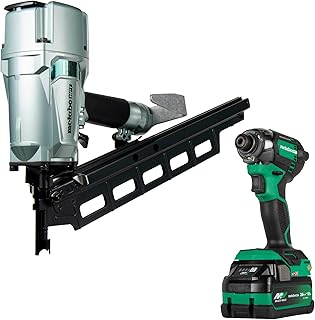
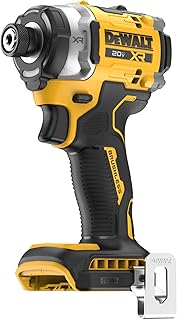
| Tool class | Torque class | Best framing use | Watch out for |
|---|---|---|---|
| Compact brushless impact driver | Roughly 1,200-1,800 in-lbs | Hangers, ties, blocking, sheathing | Bogs and heats up on 4 in. plus screws |
| Full-size high-torque impact driver | Roughly 1,800-2,400 in-lbs | Structural screws, ledger screws | Longer head, tight in narrow bays |
| Mid-torque impact wrench | Rated in ft-lbs, not in-lbs | Lag screws driven with a socket | Needs an adapter for 1/4 in. hex bits |
| High-torque 1/2 in. impact wrench | Highest class | Bolted ledgers, big lags, anchor nuts | Will twist small fasteners right off |
| Cordless drill/driver | Clutch limited | Pilot holes, countersinks, hole saws | Reaction torque on long screws |
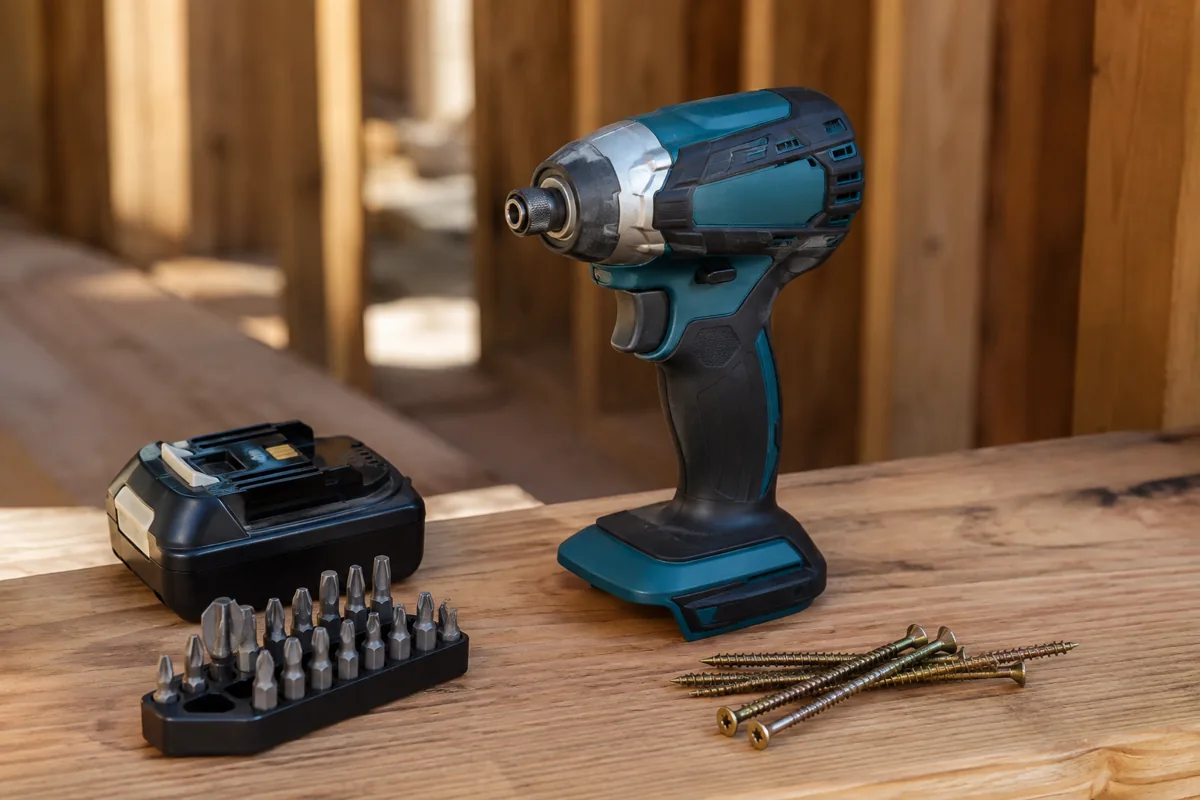
Why I reach for an impact driver for framing instead of a drill
A drill in low gear driving a 5-inch timber screw is a wrist injury waiting to happen. When the threads bind, all that reaction torque goes into the housing, then into your arm, then into whatever you are balanced on. An impact driver breaks the same work into thousands of rotational blows per minute, so the anvil soaks up most of that kick internally. The screw goes home and your wrist stays where it belongs.
The trade is control. There is no clutch and almost no depth feedback, and full trigger in soft SPF will bury a head or shear it. I keep a drill/driver on the belt for pilot holes, countersinks, and anything I want to stop dead at flush. The impact does the muscle work, the drill does the finesse.
Specs that matter, and specs that are noise
Peak torque numbers come out of a lab fixture, not a stud bay, so treat them as a class indicator only. Compact drivers live in the 1,200 to 1,800 in-lbs neighborhood; 1,800 and up is where long structural screws stop being a fight. What I actually shop for is mode selection. A three or four mode driver with a genuine low speed setting is worth more on framing than another 200 in-lbs, because low mode is how you seat a fastener without snapping it.
After that: a one-handed bit sleeve that does not gum up with sawdust, LEDs placed so the tool does not throw its own shadow into the hole, a head short enough to work between joists on 16-inch centers, and a belt hook you can swap sides. Brushless is a given across current DeWalt XR, Milwaukee FUEL, and Makita LXT lines, so that alone tells you nothing.
Full-size brushless impact driver kit for structural screws
If you buy one driver for framing, make it the full-size high-torque model with at least three speed modes and two decent capacity batteries in the kit. The compact version is nicer to carry and will let you down on the first run of 6-inch screws.
Technique: long structural screws without the carnage
Most structural screws in the LedgerLok, TimberLok, and HeadLok family are engineered to go into SPF with no pilot hole, and in that wood they do. Dry Douglas fir, old framing, and anything within about two inches of an end or edge is a different animal. There I drill a pilot just under the unthreaded shank diameter, deep enough to clear the binding zone. Ten seconds a hole beats a split rim joist.
My driving sequence is slow, fast, slow. Start in low mode with the bit seated and the tool square to the screw axis, and let the tip bite before you commit. Roll into full trigger through the middle of the run. Feather off in the last half inch so the head lands flush instead of crushing into the wood or shearing at the shank. Short hanger screws stay in low mode start to finish.
Two things kill bits: angle and fatigue. Five degrees off axis and the recess starts rounding at the first hard band of grain. Use impact-rated bits, keep the holder as short as the job allows because long extensions flex and cam out, and retire a bit when the drive flutes look polished. A worn bit ruins fasteners faster than a weak tool ever will.
Mid-torque cordless impact wrench for lags and bolts
Once lag screws or bolted ledger connections are in the plan, a mid-torque wrench pays for itself in an afternoon. Stay on the battery platform you already own so you are not feeding a second charger.
Batteries, heat, and surviving a full day
Long fasteners pull hard current, and current is heat. A small compact pack on a run of 6-inch screws sags, trips thermal protection, and leaves you standing there. On framing I run mid or high capacity packs, keep a spare out of direct sun, and rotate before a pack gets hot rather than after. Batteries baking on a truck dash all afternoon age fast and never fully come back.
There is still a place for a 12-volt driver here. Hurricane ties, straps, blocking, and tight bay work all go quicker with a short tool. It is a second driver, though, not the only one.
- ✔ Drives long structural screws without wrecking your wrist
- ✔ Short head reaches into bays a drill cannot
- ✔ One battery platform covers hangers, blocking, and sheathing
- ✔ Multi-mode trigger lets you seat fasteners at low speed
- ✘ No clutch, so heads get buried or snapped if you rush
- ✘ Loud enough that hearing protection is not optional
- ✘ Hard on cheap bits and on small fasteners
- ✘ No substitute for a nailer on schedule-driven nailing
Impact-rated driver bit and holder set
Buy impact-rated bits in multiples of whatever star or square drive your structural screws use and keep spares in the pouch. A rounded bit wrecks fastener heads, and a wrecked head buried in a ledger is a bad afternoon.
Questions I get on site
Can an impact driver replace a framing nailer? No, and I would not want it to. Most prescriptive framing schedules call for nails, and a nailer is far faster on repetitive work. Screws earn their spot where you need withdrawal strength or a connection you can take apart: ledgers, connectors with approved screws, blocking, temporary bracing. Check the plan or the connector manufacturer before you substitute anything.
Do I need an impact wrench too? If lag screws or bolted connections are in your work, yes. A 1/4-inch hex driver with a socket adapter will manage a few lags and then start complaining. A mid-torque wrench makes that job routine and doubles for anchor nuts and mudsill hardware.
Why do my star bits keep stripping? Usually angle, sometimes a bit that is not impact-rated, occasionally too much speed in the first inch. Square the tool to the screw, start in low mode, push hard enough to keep the bit seated, and change bits before they look bad instead of after.
Short version: buy the full-size driver, feed it real batteries, keep impact-rated bits in the pouch, and let low mode handle the delicate part. That combination will take ledgers, hangers, blocking, and every long screw a framing job throws at it, and it will still be running when the compact driver in the next guy’s bags quits.
Check prices on Amazon →