What's inside
As an Amazon Associate I earn from qualifying purchases. This post may contain affiliate links at no extra cost to you.
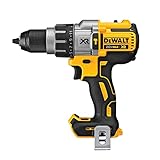
Exterior brick is not especially difficult to drill, but it is hard on drills and bits. The right cordless hammer drill makes the job controlled and repeatable; the wrong one overheats, drains a small battery quickly, or leaves a hole too large and ragged for the anchor. For most homeowners, the best choice is a 18V or 20V brushless hammer drill with a side handle, two-speed gearbox, and a clutch that can be turned off in hammer mode.
As an Amazon Associate we earn from qualifying purchases at no extra cost to you.


What we cover
What makes a good cordless hammer drill for brick
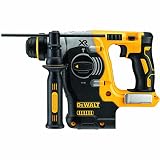
Brick drilling needs impact energy as well as rotation. A regular drill can sometimes make a small hole in soft brick, but it relies on cutting alone and will work slowly. A hammer drill adds rapid axial taps that fracture the masonry ahead of the bit. This is different from an SDS rotary hammer, which delivers substantially more impact energy and is better for repeated or large holes.
Look for a brushless motor, a two-speed mechanical gearbox, and a removable side handle. A 1/2-inch chuck is useful if you also drill wood and metal, although a 3/8-inch chuck is adequate for common wall-anchor holes. A battery around 4.0Ah gives a useful balance of runtime and weight. A compact 2.0Ah pack is easier to hold overhead but may run down quickly when drilling several holes.
For a general-purpose tool, compare 18V brushless hammer drill kits from established tool platforms. Buying a bare tool only makes sense if you already own compatible batteries and a charger.
The best drill type for the job
| Drill type | Best use | Brick performance | Main drawback |
|---|---|---|---|
| Compact 12V hammer drill | One or two small holes for light hardware | Acceptable in soft brick | Limited runtime and impact force |
| 18V or 20V brushless hammer drill | Most household mounting jobs | Good for holes up to about 1/2 inch | Heavier and more expensive |
| 18V or 20V premium hammer drill | Frequent drilling and larger anchors | Fast, with better cooling and control | Cost and weight |
| Cordless SDS-plus rotary hammer | Many holes, deep holes, or holes above 1/2 inch | Excellent | Overkill for occasional light-duty work |
A compact 12V tool is fine for mounting a small number plate, doorbell, or lightweight light fixture when the brick is soft and the holes are small. It becomes frustrating in hard-fired brick, old dense brick, or mortar joints packed with aggregate. An 18V or 20V hammer drill is the sensible middle ground for most exterior work.
If you need dozens of holes, are installing masonry anchors larger than 1/2 inch, or are drilling into concrete rather than brick, choose a cordless SDS-plus rotary hammer kit. Its hammer mechanism is much faster, but it is bulkier and less pleasant for ordinary screw-driving.
Power, controls, and battery considerations
Published maximum RPM is less important than low-speed control and impact rate. Use first gear for larger bits and harder brick, typically below about 600 RPM. Second gear is useful for small holes when the material drills easily. A variable-speed trigger lets you start without skating the bit across the wall.
Hammer drills often advertise impact rates around 20,000 to 35,000 blows per minute. That number does not tell the whole story: impact force, gear strength, bit quality, and the operator’s pressure matter just as much. More force is not always better. Excessive pressure can glaze a cheap bit, stall the motor, or cause the bit to punch through the back of a thin brick with a large chip.
A side handle is not an optional luxury. It keeps the bit square and reduces wrist torque when the bit catches. A belt hook and work light are convenient, but they should rank below a solid chuck, good battery availability, and a comfortable grip. If you already use one battery platform, staying with it is usually cheaper than switching brands for a small gain in drilling speed.
Use the right masonry bit and anchor
Buy carbide-tipped masonry bits, not general-purpose twist bits. Match the bit diameter to the anchor manufacturer’s specification. For common plastic expansion anchors, holes are often 1/4 inch, 5/16 inch, or 3/8 inch, but the required size varies. The anchor package is the authority.
For a clean 1/4-inch hole, a basic carbide masonry bit is usually enough. A premium bit can stay sharp longer when drilling multiple holes, but the cheaper option is perfectly reasonable for two or three holes. Replace a bit when its carbide edge is rounded, the shank is bent, or drilling speed has noticeably collapsed. A blunt bit creates heat rather than useful cutting action.
Choose exterior-rated screws and anchors. Ordinary indoor zinc-plated hardware can rust quickly in exposed locations. Sleeve anchors, masonry screws, and heavy-duty expansion anchors each have different load limits. Do not hang a heavy planter, awning, or railing from a small plastic anchor simply because the hole fits.
How to drill exterior brick cleanly
First, locate the hole in the brick rather than the mortar when the brick is sound and the load matters. Brick usually holds a fastener more securely, while mortar can crumble or provide a shallow, unreliable bite. However, mortar may be preferable for a very light item or when you want to avoid drilling a visible brick face. Never drill close to a brick edge; keep the hole at least 1 inch from an edge when the layout allows.
Check for electrical cables and plumbing before drilling. Mark the point with a pencil or small piece of tape, then use a level to mark multiple holes. Start in regular drilling mode at low speed to create a shallow dimple. Switch to hammer mode once the bit is centered. Keep the drill perpendicular to the wall and use firm, steady pressure rather than leaning your full weight into it.
Withdraw the bit every few seconds to clear dust, especially in holes deeper than 1 inch. Stop if the bit becomes too hot to touch. For a typical anchor, drill about 1/4 inch deeper than the anchor’s embedment, then vacuum or blow out the dust. Wear eye protection; brick dust and broken carbide fragments are unpleasant and hazardous.
Problems that waste time
If the bit spins but barely advances, the drill may be in regular mode, the bit may be worn, or the brick may be unusually hard. If the hole is oversized, the bit likely wandered, the chuck was loose, or the drill was held at an angle. A loose anchor in an oversized hole should not be “fixed” with extra screw tightening; move the hole or use an anchor specifically rated for the larger diameter.
Chipping around the exit is common when drilling through thin brick or veneer. Reduce pressure as the bit nears breakthrough, and use a shorter bit if its length permits. For repeated heavy masonry work, stop asking a standard hammer drill to behave like a rotary hammer. The cheaper tool is fine for occasional small holes, but the right upgrade prevents damaged brick, burned bits, and failed anchors.