What's inside
As an Amazon Associate I earn from qualifying purchases. This post may contain affiliate links at no extra cost to you.
Concrete pavers are hard, brittle, and often thinner than a poured slab. The right bit makes a clean hole with less chipping; the wrong one can skate across the surface, overheat, or crack a paver. For most small holes for masonry screws or plastic anchors, a carbide-tipped masonry bit used in hammer mode is the practical choice. Choose the bit to match the anchor and drill, and use a steady pace rather than leaning hard on the tool.
As an Amazon Associate we earn from qualifying purchases at no extra cost to you.



What we cover
Our Top Picks
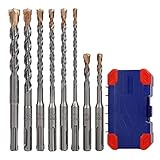
 DYRECELVE 12-Piece Masonry Drill Bit Set and Concrete5.51 x 2.95 x 0.64 inches0.45 PoundsCheck on Amazon


Choose the bit for the hole
For ordinary holes about 1/4 to 1/2 inch in diameter, buy a carbide-tipped masonry bit in the required size. A standard round-shank bit fits a regular drill chuck; an SDS-Plus bit fits an SDS-Plus rotary hammer and cannot be clamped directly in a standard chuck. Check your tool before ordering. A bit that looks close in size is not a substitute: anchors need the hole diameter specified on their packaging.
A basic masonry bit is often enough for a handful of holes in pavers. If you are drilling many holes, or your cordless hammer drill struggles, consider a rotary hammer and bits designed for it. Rotary hammers use a different impact mechanism and generally drill masonry faster with less pressure from the user. They cost more and can be unnecessarily aggressive on thin or fragile pavers.
Browse carbide-tipped masonry bits with round shanks if you have a standard drill chuck. For an SDS-Plus rotary hammer, use the matching shank instead of trying to adapt a regular bit.
Bit options at a glance
| Bit type | Best for | Trade-off |
|---|---|---|
| Basic carbide masonry bit | A few small anchor holes | Slower in hard concrete; wears faster under heavy use |
| Higher-quality carbide masonry bit | Repeated holes or tougher aggregate | Costs more, but may stay sharp longer |
| SDS-Plus masonry bit | A compatible rotary hammer and multiple holes | Requires an SDS-Plus tool; more power can chip thin pavers |
| Diamond core bit | Larger, cleaner holes where the bit and tool are suitable | Different technique and higher cost; not the default for small anchors |
Match the bit to the tool and task
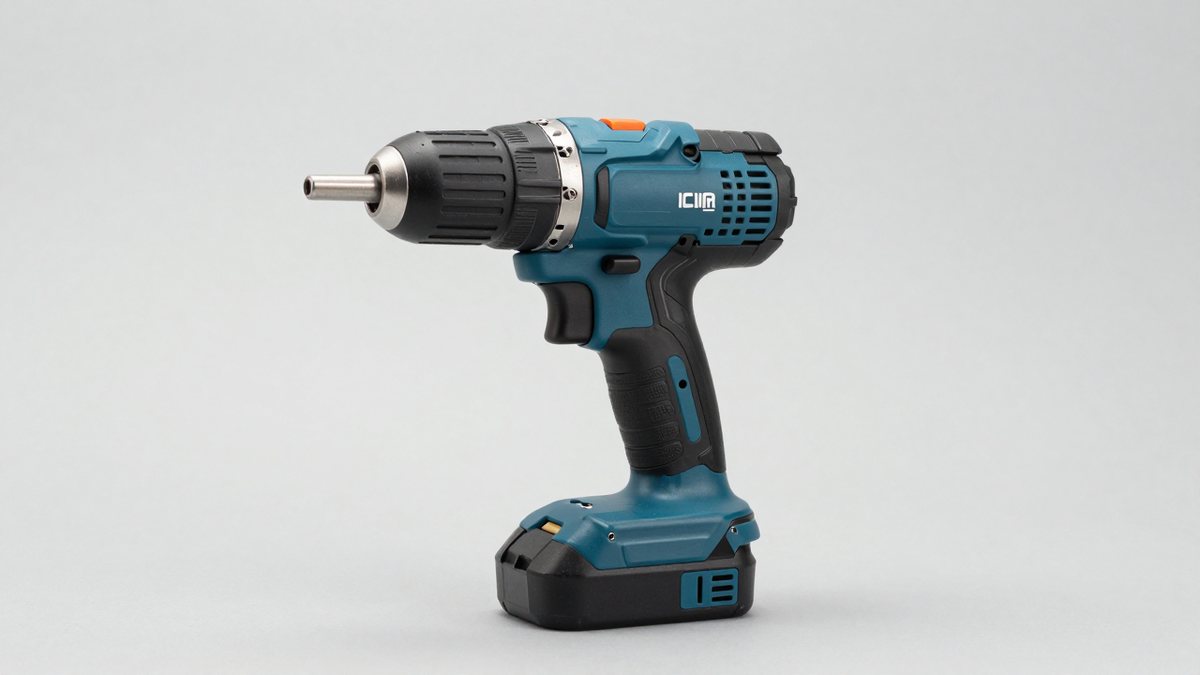
A cordless hammer drill is usually suitable for a few small holes in sound concrete pavers. Use a masonry bit rated for rotary hammer or hammer-drill use, and select the hammer setting. A regular drill without hammer action may eventually make a small hole, but it can be slow and can burn through a cheap bit. An impact driver is not the right tool for drilling these holes: its impacts rotate the bit rather than drive it forward into masonry.
For a long run of holes, large diameters, or very hard concrete, an SDS-Plus rotary hammer and a suitable carbide bit can save time. The trade-off is control. Pavers may be only around 2 inches thick, and aggressive hammering can cause breakout on the underside or split a weak paver. If the paver is thin, loose, cracked, or decorative, start gently and consider drilling without hammer action for the first few millimeters to establish the opening, if your tool allows it.
Compare SDS-Plus carbide masonry bits when you already own a compatible rotary hammer or are planning a larger batch of holes.
Drill without cracking the paver
First, check what is beneath the paver. Avoid buried utilities, irrigation lines, and any area where the hole could reach a cable or pipe. If the paver is not firmly supported, lift it and set it on a stable bed or board before drilling; a paver rocking on sand is more likely to crack. Wear safety glasses, and use hearing and dust protection. Concrete dust contains respirable silica, so keep it down with a suitable dust-control method rather than blowing it into the air.
Mark the center and keep the bit perpendicular. Start at low speed with light pressure until the carbide tip forms a shallow seat; this limits wandering and surface chips. Then use hammer mode at a controlled speed. Let the tool do the work. For a small anchor hole, pause every few seconds to withdraw the bit and clear dust from the flutes. Packed dust increases friction and slows cutting. If the bit gets hot, stop and let it cool naturally; do not quench it in water.
Drill to the depth specified for the anchor, usually a little deeper than the anchor itself so dust does not prevent it from seating. A piece of tape on the bit is a simple depth marker. Avoid drilling close to an edge: as a practical starting point, leave at least 1 inch from an edge for small holes, and more for larger holes or brittle pavers. If the application allows, a larger edge distance reduces the chance of splitting.
Common problems and what they mean
If the bit wanders, the surface may be smooth, the starting speed too high, or the bit worn. Use a fresh bit and establish a shallow seat before increasing speed. If drilling suddenly slows, pull the bit out and clear the flutes; continuing to press harder usually adds heat rather than useful cutting. A dull or undersized bit can also leave an anchor hole too tight. Do not force an anchor into a hole that does not meet its specified diameter.
Chipping around the entry point can come from excessive pressure, a worn bit, or hammering too aggressively from the start. Reduce pressure and begin without hammer action if possible. Breakout on the underside is a warning that the paver is too thin for the chosen method or that the bit has gone too deep. Stop before the bit reaches the bottom, or drill the paver separately from the supporting material when the installation permits.
What to buy
For a few 1/4-inch anchor holes, a single correctly sized carbide masonry bit is often a better buy than a large bargain set. For several hole sizes, a small set can be convenient, but check that each bit is intended for concrete and fits your drill. If you need many holes, choose a durable bit compatible with a rotary hammer rather than repeatedly replacing inexpensive bits. See carbide masonry bit sets in common anchor sizes and compare the listed diameters with the anchors you plan to install.
Related guides
More from Amazon
Programs that pair well with the guide above. Offers and eligibility are set by Amazon and may change.
A free business account with business pricing and bulk-buying tools for work, shop or home office.
Create a business accountFree shipping on eligible items, Prime Video and more. Eligible new members can start with a free trial.
Start a Prime free trialAudiobooks and podcasts to listen to on the go. Eligible new members can start with a free trial.
Try Audible freeAd-free music streaming. Eligible new subscribers can start with a free trial.
Try Music Unlimited freeAs an Amazon Associate we earn from qualifying purchases.