Key takeaways
- For hanging shelves and assembling furniture, most of what tool reviews argue about is irrelevant.
What's inside
As an Amazon Associate I earn from qualifying purchases. This post may contain affiliate links at no extra cost to you.
If your drill’s hardest job this year is a curtain rail and a flat-pack wardrobe, most drill reviews are not written for you. Here is the short version.
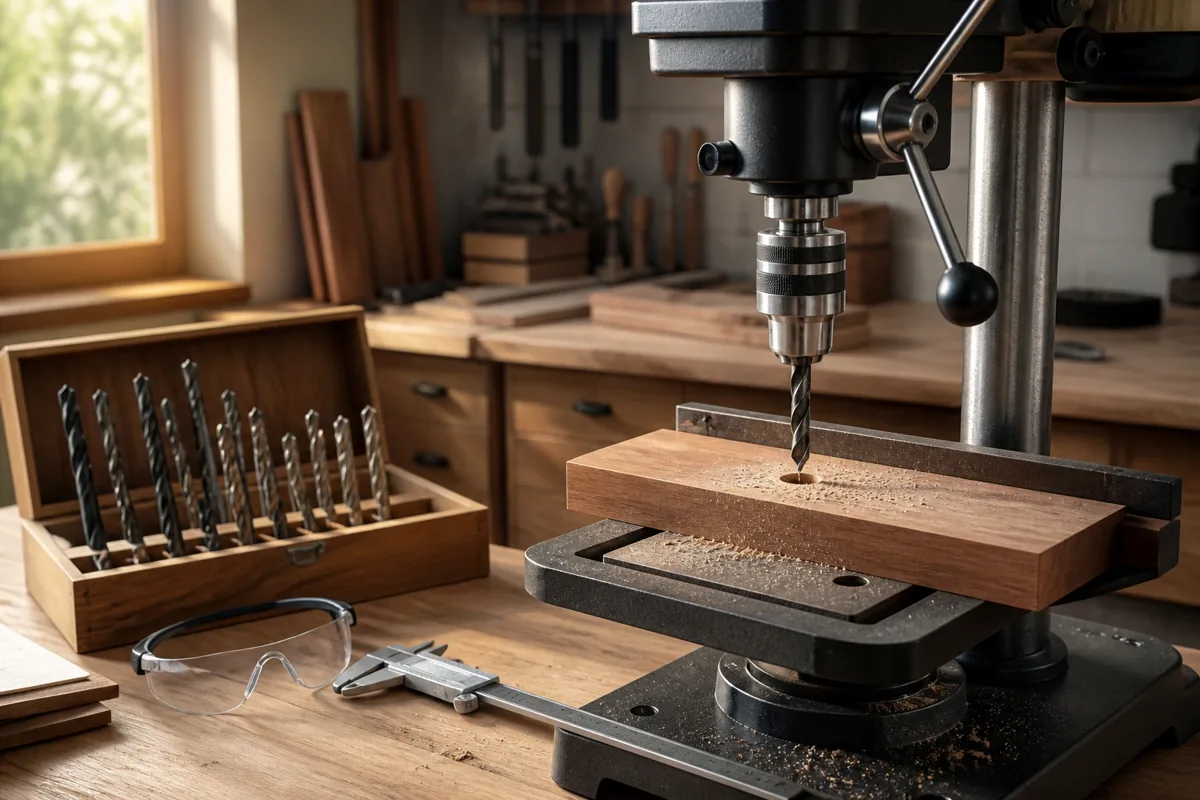
Almost every “best drill” roundup is really a list of the best drills for somebody who drills for a living. Those articles weigh peak torque, run time under continuous load, and whether the housing survives a drop off a scaffold, because that is what matters when the tool is how you pay rent. For a house, the deciding factors are close to the opposite: how it feels at the top of a ladder with one hand on the rail, whether the clutch stops you punching a screw straight through the back of a cabinet, and whether you can still buy a battery for it in four years.
As an Amazon Associate we earn from qualifying purchases at no extra cost to you. Product prices and availability are accurate as of the date shown and are subject to change.


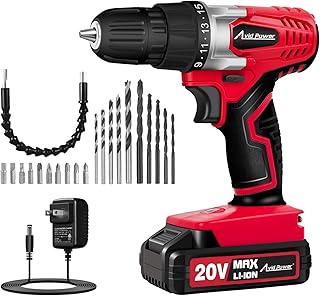


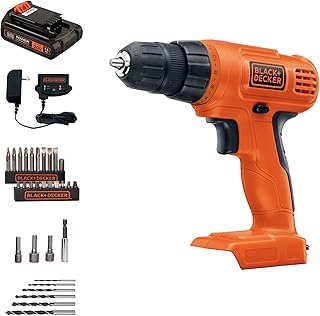
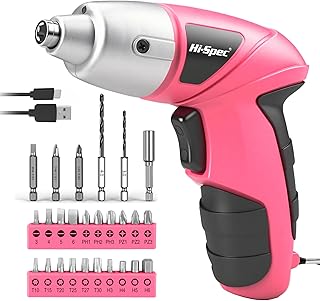
I have handed a lot of drills to people who only ever need one. The ones that actually get used are light, live somewhere findable, and have a charged pack in them. The ones that end up in the back of a cupboard are the big heavy kits somebody bought because the box promised more.
What Actually Matters for Home Use
Four things, roughly in this order. If you have to give something up to stay in budget, give up from the bottom of the list, never from the top.
Weight and size. You will hold it above your head. A compact drill is more pleasant and more than powerful enough. Weight is the one specification you feel every single time you pick the tool up, and it is the one nobody checks. A compact drill/driver with a small flat battery can be held and aimed one-handed; a full-size one with a big pack hanging off the bottom feels like twice the tool after two minutes of overhead work, and your holes start wandering because your arm is tired, not because the drill is weak. Size matters in the other direction too: a short nose-to-tail head is what lets you get a screw in inside a kitchen carcass, between studs, or under a stair tread.
Clutch settings. Prevents you burying screws through thin material or stripping soft screws. Fifteen or more is plenty. This is the feature that separates a drill that helps you from a drill that damages your furniture. Chipboard, MDF and cabinet backs have almost no holding power, and brass or soft-plated screws strip if you keep pushing. A clutch that clicks out and stops turning is a mechanical apology you never have to make. Set it low, drive one test screw into offcut or a hidden spot, and only step it up if it clicks before the head is seated.
Two speed settings. Low for driving, high for drilling. Almost every drill has this, and almost nobody moves the switch. Low gear turns a few hundred rpm with far more control, which is what you want for every screw and for anything larger than a pencil-thick hole. High gear is several times faster and belongs on small twist bits in wood and metal. Check that the selector on the top of the tool moves cleanly with your thumb, because a stiff one will never get used.
A decent chuck. Keyless, ideally all-metal, that grips a small bit without letting it wobble. A 3/8″ chuck is enough for a house; a 1/2″ chuck only earns its extra bulk if you plan on big hole saws or spade bits. Test one before you accept it: chuck a long, known-straight bit, run the drill slowly, and watch the tip. A good chuck shows a tiny circle. A bad one shows a visible orbit, and that orbit is why cheap drills seem to wander off your pencil mark. Plastic-sleeved chucks on the lowest-priced tools tend to loosen under vibration, which shows up as a bit that creeps out mid-hole.
Then, If the Budget Allows: Battery, Kit and Light
Batteries are the part that dies first, so buy into a platform whose packs you can still find on a shelf years from now. That means a brand with a wide tool range and shared batteries rather than a no-name kit whose replacement packs vanish with the listing. Two small packs beat one large pack for home use: one lives in the tool, one lives on the charger, and neither adds weight you have to hold up. Big high-capacity packs are for continuous work you will not be doing.
What comes in the box matters more than the tool’s spec sheet at this level. A kit with two batteries, a charger and a case is usually cheaper than assembling the same thing later, and the case is the reason the drill and its bits stay together instead of migrating around the house. A worklight in the nose is not a gimmick either, given that most home drilling happens in a cupboard, under a sink or behind a wardrobe.
How to Trade One Against Another
Weight beats power. Clutch beats speed. Battery availability beats brand prestige. Kit contents beat a discount on a bare tool. If you are choosing between two drills and one is lighter with a good clutch while the other claims bigger numbers, take the lighter one and do not think about it again. The only trade worth reversing is masonry: if your walls are solid, hammer function outranks a small weight saving.
What Does Not Matter
- ✘ Peak torque figures — you will never load the tool that hard
- ✘ Three-speed gearboxes
- ✘ 60V or 40V platforms
- ✘ Tool-tracking connectivity
- ✘ Brushless versus brushed, if you use it under ten times a year
None of these are bad; they are just not the reason to pick one drill over another for a house. Brushless motors genuinely run cooler, last longer and squeeze more out of a pack, so if two kits are close in price, take the brushless one. What you should not do is stretch your budget past a two-battery kit to get a brushless badge on a tool that will run for ten minutes a year. The same logic applies to the big voltage platforms: they exist for chainsaws, mowers and mixing paddles, and their weight is a penalty everywhere else.
Compact cordless drill kits
Two batteries, a charger, a case, 15+ clutch settings. Somewhere between $80 and $150 buys everything a house needs.
Budget Guidance: What Separates Good From Bad in Each Band
| Budget | What you get | Verdict |
|---|---|---|
| $60–90 | Brushed compact, small battery | Fine for very occasional use |
| $100–150 | Brushless compact, 2 batteries | Sweet spot for a home |
| $150–220 | Brushless hammer drill | Only if you have masonry walls |
| $220+ | Professional tier | Unnecessary for home use |
In the entry band the difference between a good buy and a bad one is almost never the motor. It is the chuck and the pack. A good cheap drill comes from a brand that sells batteries separately and has a metal chuck that holds a small bit straight. A bad cheap drill has a plastic chuck, a single tiny pack, and no way to replace it. Suits: someone hanging pictures and assembling furniture a few times a year. Skip it if you already know you have masonry walls or a yard.
The middle band is where most homeowners should stop. Good picks here give you two batteries, a real clutch range, a solid all-metal chuck and a case, on a platform that also sells a sander, a jigsaw or a hedge trimmer if you ever want one. Bad picks in this band are big heavy tools sold on torque numbers, or bare tools priced like kits. Suits: anyone who owns their home and expects to do shelves, blinds, flat-pack, minor repairs and the occasional small project.
Above that, you are paying for hammer function and heavier build. Worth it if your walls are brick, block or concrete, because that is a capability you cannot fake. Not worth it as a general upgrade: a hammer drill is heavier and longer than the plain version of the same tool, and the extra bulk shows up on every non-masonry job.
At the top tier you are buying durability under daily load, dust and vibration. That is a real thing, and it is aimed at somebody whose income depends on the tool starting on Monday. For a house it is unnecessary. If you have that much to spend, buy a mid-range drill and put the rest into good bits, anchors and a second pack.
Do You Need Hammer Function?
Only if your walls are brick, block or concrete. In a timber-framed house with plasterboard, a plain drill/driver is all you will ever use. If you do have masonry, the hammer version is worth the small premium. Find out before you buy rather than after: tap the wall and listen for hollow versus solid, look at what the exterior is built from, and check whether existing fixings went into plugs or into timber. If you are unsure, the safe bet is the hammer version, because a hammer drill still works perfectly as a normal drill with the mode switch set to rotation only. What a hammer drill will not do is replace a rotary hammer for drilling many large holes in concrete, and for a house you should be renting that rather than buying it.
The Mistakes That Cost People the Most
Buying a bare tool by accident. Listings for tool-only bodies sit right next to kits and look like a bargain. If the price seems too good, check for the words “tool only” and count the batteries in the photo.
Leaving the clutch on maximum. The clutch cannot protect anything if it is set past the point where it releases. It is a dial, not a decoration, and it is worth turning down every time you switch materials.
Using a drill where an impact driver belongs. Long structural screws, decking and fence rails will cook a drill’s gearbox and your wrist. If that is the work in front of you, the tool is wrong, not weak.
Neglecting the chuck and the bits. Blunt bits and a grit-filled chuck are behind most “this drill has no power” complaints. Blow the jaws out nose-down, and retire bits with rounded cutting edges instead of pushing harder.
Storing it flat in a hot garage. Lithium packs hate being left empty and hate heat. Charge it before it goes away, and keep it indoors if you can.
Buy These at the Same Time
- ✔ A set of brad point bits for wood and HSS bits for metal
- ✔ Impact-rated driver bits, even for a drill — they last longer
- ✔ Wall plugs and anchors in the sizes your walls need
- ✔ A small stud finder if your walls are timber framed
The drill is rarely what stops a job. Missing consumables are. You need the anchor that matches your wall type, the bit diameter that matches the anchor, and a driver tip that fits the screws you actually own. Buy a small assortment now, keep it in the drill case, and top up the sizes you use rather than buying a new mega-set every time. One more thing worth having on hand: a spare pack of the two or three anchor sizes you find yourself using most, since those are always the ones the box runs out of first.
Drill bit and anchor kits
Bits, anchors and driver tips in one box. Buying these separately later is how projects stall on a Sunday.
FAQ
Which platform for a homeowner? Ryobi ONE+ if you also have a yard; DeWalt or Makita if you might get more serious later. The deciding question is what else you will eventually plug the same batteries into.
12V or 18V? A 12V compact handles furniture, curtain rails, shelves and light repairs in timber, and it is noticeably smaller in the hand. An 18V kit gives headroom for hole saws, masonry and a wider range of shared tools. If you only ever buy one drill, 18V compact is the safer default.
Do I need an impact driver too? Only if you build decks or fences. For indoor jobs a drill is enough, and the clutch you lose on an impact driver is a feature you actually want indoors.
How long will the batteries last? Three to five years, less if stored fully flat or in a hot garage. Buy into a platform that still sells replacements and the tool outlives its first set of packs.
Keep it simple: a light compact kit with two batteries, a proper clutch, a metal chuck, and hammer function only if your walls demand it. Spend what is left on bits and anchors, and the drill will do everything a house asks of it.
See home drill kits →