What's inside
- Top 3 Picks
- Quick Comparison
- How We Chose
- 1. Rockville SS10P 10″ Slim Under-Seat Powered Car/Truck Subwoofer – Best Overall
- 2. LUVUMVLT 1200W 10″ Slim Under-Seat Powered Subwoofer and Amp Package – Best Budget Complete Package
- 3. Planet Audio P10AW 10 Inch 1000 Watt Powered 4 Ohm Under-Seat Car Subwoofer – Best Premium
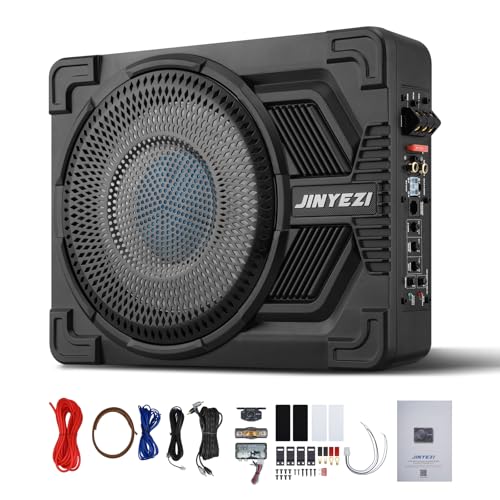
- 4. JinYeZi 10″ 1200W Under Seat Subwoofer with Amp, Class D Power Amplifier – Best for Efficient Class D Power
- 5. FOLTUSYMY 1200W 10″ Slim Under-Seat Powered Car Subwoofer – Best Budget for High-Level Input Installs
- 6. Planet Audio P8AWK 8 Inch Under Seat Powered Car Subwoofer with 8 AWG Wire Kit – Best for Tight Spaces and Easiest Install
- 7. Seventour 10″ 800W Under Seat Car Subwoofer and Amp Package – Best Budget for Musical Bass
- 8. Seventour 10″ 1200W Under Seat Car Subwoofer and Amp Package with RGB LED Light – Best for Show Lighting and Extra Headroom
- Top 3 Picks
- Quick Comparison
- How We Chose
- 1. Rockville SS10P 10″ Slim Under-Seat Powered Car/Truck Subwoofer – Best Overall
- 2. LUVUMVLT 1200W 10″ Slim Under-Seat Powered Subwoofer and Amp Package – Best Budget Complete Package
- 3. Planet Audio P10AW 10 Inch 1000 Watt Powered 4 Ohm Under-Seat Car Subwoofer – Best Premium
- 4. JinYeZi 10″ 1200W Under Seat Subwoofer with Amp, Class D Power Amplifier – Best for Efficient Class D Power
- 5. FOLTUSYMY 1200W 10″ Slim Under-Seat Powered Car Subwoofer – Best Budget for High-Level Input Installs
- 6. Planet Audio P8AWK 8 Inch Under Seat Powered Car Subwoofer with 8 AWG Wire Kit – Best for Tight Spaces and Easiest Install
- 7. Seventour 10″ 800W Under Seat Car Subwoofer and Amp Package – Best Budget for Musical Bass
- 8. Seventour 10″ 1200W Under Seat Car Subwoofer and Amp Package with RGB LED Light – Best for Show Lighting and Extra Headroom
As an Amazon Associate I earn from qualifying purchases. This post may contain affiliate links at no extra cost to you.
The best under-seat car subwoofer for most buyers is the Rockville SS10P, a 10-inch slim powered sub that slides under a front seat, accepts high-level or low-level signal, and adds usable low end to a factory stereo without stealing cargo space. It suits drivers who want a recognizable car-audio brand, a single-box install, and bass that fills the gap between door speakers and nothing at all. If budget decides the purchase, the Seventour 10-inch 800W package delivers the same basic idea — driver, enclosure, and amplifier in one unit — for less money and with less output headroom. If you want the most established name and a true 4-ohm load, the Planet Audio P10AW is the premium pick. Everything below is organized around the four things that actually determine whether an under-seat sub works in your car: how tall the enclosure is, how much real power it makes, how simple the wiring is, and how much control you get over the sound once it is bolted down.
What we cover
- Top 3 Picks
- Quick Comparison
- How We Chose
- 1. Rockville SS10P 10″ Slim Under-Seat Powered Car/Truck Subwoofer – Best Overall
- 2. LUVUMVLT 1200W 10″ Slim Under-Seat Powered Subwoofer and Amp Package – Best Budget Complete Package
- 3. Planet Audio P10AW 10 Inch 1000 Watt Powered 4 Ohm Under-Seat Car Subwoofer – Best Premium
- 4. JinYeZi 10″ 1200W Under Seat Subwoofer with Amp, Class D Power Amplifier – Best for Efficient Class D Power
- 5. FOLTUSYMY 1200W 10″ Slim Under-Seat Powered Car Subwoofer – Best Budget for High-Level Input Installs
- 6. Planet Audio P8AWK 8 Inch Under Seat Powered Car Subwoofer with 8 AWG Wire Kit – Best for Tight Spaces and Easiest Install
- 7. Seventour 10″ 800W Under Seat Car Subwoofer and Amp Package – Best Budget for Musical Bass
- 8. Seventour 10″ 1200W Under Seat Car Subwoofer and Amp Package with RGB LED Light – Best for Show Lighting and Extra Headroom
Our Top Picks
 Planet Audio P10AW 10 Inch 1000 Watt Powered10 Inch without Wire Kit13.58 x 10.43 x 3.15 inches10.53 PoundsCheck on Amazon
 Planet Audio P8AWK 8 Inch Under Seat Powered8 Inch with Wire Kit8.86 x 12.2 x 2.95 inches10.25 poundsCheck on Amazon



Top 3 Picks
Best Overall: Rockville SS10P 10″ Slim Under-Seat Powered Subwoofer
The SS10P is the safe answer because Rockville builds slim powered subs as a core product line rather than a one-off, and the 10-inch driver in a shallow enclosure is the size that fits the widest range of seats while still moving enough air to be felt. It is a complete package — enclosure, driver, and amplifier in one box — so the install is a power run, a ground, a signal source, and a turn-on trigger. It suits someone who wants one purchase, one weekend afternoon, and a result that sounds like a factory premium audio upgrade.
Best Budget: Seventour 10″ 800W Under-Seat Subwoofer and Amp Package
At 800W listed, this is the lowest-power 10-inch option here, and that is exactly why it is the budget pick: less current draw, less demand on a stock charging system, and less chance of the thermal protection cutting in during a long drive. Seventour markets it around “pure and pleasant bass,” which is the right expectation to set for a compact powered sub. It suits first-time upgraders and anyone running a factory head unit who wants a noticeable improvement without rewiring the car.
Best Premium: Planet Audio P10AW 10″ 1000W Powered 4-Ohm Under-Seat Subwoofer
Planet Audio has been in car audio for decades, and the P10AW pairs a 10-inch driver with a built-in amplifier in a genuinely under-seat footprint. The 4-ohm rating matters if you ever want to add a second matching unit or drive it from an external amplifier later. It suits buyers who care about brand support, parts availability, and resale more than the lowest possible entry cost.
Quick Comparison
Every unit below is a powered enclosure: the driver, the box, and the amplifier are one assembly. “Listed power” is the figure in the product name, which in this category is almost always a peak or maximum music rating rather than continuous RMS — the section on wattage in How to Choose explains how to read it.
| Product | Best for | Driver & listed power | Amp & inputs | Enclosure profile | Price tier |
|---|---|---|---|---|---|
| Rockville SS10P | Best overall balance | 10 in, slim powered | Built-in amp, high/low level | Slim under-seat | Premium |
| LUVUMVLT 1200W 10″ | Cheapest complete package | 10 in, 1200W listed | Built-in amp, high/low level input | Slim under-seat | Budget |
| Planet Audio P10AW | Established brand, 4-ohm load | 10 in, 1000W listed, 4 ohm | Built-in powered amp | Under-seat | Premium |
| JinYeZi 10″ 1200W | Class D efficiency | 10 in, 1200W listed | Class D built-in amplifier | Under-seat | Premium |
| FOLTUSYMY 1200W 10″ | Budget high-level installs | 10 in, 1200W listed | Built-in amp, high/low level input | Slim under-seat | Budget |
| Planet Audio P8AWK | Tight spaces, complete kit | 8 in, powered | Built-in amp, 8 AWG wire kit included | Compact under-seat | Mid-range |
| Seventour 10″ 800W | Entry-level musical bass | 10 in, 800W listed | Built-in amp | Under-seat | Budget |
| Seventour 10″ 1200W RGB | Lighting plus more power | 10 in, 1200W listed | Built-in amp, RGB LED lighting | Under-seat | Mid-range |
| Feikeer 1200W 10″ | Mid-range all-rounder | 10 in, 1200W listed | Built-in amplifier | Under-seat | Mid-range |
How We Chose
This list was assembled from published product information, brand history, and the engineering realities of the category — not from bench testing. The criteria were:
Fit envelope first. An under-seat sub that does not physically fit is worthless, so enclosure height and footprint were weighted more heavily than wattage. A 3-inch-tall box fits dozens of vehicles that a 4-inch box cannot enter.
Realistic power. Listed figures of 800W, 1000W, and 1200W were treated as marketing numbers in the peak class, and units were compared by what their amplifier class, driver size, and enclosure volume imply about usable output.
Wiring simplicity. High-level inputs, signal-sensing turn-on, and included wiring kits reduce the number of failure points and the number of hours on your back in the footwell. Products that assume fewer extra parts were favored.
Control set. Gain, low-pass crossover, bass boost, phase, and a remote level knob are what let you integrate a sub with factory speakers instead of fighting them. A sub you cannot tune is a sub you will unplug.
Upgrade path and support. Brands with a track record in car audio, parts that can be replaced, and the option to add a second unit or move to an external amplifier later ranked higher than unknown one-off listings.
Category fit and price tier. Each pick had to occupy a clear role — overall, budget, premium, tight-space, feature-led — so the list works as a decision aid rather than nine versions of the same recommendation.
1. Rockville SS10P 10″ Slim Under-Seat Powered Car/Truck Subwoofer – Best Overall
As an Amazon Associate we earn from qualifying purchases at no extra cost to you.

The SS10P is the pick for the buyer who wants a known quantity. Rockville has been selling amplifiers, subs, and PA gear for years, and the SS-series slim powered sub is one of the products the brand is genuinely known for, so replacement parts, documentation, and community knowledge are easier to find than for a generically branded listing. It suits sedan, SUV, and truck owners who want one box that handles the entire low-frequency job.
Key specifications and design class:
- Driver: single 10-inch woofer, the size that balances cone area against enclosure depth.
- Enclosure: slim, carpeted, low-profile box shaped to sit flat on the floor pan under a seat.
- Amplifier: built-in, plate-mounted on the end of the enclosure so the whole unit is one install.
- Inputs: high-level (speaker wire) and low-level (RCA) capability, which is what makes a factory head unit viable.
- Controls: gain, low-pass crossover, and bass boost in the class-typical arrangement, with the crossover adjustable across roughly the 50–150 Hz band.
- Mounting: pre-drilled feet or brackets so the box can be strapped or bolted so it does not slide under braking.
Why it earns the top spot. The most common failure of an under-seat sub install is not the subwoofer — it is the integration. A 10-inch driver in a shallow box has a natural roll-off somewhere in the 45–60 Hz region, and if you cannot blend that with your door speakers, you get a lump of one-note bass that sounds worse than no sub at all. The SS10P’s control set exists to solve that problem: turn the crossover down to around 80 Hz, keep the boost modest, and the sub hands off to the factory speakers instead of fighting them. Add a 10-inch driver, and you get more excursion and more output than an 8-inch unit in a comparable box, which matters in a truck cab where road noise eats bass for breakfast.
The other reason it ranks first is support. When a no-name powered sub develops a rattle or a dead channel at month fourteen, the buyer usually has no path forward. Rockville’s product line means the same form factor has been sold long enough that fixes, wiring diagrams, and mounting advice are widely documented by other owners.
Pros
- 10-inch driver gives meaningfully more output than 8-inch options in the same footprint class.
- High-level and low-level input support means it works with a factory radio or an aftermarket head unit.
- Brand with a long car-audio history, so parts and documentation are easier to source.
- Single-box install: no separate amplifier to mount, wire, and tune.
- Sized for both car floors and truck cabs, where the space under the seat is often generous.
Cons
- Premium tier pricing — you pay for the brand and the 10-inch driver.
- Slim boxes trade deep bass extension for height; do not expect 30 Hz output.
- Still needs a proper fused power run from the battery, which is the bulk of the labor.
- A 10-inch enclosure is taller and longer than an 8-inch one, so measure before buying.
How it compares with the nearest alternative. The closest competitor is the Planet Audio P10AW. Both are 10-inch powered boxes at the premium tier. Planet Audio is the more established audio-only brand and the P10AW is specified as a 4-ohm load, which matters if you plan to add a second unit or drive it externally later. Rockville’s advantage is the slim enclosure orientation — it is designed from the ground up to slide under a seat, whereas a generic 10-inch powered box may be deeper and taller. If your clearance is tight, take the Rockville; if you want a 4-ohm load and an audio-specialist brand, take the P10AW.
2. LUVUMVLT 1200W 10″ Slim Under-Seat Powered Subwoofer and Amp Package – Best Budget Complete Package

The LUVUMVLT package is the pick for the buyer who wants the whole job done in one order at the lowest possible cost. It is a slim 10-inch powered sub with a built-in amplifier and both high-level and low-level inputs, which means it can be fed from rear speaker wires if your head unit has no subwoofer output. It suits budget-conscious first-time upgraders, older vehicles with basic factory stereos, and anyone who wants a noticeable improvement without a component-by-component build.
Key specifications and design class:
- Driver: 10-inch woofer in a shallow, slim enclosure.
- Listed power: 1200W in the product name — a peak/maximum class rating, not continuous RMS.
- Inputs: high-level and low-level, the most flexible combination for factory systems.
- Amplifier: built into the enclosure, with the class-typical gain, crossover, and boost controls.
- Package: sold as a subwoofer and amp package, so the amplification is not a separate purchase.
- Fit: slim form factor intended for under-seat mounting in cars and light trucks.
Strengths. The high-level input is the headline feature at this price. It means you can tap the rear speaker wires behind the head unit, run those two channels into the sub, and let the sub’s own crossover strip out the high frequencies. No line-output converter, no new head unit, no RCA run from the dash to the trunk. For a car with a sealed factory radio and no upgrade path, that is the difference between a two-hour install and a five-hour one.
The 10-inch driver is also the right call at this price point. Budget 8-inch powered subs exist, and they fit more easily, but a 10-inch cone moves roughly half again as much air for the same excursion, and in a car cabin — which is a small, sealed, highly resonant space — that extra displacement is what you actually hear. The slim enclosure keeps the height down so the box can sit on the floor pan rather than being wedged under the seat frame.
Where it gives ground. At the budget tier, you are accepting three trade-offs. First, the amplifier is the most likely part to disappoint: budget plate amplifiers in this class often deliver far less continuous power than the nameplate suggests, and thermal protection that cuts output during long, loud drives is common. Second, the enclosure materials and hardware are typically lighter-duty, so a poorly secured box can develop rattles. Third, documentation and support are thinner — expect to rely on generic installation guides rather than a model-specific manual.
Pros
- Lowest-cost way to get a 10-inch powered sub with a built-in amp.
- High-level inputs allow integration with a factory head unit that has no subwoofer pre-out.
- Slim enclosure keeps the height in the range that fits most sedan and crossover front seats.
- Single-box design keeps the install to power, ground, signal, and turn-on.
- Easy to remove and move to another vehicle later.
Cons
- 1200W is a peak-class figure; real continuous output is a fraction of it.
- Budget plate amplifiers are more prone to thermal cutout under sustained high output.
- Thinner support documentation and fewer model-specific resources.
- Lighter-duty hardware means mounting and securing the box deserves extra care.
How it compares with the nearest alternative. The direct rival is the FOLTUSYMY 1200W 10-inch slim sub, which is also a budget-tier slim 10-inch powered box with high- and low-level inputs. Functionally they occupy the same slot; the difference comes down to which listing offers the better enclosure dimensions for your specific seat clearance and which includes more of the wiring hardware. If neither lists a height you can verify against your own measurement, the Planet Audio P8AWK — an 8-inch unit that ships with a wire kit — is the safer choice for a very tight footwell, at the cost of some output.
3. Planet Audio P10AW 10 Inch 1000 Watt Powered 4 Ohm Under-Seat Car Subwoofer – Best Premium

The P10AW is for the buyer who wants a name with history behind it. Planet Audio has been making car amplifiers and subwoofers for decades, and that longevity matters in a category full of listings that appear and vanish within a year. It suits someone who plans to keep the vehicle for a long time, may add a second subwoofer or an external amplifier later, and wants a 4-ohm load that plays nicely with future upgrades.
Key specifications and design class:
- Driver: 10-inch woofer, the category’s sweet spot for output versus footprint.
- Listed power: 1000W in the product name, a peak-class rating.
- Impedance: 4 ohm, which is the standard load for car audio amplifiers and the most upgrade-friendly.
- Amplifier: built-in powered design, so no external amp is required to get running.
- Form factor: under-seat enclosure — measure the height against your seat frame before committing.
- Controls: the class-typical gain, crossover, and bass-boost set for blending with factory speakers.
Strengths. The 4-ohm specification is the detail that separates this from most budget listings. Compact powered subs are frequently built around low-impedance loads to squeeze more wattage out of a small amplifier, which is fine until you want to change something. A 4-ohm driver is the impedance that virtually every car amplifier is rated to drive, so if you outgrow the built-in amp, you can pull the driver and run it from a dedicated amplifier — or add a second matching unit without worrying about whether the combined load will send your amp into protection.
Brand continuity is the second strength. Planet Audio’s product families have been sold and serviced long enough that wiring conventions, control layouts, and mounting approaches are consistent across models. When you are running a power cable through a firewall grommet and hunting for a ground point, consistency is worth more than it sounds.
Where it gives ground. Premium pricing is the obvious one — you are paying for brand and the 4-ohm design, not for dramatically more output than a mid-range 10-inch powered sub. The second consideration is enclosure height. This is an under-seat design, but “under-seat” covers a range, and a 10-inch driver needs a certain internal volume. If your seat pan sits only 2.5 inches off the floor, an 8-inch unit is the realistic option regardless of brand.
Pros
- 4-ohm load is compatible with virtually any external car amplifier if you upgrade later.
- Established audio brand with long-running product lines and consistent design conventions.
- 10-inch driver delivers more displacement than 8-inch alternatives in the same class.
- Built-in amplifier keeps the install to a single unit.
- Strong resale and parts familiarity compared with generic listings.
Cons
- Premium tier pricing for output that a mid-range 10-inch unit can approach.
- 10-inch enclosure height may exceed very low seat clearances.
- Still requires a fused power run, a solid ground, and a turn-on source.
- 1000W is a peak-class nameplate; expect continuous output well below it.
How it compares with the nearest alternative. Against the JinYeZi 10-inch 1200W, the trade is topology versus brand. JinYeZi specifies a Class D amplifier, which is more electrically efficient — it wastes less energy as heat, draws less current from the alternator for the same output, and runs cooler in a confined under-seat space. Planet Audio counters with a 4-ohm load, a longer track record, and easier future upgrades. If your charging system is marginal or the sub will sit in a hot, enclosed location, the Class D design has a genuine engineering advantage. If you want the safer long-term ownership story, the P10AW is the pick.
4. JinYeZi 10″ 1200W Under Seat Subwoofer with Amp, Class D Power Amplifier – Best for Efficient Class D Power
The JinYeZi is the pick for the buyer who understands that in a confined, unventilated space under a car seat, efficiency is not a spec-sheet luxury — it is a durability feature. It is a 10-inch powered under-seat sub built around a Class D amplifier. It suits drivers in hot climates, owners of vehicles with modest alternators, and anyone who has dealt with a subwoofer that keeps shutting down on a long summer drive.
Key specifications and design class:
- Driver: 10-inch woofer in an under-seat enclosure.
- Listed power: 1200W in the product name, peak-class.
- Amplifier topology: Class D — switching amplification that typically operates above 80% efficiency, versus roughly 50–65% for a comparable Class AB design.
- Heat: lower waste heat means less reliance on thermal protection circuitry, which is the most common reason a compact powered sub cuts out.
- Current draw: lower for the same output, which reduces strain on the alternator and the factory wiring.
- Controls: gain, low-pass crossover, and bass boost in the class-typical layout.
Why the amplifier class matters here. Run the numbers. Suppose a compact powered sub produces 200W of continuous output. At 80% efficiency, it draws about 250W from the electrical system. At 60% efficiency, it draws about 333W for the same acoustic result. At a nominal 13.8 volts, that is roughly 18 amps versus roughly 24 amps — a six-amp difference that the alternator has to supply continuously, and that the amplifier has to shed as heat. Under a seat, there is no airflow. A design that dumps 133W of heat into a closed footwell will reach its thermal limit sooner than one that dumps 50W, and thermal protection means the music stops.
The practical consequence is that a Class D unit in this class tends to play longer and louder before it derates, and it puts less load on a stock charging system. In a small car with a 90-amp alternator already feeding headlights, climate control, and a factory amplifier, that headroom is the difference between a system that works on a hot day and one that does not.
Where it gives ground. Class D designs sometimes exhibit different distortion characteristics at the very top of their range than Class AB units, though at subwoofer frequencies this is largely academic — the crossover is typically set below 100 Hz, and the ear is far less sensitive to distortion there. The larger caveat is brand familiarity: JinYeZi is not a legacy car-audio name, so documentation, community support, and long-term parts availability are less predictable than with Planet Audio or Rockville.
Pros
- Class D amplifier runs cooler and draws less current than an equivalent Class AB design.
- Lower heat output means fewer thermal-protection shutdowns in an enclosed footwell.
- Gentler on stock alternators and factory wiring.
- 10-inch driver provides real displacement in an under-seat footprint.
- Complete powered package — no separate amplifier to source or mount.
Cons
- Newer brand with less documented long-term reliability and thinner support resources.
- 1200W is a peak-class nameplate, not continuous output.
- Enclosure height still needs verification against your specific seat clearance.
- Resale value is lower than for a legacy audio brand.
How it compares with the nearest alternative. The nearest alternative is the Planet Audio P10AW. Planet Audio wins on brand history, a 4-ohm load that makes future amplifier upgrades simple, and predictable parts support. JinYeZi wins on thermal and electrical efficiency, which matters most in hot climates, small-engine vehicles, and installations where the sub is buried under a seat with no ventilation. If you have ever had a powered sub shut itself off mid-drive, the Class D topology is the more important spec of the two.
5. FOLTUSYMY 1200W 10″ Slim Under-Seat Powered Car Subwoofer – Best Budget for High-Level Input Installs

The FOLTUSYMY is for the buyer with a factory stereo, no subwoofer pre-out, and no interest in replacing the head unit. It is a slim 10-inch powered subwoofer with high-level and low-level inputs and a built-in amplifier, positioned at the budget tier. It suits commuters in vehicles with integrated dash systems — the ones where swapping the radio would mean losing climate controls or a factory amplifier — and anyone who wants to keep the install reversible.
Key specifications and design class:
- Driver: 10-inch woofer in a slim enclosure designed for under-seat placement in cars and trucks.
- Listed power: 1200W in the product name, peak-class.
- Inputs: high-level (speaker wire) and low-level (RCA) — the combination that makes factory integration possible.
- Amplifier: built into the enclosure.
- Application: listed for car and truck audio, so the enclosure is sized for the larger footwells found in cabs as well as passenger cars.
- Controls: the class-typical gain, low-pass crossover, and bass boost.
Why high-level inputs are the whole story. Most modern vehicles route audio through an integrated head unit that cannot be replaced without losing functionality. That unit usually has no RCA subwoofer output. The two workarounds are a line-output converter that taps speaker wires and converts them to RCA, or a subwoofer with high-level inputs built in. The second option eliminates a component, a set of connections, and a potential noise source.
There is a catch worth knowing before you buy. If your vehicle has a factory amplifier — common in premium audio packages — the signal on the speaker wires is already equalized and processed, often with bass rolled off at high volume to protect the factory speakers. Feeding that into a subwoofer means the sub inherits the factory’s bass-limiting behavior. In that case, tap the signal as early in the chain as you can, or use a summing interface that recombines the channels before the factory processing. On a basic factory system with no outboard amplifier, direct high-level tapping works fine.
Strengths beyond the inputs. The slim profile is the second selling point. Slim enclosures are built around shallow-mount drivers and shallow boxes, which is what lets a 10-inch sub sit on a floor pan instead of being wedged under a seat frame. The 10-inch driver means you are not sacrificing cone area for that slimness the way an 8-inch unit would. And at the budget tier, the value proposition is straightforward: a complete powered sub for less than the cost of a separate amplifier and driver.
Where it gives ground. Budget-tier plate amplifiers are the weak point in this class. Expect the nameplate wattage to be a peak figure, expect thermal protection to engage during extended high-volume sessions, and expect the included mounting hardware to be minimal — you may need to source straps or brackets yourself. Documentation is typically generic.
Pros
- High-level inputs make factory head unit integration straightforward.
- Slim enclosure fits under seats where a standard powered box will not.
- 10-inch driver preserves output while keeping the box shallow.
- Budget pricing for a complete driver-enclosure-amplifier package.
- Listed for truck applications as well as cars, where under-seat space is often more generous.
Cons
- High-level tapping inherits factory equalization on vehicles with a factory amplifier.
- Budget amplifier means limited continuous output and likely thermal derating.
- Minimal included mounting hardware — plan on buying straps or brackets.
- 1200W is a peak-class nameplate.
How it compares with the nearest alternative. The LUVUMVLT 1200W 10-inch slim sub is the closest match: same budget tier, same 10-inch slim powered format, same high- and low-level input arrangement. The decision between them should come down to two verifiable details — the exact enclosure height and depth each listing publishes, measured against your own seat clearance, and how much wiring hardware each includes. If your footwell is genuinely tight, step down to the Planet Audio P8AWK, which trades cone area for an 8-inch footprint and includes a wire kit.
6. Planet Audio P8AWK 8 Inch Under Seat Powered Car Subwoofer with 8 AWG Wire Kit – Best for Tight Spaces and Easiest Install

The P8AWK is the pick for the buyer whose seat simply will not accept a 10-inch box, or who wants the install to be as close to turnkey as this category gets. It is an 8-inch under-seat powered subwoofer that ships with an 8 AWG amplifier wiring kit. It suits compact cars, sports coupes with low-mounted seats, crew-cab trucks where the rear bench sits close to the floor, and anyone who does not want to source a fuse holder, cable, and connectors separately.
Key specifications and design class:
- Driver: 8-inch woofer — smaller cone area, shallower mounting depth, and a lower enclosure height than any 10-inch option here.
- Amplifier: built-in powered design.
- Included wiring: an 8 AWG amplifier kit, which is the correct gauge class for the current draw of a compact powered sub on a typical run length.
- Brand: Planet Audio, a long-established car-audio manufacturer.
- Controls: gain, crossover, and bass-boost set in the class-typical arrangement.
- Fit class: the smallest enclosure in this list, which is the entire reason to choose it.
Why the 8 AWG kit is not a throwaway accessory. Most powered subs ship bare, and buyers then guess at wire gauge. Guessing wrong is expensive in both directions: too thin and the amplifier starves under load, clipping and overheating; too thick and you have paid for copper you cannot terminate cleanly into the amplifier’s power terminals. An 8 AWG kit matches a compact powered sub drawing roughly 25–40 amps over a run of about 10–15 feet. The kit also means the fuse holder, the ring terminals, and the cable are all present, which removes the most common reason an install stalls halfway through.
The real trade-off: cone area versus clearance. An 8-inch driver has roughly 64% of the cone area of a 10-inch driver. In a car cabin — a small, sealed, resonant space with substantial cabin gain below 60 Hz — that does not mean 64% of the perceived bass, but it does mean the 8-inch unit has to work harder to reach the same output, and it will reach its limits sooner. The compensation is physical: an 8-inch subwoofer fits under seats where a 10-inch enclosure will not, and a subwoofer that fits and plays beats a 10-inch subwoofer sitting in a closet.
There is also an acoustic argument for the smaller driver in a tight space. A smaller box with a smaller driver tends to have a smoother mid-bass transition in the 60–120 Hz region, which is exactly where an under-seat sub hands off to door speakers. If your goal is tight, punchy bass that integrates with a factory system rather than window-rattling output, an 8-inch unit in a well-placed box is often the more musical choice.
Pros
- Smallest enclosure in this comparison — the best odds of fitting a low seat pan.
- Ships with an 8 AWG wiring kit, removing the most common install obstacle.
- Established brand with consistent product documentation.
- Mid-range pricing for a complete powered sub plus wiring.
- Tighter mid-bass integration with factory door speakers.
Cons
- Less output and less deep-bass extension than any 10-inch option here.
- 8 AWG kit may be marginal if you later add a second subwoofer.
- Smaller driver reaches its excursion limits sooner at high volume.
- Not the right choice if your priority is maximum output rather than fit.
How it compares with the nearest alternative. Against the Seventour 10-inch 800W, the trade is simple: the Seventour gives you a 10-inch driver and more output for a similar budget-tier outlay, but its enclosure is larger and it does not include a wiring kit. If your seat clearance is 3 inches or more, take the 10-inch Seventour. If it is under 3 inches, or if you want the install finished in one afternoon without a parts run, the P8AWK is the correct answer.
7. Seventour 10″ 800W Under Seat Car Subwoofer and Amp Package – Best Budget for Musical Bass

The Seventour 800W package is for the buyer who wants bass that blends rather than bass that dominates. It is a 10-inch under-seat powered subwoofer with a built-in amplifier, sold as a complete package, and it carries the lowest listed power figure in this comparison. That is a feature. It suits commuters, long-distance drivers, and anyone upgrading a factory system in a vehicle with a modest alternator.
Key specifications and design class:
- Driver: 10-inch woofer — full-size cone area in an under-seat box.
- Listed power: 800W in the product name, the lowest peak-class rating here.
- Amplifier: built into the enclosure; the package includes both subwoofer and amp.
- Power draw: lower than the 1000W and 1200W listings, which translates to less alternator load and less heat.
- Tuning character: marketed around “pure and pleasant bass” rather than maximum output.
- Controls: class-typical gain, low-pass crossover, and bass boost.
Why lower power can be the better buy. Here is the calculation that matters. Take a compact powered sub making 150W continuous at 80% efficiency: it draws about 188W from the electrical system, or roughly 13.6 amps at 13.8 volts. Scale that to 300W continuous and you are at roughly 27 amps. In a small car with a 100-amp alternator that is already supplying 50 amps to lights, fans, and electronics, the difference between 14 and 27 amps is the difference between comfortable headroom and dimming headlights on bass hits.
Lower continuous power also means lower heat in a location with no airflow, which means the thermal protection circuit engages less often. A sub that plays at 90% of its capability for three hours is more useful than one that plays at 100% for twenty minutes and then goes silent.
Strengths. The 10-inch driver is the standout at this price. You are getting the same cone area as the premium options, paired with a smaller amplifier. For most listening — which happens at moderate volume with the engine running and road noise present — that combination is more than adequate, and it integrates more easily with factory speakers because you are not fighting a huge output disparity between the sub and the doors.
As a package, it also keeps the install simple. There is no separate amplifier to mount, no gain-matching between two devices, and no additional power cable to run. The whole system is one box, one power run, one ground, and a signal.
Where it gives ground. If you listen to bass-heavy material at high volume, 800W listed means the real continuous output will run out earlier than the 1200W options. Expect the sub to reach its excursion limits and the amplifier to compress output before a 1200W unit would. Documentation and brand recognition are also thinner than for Rockville or Planet Audio.
Pros
- Lowest electrical demand in this comparison — gentle on stock charging systems.
- 10-inch driver provides full-size cone area despite the low power rating.
- Less heat generation means fewer thermal-protection interruptions.
- Complete package: driver, enclosure, and amplifier in one purchase.
- Easy to blend with factory speakers because output is not overwhelming.
Cons
- Lowest output ceiling in this list; it will run out of headroom first.
- 800W is still a peak-class nameplate, not continuous RMS.
- Thinner brand documentation and community support.
- Not the right pick if your goal is maximum volume.
How it compares with the nearest alternative. The nearest alternative is the Seventour 10-inch 1200W RGB model from the same brand. Both use a 10-inch driver in an under-seat powered enclosure, and both are built around the same design language. The 1200W version adds power headroom and RGB LED lighting, and sits a tier higher on price. If you want the lowest electrical demand and the simplest ownership experience, the 800W is the better buy. If you want the lighting feature and more output reserve, step up to the 1200W — but budget for a slightly heavier power run.
8. Seventour 10″ 1200W Under Seat Car Subwoofer and Amp Package with RGB LED Light – Best for Show Lighting and Extra Headroom

The Seventour 1200W RGB is for the buyer who wants the under-seat sub to be seen as well as heard. It is a 10-inch powered under-seat subwoofer with a built-in amplifier and RGB LED lighting on the enclosure. It suits show-car builders, owners of vehicles with visible under-seat space — trucks, vans, and SUVs where the sub is not fully hidden — and anyone who wants more output headroom than the 800W version provides.
Key specifications and design class:
- Driver: 10-inch woofer.
- Listed power: 1200W in the product name, peak-class.
- Lighting: RGB LED illumination built into the enclosure — the feature that distinguishes it from the 800W model.
- Amplifier: built into the enclosure; sold as a subwoofer and amp package.
- Power draw: higher than the 800W version, so plan the power run accordingly.
- Controls: class-typical gain, low-pass crossover, and bass boost.
The lighting is not just decoration. In a truck or SUV, the space under the rear bench is often open to the cabin, and an unlit black box in that space looks like a mistake. Integrated RGB lighting turns the subwoofer into a visible part of the interior. It also has a practical side: an illuminated enclosure under a seat is easy to check at a glance for shifting or cable chafing, which is one of the more common causes of intermittent subwoofer failure.
Be realistic about the electrical side, though. Adding LED lighting to a powered subwoofer adds a small but nonzero current draw, and it adds another wiring connection — typically a switched power lead for the lights. Route that lead to an ignition-switched source rather than a constant 12-volt feed, or the lights will stay on and drain the battery.
Strengths. The 1200W listing puts this in the same power class as the premium picks, and the 10-inch driver means the enclosure is doing real work rather than relying on amplifier ratings alone. As a mid-range product, it sits between the budget 800W version and the premium branded options, which is a sensible place to land if you want more output than the entry tier but do not want to pay for a legacy brand name.
The package format keeps installation manageable. Everything is in one box: driver, enclosure, amplifier, and lighting. The wiring additions beyond a standard powered sub install are minimal — a lighting feed and, depending on the design, a controller or switch.
Where it gives ground. The higher power rating means higher current draw and more heat, and mid-range plate amplifiers are more likely to derate under sustained high output than premium designs. Brand documentation is thinner than for Planet Audio or Rockville, and the lighting adds a component that could fail independently of the audio path — though if the lights fail, the subwoofer still works.
Pros
- RGB LED lighting makes the enclosure a visible interior feature rather than a hidden box.
- 1200W listed puts it in the same power class as premium options.
- 10-inch driver provides full-size cone area.
- Mid-range pricing between the budget and premium tiers.
- Complete package — driver, enclosure, amplifier, and lighting in one unit.
Cons
- Higher current draw than the 800W version; plan the wiring accordingly.
- Lighting requires an ignition-switched feed to avoid battery drain.
- Mid-range amplifier may derate under sustained high output.
- Lighting adds a failure point independent of the audio path.
How it compares with the nearest alternative. The obvious comparison is the Feikeer 1200W 10-inch, which occupies the same mid-range tier with the same 10-inch driver and a built-in amplifier. Feikeer’s advantage is simplicity — no lighting circuit, no extra wiring, fewer things to fail. Seventour’s advantage is the visible feature set and the