Key takeaways
- A driller's guide to choosing a high torque cordless drill for metal, plus the bit choice, speed and pressure habits that keep the holes clean and your bits alive.
What's inside
As an Amazon Associate I earn from qualifying purchases. This post may contain affiliate links at no extra cost to you.
Steel does not forgive a heavy trigger finger. I have killed more bits in quarter inch mild steel than in every stick of framing lumber I have ever touched, and it was rarely the bit’s fault. What you want from a high torque cordless drill for metal is control down low: enough grunt to keep a big bit cutting at 400 rpm without bogging, a chuck that holds a round shank under load, and electronics that catch the tool when the bit hooks on breakthrough.
The trap is shopping by the torque figure on the box. Those inch pound ratings are stall torque measured under conditions each brand picks for itself, so they are fair for comparing two drills inside one lineup and close to useless across brands. What separates a drill that eats holes in plate from one that stalls and stinks is the gearbox, the current the battery can push, and how steadily you can hold a slow speed on the trigger.
As an Amazon Associate we earn from qualifying purchases at no extra cost to you. Product prices and availability are accurate as of the date shown and are subject to change.
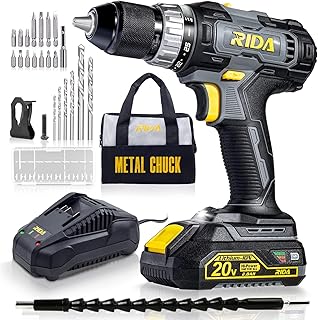

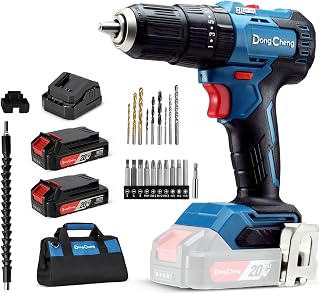


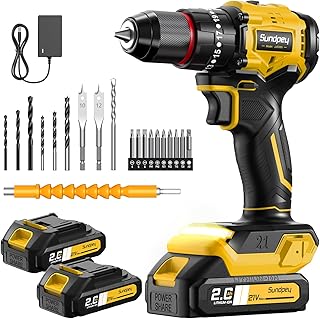


| Job in metal | What I reach for | Speed and bit notes |
|---|---|---|
| Sheet thinner than 1/8 in | Compact brushless drill | High gear, step bit, light pressure |
| Holes to 1/4 in in mild steel | Two speed 18V or 20V drill | Low gear, cobalt jobber bit, a drop of oil |
| 1/2 in holes in plate | Full size high torque drill, side handle on | Low gear under 500 rpm, pilot first |
| Hole saws, 1 in and up | Braced high torque drill or a mag drill | Slowest speed, peck cut, flood with oil |
| Self tappers and lags | Impact driver, not a drill | Impact rated bits, short trigger bursts |
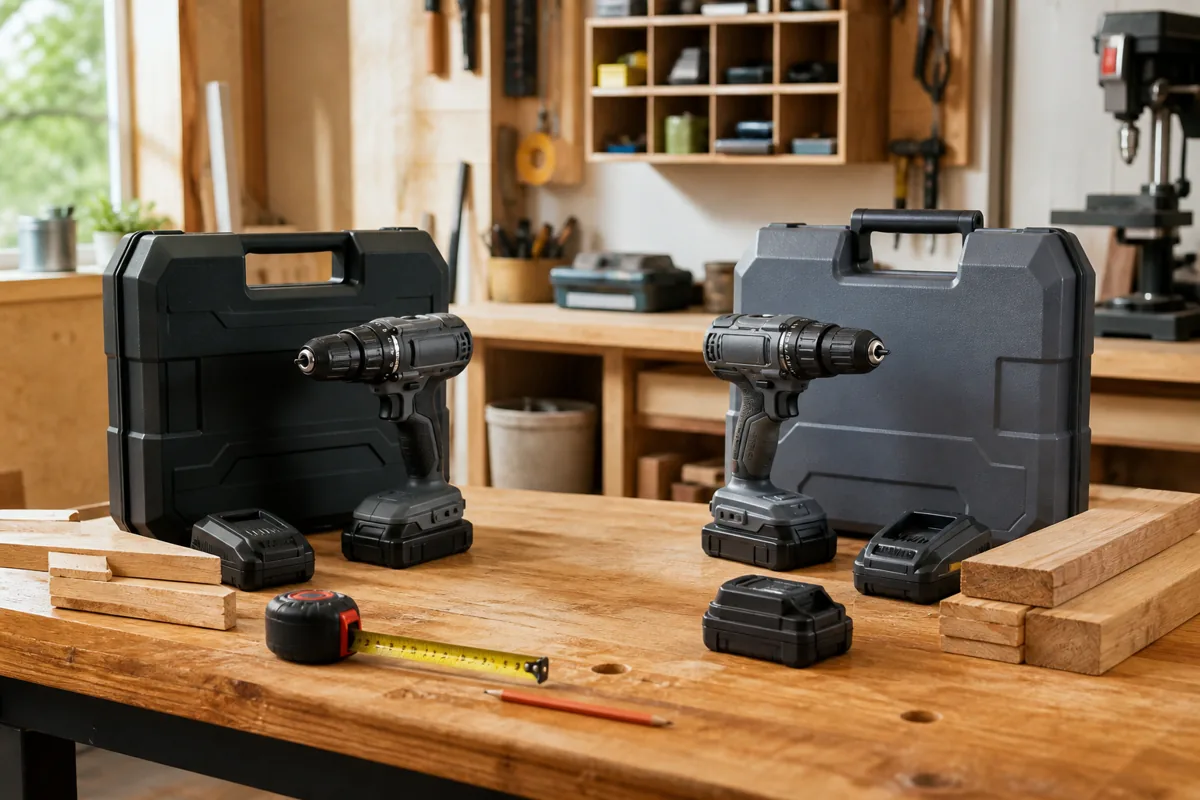
What high torque actually means once the bit touches steel
A full size brushless hammer drill from any serious line, DeWalt XR, Milwaukee FUEL, Makita LXT, lands in the same performance neighborhood. They all run two speed gearboxes, they all advertise a fat peak torque number, and any of them will put a half inch hole through plate if you drive it properly. What you feel between them is handle shape, how the electronics behave near a stall, and how hard the pack sags when you lean in.
The number I care about is the top of the low speed range. A low gear that tops out around 400 to 650 rpm gives you a real working window for bits from 3/8 inch up. A low gear that runs to 900 rpm is geared for driving screws, and you will spend the whole hole feathering the trigger just to stay slow. Sustained torque at low rpm is the spec that matters, and nobody prints it.
Full-size brushless hammer drill and driver kits
This is the class to buy if you drill steel more than a few times a year: two speed brushless, metal chuck, threaded side handle. Leave hammer mode off for metal, always. If you already own the platform, a bare tool plus your biggest pack costs less than another kit.
How I pick a high torque cordless drill for metal
My checklist is short. A two speed gearbox with a genuinely slow low range. A half inch all metal ratcheting chuck, because plastic sleeves and 3/8 inch chucks quit on round shanks above 3/8 inch. A side handle that threads onto the collar, since a bit that grabs will try to break something and leverage is how you win that argument. A brushless motor for heat on long cuts. Anti kickback electronics under whatever name your brand uses, which cut power when the tool senses sudden rotation.
Batteries matter more than shoppers expect. High capacity packs built on the larger cell format push more current with less voltage sag, which is exactly what a big bit in low gear is asking for. A compact pack will run a full size drill, but it heats up and pulls power back partway through a big hole.
Bits and cutting oil beat another hundred inch-pounds
Torque hides a lot of sins, but a sharp cobalt bit and a squirt of oil will improve your holes more than any tool upgrade. Cobalt alloy bits, sold as M35 or M42, hold an edge at the temperature a cordless drill builds in steel far better than plain black oxide. Look for a 135 degree split point, which self centers and bites on contact instead of skating around looking for a start.
Center punch every hole. Pilot with a bit about as wide as the finish bit’s web, roughly a third of its diameter and no more, because an oversized pilot leaves the cutting lips unsupported and invites a snatch. Use dark thread cutting oil on anything past 1/8 inch and never run stainless dry. Then read your chips: long silver or straw curls mean the bit is cutting, blue chips mean it is cooking, and gray powder means it is rubbing and the edge is already gone.
Cobalt drill bit sets for steel and stainless
A mid priced cobalt index in common fractional sizes outlives several sets of bargain black oxide bits, and it is the cheapest performance gain there is in metal. Pick a case you can refill one bit at a time, because 1/8, 3/16 and 1/4 inch always go first.
Speed, pressure and the breakthrough grab
Bigger hole, slower speed. That is the whole rule, and nearly every cooked bit I have seen came from ignoring it. Bits under 1/8 inch tolerate high gear. A quarter inch bit in mild steel wants the bottom of low gear. A half inch bit wants the slowest speed you can hold steady, and stainless wants slower still with more pressure. Firm constant pressure keeps the lips biting, and here is the part most people have backwards: light pressure at high speed work hardens stainless and glazes the hole so nothing will cut it afterward.
Deeper than about one and a half bit diameters, back out and clear the chips, because packed flutes mean heat. When resistance drops just before breakthrough, ease off and brace, since that is when a twist bit hooks the last skin of metal and tries to spin the tool out of your hands. Clamp the work every time, and back thin sheet with scrap wood. In sheet metal, skip twist bits and run a step bit, which cuts round, deburrs as it steps, and cannot grab the same way.
- ✔ Low gear grunt keeps large bits cutting instead of stalling
- ✔ Half inch metal chuck holds round shanks and hole saws
- ✔ Side handle plus anti kickback saves your wrist on breakthrough
- ✔ Runs on the batteries you already own
- ✘ Heavy and long in the nose, awkward in cabinets and joist bays
- ✘ Clumsy for everyday screw driving next to an impact driver
- ✘ Big holes drain packs fast, so plan on two
- ✘ No replacement for a mag drill on structural steel
Step bits for sheet metal and thin stock
If most of your metal is thinner than 1/8 inch, a step bit set ends the grabbing and the triangular holes for the price of a couple of twist bits. High gear, light pressure, stop when the shoulder marks your size.
FAQ
Do I need a hammer drill if I only drill metal? No, and never use hammer mode in metal, since it chips the cutting edges off a bit in seconds. But in most lineups the hammer drill is the model that gets the bigger gearbox, the metal chuck and the threaded handle, so buying one and leaving the switch on drill only is the practical move.
Can an impact driver drill steel? With hex shank impact rated bits it will make small holes in thin stock in a pinch. You give up low speed control and the hammering beats up cutting edges, so keep the impact for fasteners and let the drill cut holes.
What battery should I run on a high torque cordless drill for metal? The biggest capacity pack in your platform, or the high output line if your brand offers one. Larger packs sag less under heavy draw and run cooler, which you feel as a bit that keeps cutting instead of quitting halfway.
Buy the drill for its low gear, its chuck and its side handle, then put the rest of the money into cobalt bits and a bottle of cutting oil. That combination drills more holes in less time than a bigger torque number ever has.
Check prices on Amazon →