What's inside
As an Amazon Associate I earn from qualifying purchases. This post may contain affiliate links at no extra cost to you.
What we cover
What “compact” means on the job
In a tight installation area, overall length matters more than headline torque. A driver that is an inch shorter can fit between a cabinet side and a wall, reach behind a plumbing trap, or keep the bit straight under a shelf. Compare tool length from the back of the housing to the tip of the installed bit, not just the bare tool dimensions. Battery size adds bulk too: a compact 2.0Ah pack is often easier to maneuver than a 5.0Ah pack, even on the same driver.
For most cabinet, electrical, and interior repair work, look for a 12V or compact 18V/20V impact driver with a short head, variable-speed trigger, and at least two speed settings. A 12V tool is usually lighter and easier to place; a compact full-size platform often offers more power and shares batteries with other tools. The right choice depends on whether access or sustained fastening is the bigger problem.
As an Amazon Associate we earn from qualifying purchases at no extra cost to you.
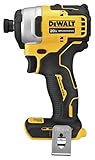

Compact driver options compared
| Type | Best fit | Trade-off |
|---|---|---|
| 12V impact driver | Cabinets, hardware, small fasteners, overhead work | Less reserve for long or large screws |
| Compact 18V/20V impact driver | General installation and users already on that battery platform | Often heavier; larger batteries can compromise access |
| Right-angle drill or attachment | Drilling holes where a straight drill cannot fit | Not a substitute for an impact driver; attachments can be bulky |
| Standard drill/driver | Small screws, pilot holes, and work needing a clutch | Longer body and slower on demanding fastening |
For a dedicated tight-space fastening tool, browse compact 12V impact drivers. If you already own batteries from a larger cordless system, compare its short-head models before buying another platform. Battery and charger costs can outweigh a modest difference in tool price.
Features worth paying attention to
Check the tool’s bare length, weight with a small battery, and trigger control. A short body is useful only if your hand can still reach the trigger and the bit can sit square to the screw. A bright work light helps inside cabinets, but it cannot correct a poor angle. A belt hook is convenient on a ladder; a bulky hook can snag when working between framing or equipment.
Two or three speed modes are more useful than a high maximum torque figure for delicate installation work. Low speed gives you time to stop before a screw head strips or a fitting cracks. Impacts can still damage softwood, thin sheet metal, plastic, and brass. Start slowly, use a pilot hole where appropriate, and finish by hand if the fastener is near a stop point. An impact driver has no conventional clutch to limit torque.
Use impact-rated 1/4-inch hex bits. Ordinary bits can snap under repeated impact, especially when they are long, worn, or poorly seated. Keep a fresh Phillips or square-drive bit matched to the fastener; a bit that cams out can ruin a screw head and make removal difficult. For many cabinet and trim jobs, a good short bit is easier to control than an extension. A slim magnetic bit holder adds reach, but it also adds length and can wobble.
Choose 12V or compact 18V/20V?
Choose 12V if you regularly work one-handed, overhead, or between close obstructions. The smaller battery often makes a noticeable difference over a full day. It is usually enough for cabinet screws, electrical boxes, light framing repairs, and common 2- to 3-inch construction screws when you drill a pilot hole in dense material.
Choose compact 18V/20V if you also drive longer structural screws, work in hardwood, or need one system for several demanding tools. A small battery keeps the tool more manageable, while a larger pack can improve runtime but make the handle and base harder to place. For a broad selection, compare compact 18V impact drivers against the batteries you already own.
The cheaper option is fine when the job is occasional and predictable. If you need to fasten a few cabinet hinges or assemble shelving, a basic driver with a small battery is generally more useful than paying extra for maximum torque or elaborate modes. Spend more when low-speed control, frequent use, battery compatibility, or reduced tool length solves a problem you face often.
When an impact driver is the wrong tool
Impact drivers excel at driving screws, but they are poor substitutes for a drill when making clean holes. Use a drill/driver with the correct bit for wood, metal, and masonry; for brick or concrete, use a hammer drill with a masonry bit if the material and anchor require it. For a hole behind a cabinet or between studs, a right-angle drill may fit better than an impact driver with a long bit.
For wall anchors, match the drill bit diameter to the anchor instructions and the wall material. A hole that is too large lets a plastic anchor spin; one that is too small can crush or distort it during installation. Set the anchor with controlled pressure rather than hammering it in with repeated impacts. For small screws in drywall, an impact driver can strip the paper face or crush the board before the fastener feels tight.
A practical buying check
Before ordering, measure the tightest gap and note the fastener length and material. Check tool length with the battery installed, available low-speed settings, and whether bare-tool pricing excludes a charger. If you are buying your first cordless tool, a kit with a compact battery and charger may cost less than assembling the pieces separately. If you already have compatible batteries, a bare tool may be the better buy.
Test the fit with the bit installed, not just the driver body. Leave enough room to hold the handle securely and keep the bit aligned; forcing a driver in at an angle invites cam-out, damaged heads, and bent screws. If there is no room for a straight approach, change the tool or fastener strategy rather than relying on extra torque.