What's inside
As an Amazon Associate I earn from qualifying purchases. This post may contain affiliate links at no extra cost to you.
What we cover
What matters when drilling through a self-centering jig
A self-centering jig helps align a hole with an edge or existing feature. The drill still has to stay square, feed smoothly, and repeat the same depth without wandering. For most woodworking jigs and ordinary twist bits up to about 1/2 inch, a good 18V cordless drill is a practical choice. You usually do not need a hammer drill, an impact driver, or the highest torque rating on the shelf.
Prioritize a low-speed setting, a controllable trigger, a stable chuck, and a clutch that engages predictably. A two-speed drill with a low range around 0–500 rpm gives better control than one that starts abruptly at high speed. For repeated holes, a side handle is useful on larger bits, but it is unnecessary for small pilot holes. Check that the jig’s guide bushings match your bit diameter; a close fit helps keep the bit centered, while a loose or worn bushing allows it to tilt.
As an Amazon Associate we earn from qualifying purchases at no extra cost to you.
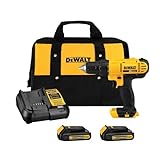


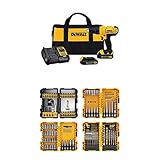
Choose the right drill type
A standard cordless drill is the best default for wood, plastic, and most small-to-medium holes in metal. A hammer drill adds a percussion mode for masonry, but that feature does not improve accuracy in a jig. Keep hammer mode off when drilling wood or metal; vibration can damage the jig, loosen the setup, or make the bit walk.
An impact driver is built for turning screws, not controlled hole drilling. Hex-shank drill bits are available for impact drivers, but the pulsing action makes it harder to feed gently and hold a repeatable depth. Use one for fastening after drilling, not as your main jig drill.
Cordless drill options for repeated jig work
| Type | Best use | Trade-off for jig drilling | Who should buy it |
|---|---|---|---|
| Compact 12V drill | Pilot holes and small bits in wood | Light and easy to control, but less reserve for large bits or thick stock | Occasional furniture or cabinet work |
| 18V drill/driver | Repeated holes in wood, plastic, and metal | More weight than 12V, but broad bit range and useful low-speed control | Most DIY users and frequent jig users |
| 18V hammer drill | General drilling plus occasional masonry | Often heavier; hammer mode is of no benefit in a jig | Buy only if you also drill into brick or concrete |
| Impact driver | Driving screws and lag screws | Pulsing action is harder to control for accurate holes | Pair with a drill, rather than choosing it instead |
For a basic, low-cost setup, a 12V cordless drill/driver is enough when the jig is for small pilot holes and the material is not unusually hard. If you already own compatible batteries, buying a bare tool can cost less than replacing a battery system.
Features worth paying for
For regular use, look at an 18V brushless drill/driver with two speed ranges, a 1/2-inch chuck, and a belt hook or side handle if you need them. Brushless motors can improve runtime and reduce maintenance, but they are not a requirement for accurate holes. A brushed drill with a smooth trigger can do the job well, especially if you drill only a few holes at a time.
Do not choose solely by advertised torque. High torque helps turn large bits, but it can also twist the drill sharply if a bit binds. Use the lowest speed and a firm grip, and select a drill with a side handle for larger holes. A clutch is useful for driving screws; for drilling, set the tool to the drill symbol rather than a numbered clutch setting.
How to get consistent holes
Clamp the jig firmly and check that its reference face is seated against the workpiece. Even a small gap can shift the hole location. Use a sharp bit that fits the guide, and keep the shank clean so it sits straight in the chuck. Tighten the chuck securely; a bit that slips can leave a rough hole or change the effective depth.
Mark or set the depth before drilling. A depth-stop collar is more repeatable than judging by eye, particularly when making a row of holes. If you do not have one, wrap tape around the bit as a visible guide, but expect less consistency. Drill at a steady pace without forcing the tool. In wood, back the bit out occasionally to clear chips; packed chips can overheat the bit and tear the hole edge. For through-holes, clamp scrap backing material behind the work to reduce breakout.
Common failures are usually setup problems, not lack of drill power. A hole that starts off-center often means the jig moved, the bushing is worn, or the bit is not seated straight. A wandering hole in metal may call for a center punch before using the jig. If the drill stalls, reduce feed pressure or use a smaller pilot hole before stepping up to the final diameter.
When a cheaper drill is enough
If you make a few small holes in softwood or plywood, a modest 12V drill and a sound jig are sufficient. Spend first on sharp bits, a secure clamp, and a depth stop rather than paying extra for maximum torque or hammer mode. Upgrade to an 18V drill when you regularly use larger bits, drill thick hardwood, or want one tool for a wider range of jobs.
For masonry holes, remove the jig if it is not rated for hammering and use a suitable masonry bit with hammer action. For wood and metal jig work, keep the hammer function off. That separation makes the setup more accurate and helps the jig and bits last longer.