What's inside
As an Amazon Associate I earn from qualifying purchases. This post may contain affiliate links at no extra cost to you.
What we cover
What a step bit can—and can’t—do
A step bit is useful for making clean, round holes in thin sheet metal, including electrical boxes and enclosures. Its stepped cutting edges enlarge the hole in stages, so you can stop at the diameter you need rather than letting a twist bit wander or grab as it breaks through.
For common knockout sizes, a step bit can work well in mild steel, aluminum, and plastic, provided the material is within the bit’s stated capacity. It is not a substitute for a knockout punch when you need a precise, burr-free hole in thick steel, or when the enclosure’s listing and installation instructions require a particular hole-making method. Check the enclosure and fitting instructions before cutting.
As an Amazon Associate we earn from qualifying purchases at no extra cost to you.
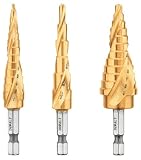

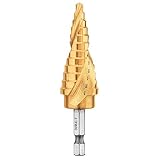

How to choose a step bit
Start with the actual fitting size, not just the trade size printed on the fitting. A trade-size conduit fitting may need a hole larger than its nominal conduit diameter. Check the fitting manufacturer’s hole-size specification, then choose a bit with a step at that diameter. A bit marked with its step sizes is easier to use accurately than one with only a broad diameter range.
For occasional work in thin panels, a basic high-speed steel (HSS) bit is usually adequate. If you regularly drill steel enclosures, a cobalt or titanium-coated option may last longer, but coating alone does not make a bit suitable for every material. Cobalt bits are generally more heat-resistant; titanium nitride coatings can reduce friction, but wear away as the cutting edge is sharpened. Look for a clearly marked maximum sheet thickness and step diameters. Compare step drill bit sets for sheet metal by those details rather than the number of pieces in the case.
Step bit versus other hole-making options
| Tool | Best use | Trade-off |
|---|---|---|
| HSS step bit | Several hole diameters in thin sheet; occasional installation work | Can overheat or wear quickly in thick or hard steel |
| Knockout punch | Accurate conduit-sized holes in electrical enclosures | Costs more and requires room to fit the punch and draw stud |
| Hole saw | Larger holes or repeated cuts in material within its rated capacity | More likely to snag at breakthrough; needs a pilot hole and steady control |
| Twist drill | Small pilot holes and general drilling | Less convenient for enlarging a hole to a precise larger diameter |
A knockout punch is usually the better buy if you repeatedly install conduit fittings or need consistent holes in thicker panels. A step bit costs less and takes up less space, and it can be the practical choice for a few holes in thin material. For occasional work, a manual knockout punch set is worth comparing against a quality step bit before committing to either tool.
Drill speed and setup matter
Use a variable-speed drill, not an impact driver. An impact driver’s repeated blows make it harder to control the cut and can damage the bit or panel. Clamp or securely support loose sheet metal, and keep the workpiece from vibrating. On an installed enclosure, switch off and verify the circuit is de-energized before drilling. Move or shield wiring and components; metal chips can short electrical parts long after the hole is made.
Mark the center and make a small pilot hole if the bit’s tip will not reliably start on the surface. Use cutting fluid on steel, especially when drilling several holes. Run the drill at a moderate speed with steady pressure. Too much speed or pressure creates heat, dulls the cutting edges, and can turn a clean cut into a ragged one. Let the bit cut; if it squeals, smokes, or stops making progress, back out, clear chips, and check the speed and bit condition.
Stop as soon as the required step reaches the panel. Going one step too far can leave a hole that is too large for the fitting’s locknut or sealing surface. The diameter markings can be difficult to read while drilling, so pause as the cut approaches the target and inspect the step at the panel. A depth stop or a strip of tape can help, but neither replaces checking the actual diameter.
Common failures and fixes
Bit grabs at breakthrough: This often happens when the sheet is unsupported or the drill is moving too fast. Clamp the panel, ease off pressure near the final cut, and keep both hands on the drill. A step bit reduces the sudden grab common with some larger twist bits, but it cannot prevent it in every setup.
Hole is rough or burred: Check that the bit is sharp and suited to the material. Use a slower speed and cutting fluid on steel. Deburr both sides of the hole with a deburring tool or a suitable hand file, then remove every chip before installing electrical fittings.
Bit overheats or dulls: A small general-purpose bit may not be rated for the panel thickness or steel type. Let the bit cool between holes, avoid forcing it, and replace it when it no longer cuts cleanly. If the work is frequent, step up to a more durable bit or use a punch rather than repeatedly burning through cheap bits.
A practical buying checklist
Before ordering, confirm the required hole diameter, panel material and thickness, and whether the tool’s capacity covers both. For a broad range of occasional jobs, a marked multi-step set is convenient; for one fitting size, a single bit covering that step may be all you need. A cobalt step drill bit for metal can make sense for repeated steel work, but it is unnecessary spending for a few holes in thin aluminum. For routine electrical installation, compare the cost and hole quality of a conduit knockout punch set with the bits you would otherwise replace.