What's inside
- Top Picks at a Glance: Best Impact Drivers for the Jobs an Impact Driver Is Made For
- What Is the Main Function of an Impact Driver? Quick Answers to Common Questions
- How an impact driver multiplies torque
- What it’s actually for: the jobs where it earns its keep
- Where a regular drill is still the better tool
- Best Impact Drivers by Tier: Six More Models Worth Considering
- Also Consider
- How We Chose These Impact Drivers
- Do you need one? Match the tool to your situation
- Impact Driver Buying Guide: Specs That Matter for Its Real Purpose
- Impact Driver vs Drill vs Impact Wrench: Which Tool Fits Which Job?
- Which Impact Driver Should You Buy?
- Ownership realities: bits, batteries, and common mistakes
- How to Use an Impact Driver Correctly: Settings, Bits, and Safety
- FAQ
As an Amazon Associate I earn from qualifying purchases. This post may contain affiliate links at no extra cost to you.
The purpose of an impact driver is to drive screws, lag bolts, and other fasteners by adding rapid rotational hammer blows on top of normal rotation — a mechanism that lets it deliver roughly two to four times the torque of a same-size drill. If your work involves long deck screws, structural connectors, or fasteners that would stall a drill, it’s the right tool; if you mostly bore holes or drive small screws where depth control matters, a regular drill/driver is still the better choice.
As an Amazon Associate we earn from qualifying purchases at no extra cost to you.



Updated November 2026 — what is the main purpose of an impact driver? The main purpose of an impact driver is to drive screws and bolts with high torque, using rapid rotational hammer blows that keep a fastener turning when a regular drill would stall.
That one line is also the answer to the quiz-style versions of this question: of the usual options (cut curved lines in wood, drill holes in wood, polish surfaces, drive screws with high torque), only driving screws with high torque is correct. Curved cuts belong to a jigsaw, wood holes to a drill, and polishing to a sander or buffer.
Quick summary of our top three picks for most buyers: the Milwaukee M18 FUEL 2953-20 is the strongest all-round driver here, the Makita XDT16Z is the best choice for controlled, comfortable fastening, and the Ryobi ONE+ HP PSBID01 is the lowest-cost way into a brushless driver if you already own ONE+ batteries.
What we cover
- Top Picks at a Glance: Best Impact Drivers for the Jobs an Impact Driver Is Made For
- What Is the Main Function of an Impact Driver? Quick Answers to Common Questions
- How an impact driver multiplies torque
- What it’s actually for: the jobs where it earns its keep
- Where a regular drill is still the better tool
- Best Impact Drivers by Tier: Six More Models Worth Considering
- Also Consider
- How We Chose These Impact Drivers
- Do you need one? Match the tool to your situation
- Impact Driver Buying Guide: Specs That Matter for Its Real Purpose
- Impact Driver vs Drill vs Impact Wrench: Which Tool Fits Which Job?
- Which Impact Driver Should You Buy?
- Ownership realities: bits, batteries, and common mistakes
- How to Use an Impact Driver Correctly: Settings, Bits, and Safety
- FAQ
Our Top Picks
 Milwaukee 2953-20 18V Cordless 1/4" Hex Impact Driver241 x 99 x 137 inches2.49 poundsCheck on Amazon




Top Picks at a Glance: Best Impact Drivers for the Jobs an Impact Driver Is Made For
- Best overall for heavy fastening: Milwaukee M18 FUEL 2953-20
- Best for control and small screws: Makita XDT16Z
- Best for screws plus sockets: Bosch GDX18V-1800CN
- Best compact driver for tight spaces: Milwaukee M12 FUEL 3453-20
- Best budget brushless: Ryobi ONE+ HP PSBID01
- Best kit-style value: Metabo HPT WH18DEX
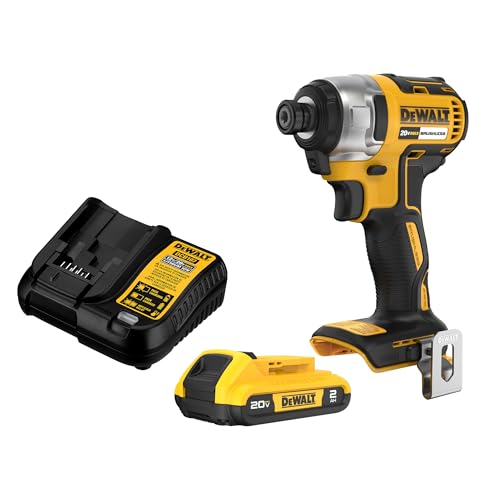
- Also covered above: the four DeWalt models in the cards at the top of this page
Each pick below gets one line of key specs, a short explanation of who it suits, and an honest “skip it if” note. All specs come from maker spec sheets and published reviews, and none of the picks are rated by us in a lab.
What Is the Main Function of an Impact Driver? Quick Answers to Common Questions
Many people reach this page from a trade-school or safety quiz, so here are the short answers in plain words. Each one is expanded in the sections that follow.
Main function of an impact driver
The main function of an impact driver is to drive screws with high torque. It is not a drill, a saw, or a polisher, so the quiz options about drilling holes in wood, cutting curved lines, or polishing wood or metal surfaces are the wrong ones.
In which ways is an impact driver set useful?
The answer to the multiple-choice version, “breaking loose rusty fasteners, reaching awkward fasteners, preventing slipping, or all of the above”, is all of the above. The hammering action frees seized, rusted bolts. The compact body and short head reach into tight spots a full-size drill cannot. And the constant forward pressure from each blow keeps the bit seated in the screw head, which reduces cam-out, the slipping that chews up Phillips and Torx heads.
Why it beats a drill for fasteners
A drill pushes torque continuously, so a stubborn lag screw stalls it and twists your wrist. An impact driver stores energy between blows and releases it in bursts, so the reaction force stays in the tool instead of your arm. That is why a compact driver can sink a structural screw that a bigger drill refuses to turn.
What it is not for
It is not for precise holes, hole saws, or masonry. If your project needs those, pair the driver with a drill or a hammer drill rather than forcing one tool to do both jobs.
How an impact driver multiplies torque
A drill delivers torque continuously: the motor’s output goes straight to the chuck, and once the fastener’s resistance exceeds that output, the drill stalls — or worse, the reaction torque twists back into your wrist. An impact driver works differently. Inside, a spring-loaded hammer spins with the motor; when resistance builds past a threshold, the hammer rides forward and slams against an anvil, advancing the bit in thousands of tiny rotational strikes per minute (the IPM — impacts per minute — spec).
Each strike releases stored energy rather than asking the motor for sustained torque, which is why a 2-lb driver can produce 1,800+ in-lbs while a much heavier drill tops out far lower. Two side effects matter in practice: the reaction force is absorbed by the mechanism instead of your arm, and the hammering keeps downward pressure on the bit, so Phillips and Torx heads cam out far less often.
One caveat when comparing specs: impact driver torque is a peak figure per blow, while drill torque (often quoted as in-lbs or UWO) is continuous. The numbers aren’t directly comparable — but on stubborn fasteners, the impact always wins.
| Spec | 18V Drill/Driver | 18V Impact Driver |
|---|---|---|
| Rated torque | ~350–800 in-lbs (continuous) | ~1,300–2,200 in-lbs (peak) |
| Speed / impacts | 0–550 & 0–2,000 RPM | 0–3,600+ RPM, 3,000–4,400 IPM |
| Chuck | 1/2″ keyless — any bit shank | 1/4″ quick-release hex only |
| Clutch settings | Yes — usually 15–25 positions | No — speed/mode buttons on premium models |
| Weight (bare tool) | ~2.5–3.5 lbs | ~2.0–2.5 lbs |
| Noise under load | ~80–90 dB | ~95–110 dB — hearing protection advised |
Published torque leaders include the Milwaukee M18 Fuel 2953 (~2,000 in-lbs), DeWalt Atomic DCF850 (~1,825 in-lbs), Makita XDT16 (~1,600 in-lbs), and Bosch’s GDX18V-1800 “Freak” (~1,800 in-lbs), which uniquely combines a 1/4″ hex with a 1/2″ square drive for sockets.
What it’s actually for: the jobs where it earns its keep
- Lag and structural screws. A 1/4″ × 4″ lag or a Simpson SDWS timber screw will stall most drills or demand a pilot hole; an impact driver sinks it flush in one pull, even into pressure-treated lumber or engineered beams.
- Decks, fences, and subfloor. Hundreds of #8–#10 × 2.5–3.5″ screws per session. Most manufacturers rate a 5.0Ah battery at roughly 500–800 deck screws per charge; in wet PT lumber expect fewer — carry a spare for all-day work.
- Repetitive assembly. Cabinet boxes, shelving runs, metal stud framing — anywhere speed and one-handed operation (the hex chuck loads bits single-handed) saves real time.
- Breaking loose seized fasteners. Rusted carriage bolts, corroded hardware, painted-over screws. The percussive action often frees fasteners that strip under steady torque.
- Light mechanical work. With hex-to-square adapters and impact-rated sockets, it handles small engine bolts and equipment assembly — but it is not an impact wrench (see limits below).
Where a regular drill is still the better tool
- Drilling holes. The 1/4″ hex chuck won’t grip round-shank twist bits. Hex-shank bits exist, but the hammering produces rougher, slightly oversized holes — fine for rough-in wiring holes through studs, bad for dowel or joinery work. There’s also no hammer-drill function for masonry.
- Precision fastening. No mechanical clutch means no reliable depth stop. Hinge screws, drawer-slide hardware, and anything smaller than a #6 can strip or drive through thin material in a blink.
- Soft materials. MDF, particleboard, and thin sheet goods offer little resistance — the impact can spin screws right through or strip the hole before you react.
- Accessories. Hole saws, spade and auger bits, mixing paddles, and wire brushes are all designed around a drill’s smooth rotation.
- Quiet environments. The impact mechanism is loud by nature; a drill is far friendlier for apartment or evening work.
- Lug nuts. Borderline. Some high-torque drivers can break loose a wheel nut (~80–140 ft-lbs), but you should never tighten wheels with one — a torque wrench is mandatory, and a real impact wrench is the correct tool.
Best Impact Drivers by Tier: Six More Models Worth Considering
Knowing the purpose of an impact driver is only half the decision; the other half is picking the right one for your battery platform and budget. The four DeWalt drivers at the top of this page cover one ecosystem. Here are six models from other major platforms, grouped by price tier so you can see what each step up buys.
| Model | Best for | Platform | Torque class | Watch for | Tier |
|---|---|---|---|---|---|
| Milwaukee M18 FUEL 2953-20 | Heavy fastening | M18 18V | ~2,000 in-lbs | Tool only, battery extra | Premium |
| Makita XDT16Z | Control, small screws | LXT 18V | 1,600 in-lbs | Below class leaders on raw torque | Upper-mid |
| Bosch GDX18V-1800CN | Screws plus sockets | Bosch 18V | 1,800 in-lbs | Smaller battery lineup | Upper-mid |
| Milwaukee M12 FUEL 3453-20 | Tight spaces | M12 12V | Up to 1,500 in-lbs | Less reach on long lags | Mid-range |
| Metabo HPT WH18DEX | Kit value | Metabo HPT 18V | Check maker sheet | Specs vary by kit | Budget to mid |
| Ryobi ONE+ HP PSBID01 | Budget brushless | ONE+ 18V | Check maker sheet | Needs ONE+ batteries | Budget |
Milwaukee M18 FUEL 2953-20 — Best for heavy fastening

- Platform: M18 18V, tool only
- Drive: 1/4″ hex
- Torque: about 2,000 in-lbs, one of the highest published for the class
- Modes: 4-mode Drive Control
- Motor and electronics: FUEL brushless with REDLINK PLUS battery protection
If the purpose of your impact driver is to sink long structural screws all day, this is the driver the others are measured against. The mode selector lets you drop to a gentler setting for small screws, which solves the biggest complaint about impact drivers: overdriving. Because the M18 line includes saws, drills, and impact wrenches, it also pays off if you plan to build a bigger kit later. Expect it to suit deck, framing, and remodel work comfortably; that is an estimate from the spec tier, not a measured result.
Pros: top-tier torque; selectable modes; broad M18 tool family; battery protection electronics.
Cons: tool-only pricing means you must buy a battery and charger; loud like every impact driver.
Skip it if… you mostly hang shelves and drive small screws; a lighter mid-range driver is cheaper and easier on the wrist.
Makita XDT16Z — Best for control and smaller fasteners

- Platform: 18V LXT, tool only
- Torque: 1,600 in-lbs
- Speeds: 4-speed selector
- Feature: Quick-Shift Mode that automatically lowers speed and torque for small fasteners
- Motor: brushless
The XDT16Z does not chase the biggest torque number. Its Quick-Shift Mode backs the driver off as the fastener seats, which helps on cabinet hardware, hinge screws, and trim where a full-power hit would strip a head or drive through thin stock. For remodelers who switch between heavy and delicate work, that behavior can be worth more than another few hundred in-lbs. Several roundups note it trails the torque leaders on very heavy lug-nut-style jobs, so treat it as a carpentry and assembly tool.
Pros: predictable control; compact and comfortable; large LXT platform.
Cons: lower peak torque than the top Milwaukee and Bosch models; tool only.
Skip it if… you regularly drive 4-inch structural screws or work on automotive hardware.
Bosch GDX18V-1800CN — Best for screws plus sockets

- Platform: Bosch 18V, bare tool
- Torque: 1,800 in-lbs
- Speed: 3,400 RPM
- Drive: 1/4″ hex chuck plus 1/2″ square drive in one tool
- Motor: EC brushless
This model is the hybrid mentioned earlier in this guide. It switches between a 1/4″ hex bit holder and a 1/2″ square drive for sockets, so it drives deck screws in the morning and runs a lug or carriage bolt in the afternoon. It is not a true impact wrench, and heavy automotive tightening still needs a torque wrench, but for general repair and equipment assembly the flexibility is hard to beat in this price range.
Pros: two drive styles in one body; strong published torque; good for mixed work.
Cons: fewer matching tools than the big platforms; a slightly longer body than compact drivers.
Skip it if… you only drive screws and want the smallest, lightest tool.
Milwaukee M12 FUEL 3453-20 — Best compact driver for tight spaces

- Platform: M12 12V, bare tool
- Torque: up to 1,500 in-lbs
- Speed: up to 3,600 RPM in Mode 3
- Size: about 5 inches long, about 2 lbs
- Extras: 4-mode Drive Control with a self-tapping screw mode, Tri-LED light
This is the answer to “awkward fasteners”: between joists, inside cabinets, under a sink, or overhead where a 2.5-lb full-size driver wears you out. Fifteen hundred in-lbs is still more than most drills deliver in continuous torque, and the self-tapping mode helps with sheet metal and light-gauge framing. Pair it with a compact battery and it makes a good second driver even for people who own an 18V system.
Pros: very small and light; strong for its size; useful lighting and modes.
Cons: separate M12 batteries; not the pick for long lag screws.
Skip it if… your main work is decks, fences, and framing.
Metabo HPT WH18DEX — Best kit-style value

- Platform: Metabo HPT 18V
- Motor: brushless
- Drive: 1/4″ hex chuck
- Package: kit listing with two lithium-ion batteries
- Note: torque and speed figures are on the maker’s spec sheet; check the exact kit before buying
A kit with batteries included lowers the entry cost compared with tool-only models, which is useful when you are starting from zero. Metabo HPT has a long record in pro framing tools, and the driver is a reasonable fit for homeowners tackling a deck or fence. Confirm the exact model and kit contents on the maker’s page, since the same name can be sold in several configurations.
Pros: brushless at a modest tier; batteries included; simple controls.
Cons: smaller accessory ecosystem; kit contents vary by listing.
Skip it if… you already own another 18V platform and only need a bare tool.
Ryobi ONE+ HP PSBID01 — Best budget brushless

- Platform: 18V ONE+ (tool only; battery and charger not included)
- Motor: ONE+ HP brushless
- Drive: 1/4″ hex, compact body
- Compatibility: works with ONE+ batteries across the wide Ryobi lineup
- Note: published torque figures differ between sources, so use the maker’s sheet
Ryobi is the practical entry point for a homeowner who wants brushless efficiency without a pro-tool price. If you already own a ONE+ battery or two, it is the cheapest route to a driver that handles deck screws and general assembly. Reviewers generally place it below premium drivers for sustained heavy work, which is the honest trade-off at this tier.
Pros: low cost; shares batteries with many other tools; compact.
Cons: less refined under sustained heavy load; torque claims vary by source.
Skip it if… you build for a living and want maximum run time and torque.
Also Consider
Makita XDT18ZB sub-compact driver

Best for light, all-day overhead and cabinet work. It is an 18V LXT brushless sub-compact tool, sold bare. The trade-off is lower power than the XDT16Z, so it will struggle with long structural screws.
Hart HPID25 20V brushless driver

Best for shoppers who want a brushless 1/4″ hex driver on a budget-oriented platform. It is sold tool only. The trade-off is a smaller tool lineup than the big names, so check what else the line offers before committing.
Craftsman CMCF800C1 20V MAX driver kit

Best for occasional home use. The kit includes a battery and charger, a 2,800 RPM rating, and an LED light. The trade-off is that it is not aimed at heavy daily use, so it suits shelves, furniture, and small repairs more than deck building.
How We Chose These Impact Drivers
These picks are based on published research, not on lab results from us. We compared manufacturer spec sheets, retailer listing data, and independent 2026 roundups, then filtered for current-generation models. The criteria were published torque, brushless motor design, size and weight, battery platform breadth, availability of a bare-tool option, and whether the tool matches the purpose of an impact driver: fast, high-torque fastening. We capped each brand at two picks and covered every price tier from budget to premium. Where sources disagreed on a figure, we left the number out and told you to check the maker’s sheet.
Do you need one? Match the tool to your situation
| Your situation | Right choice |
|---|---|
| Occasional homeowner — hanging shelves, minor repairs | Drill/driver only; it covers holes and light screws |
| One big project ahead (deck, fence, shed) | Mid-range impact driver, or a combo kit — usually $150–$350 for drill + driver + two batteries |
| Regular DIY remodeler | Both tools; swapping between pilot drilling and driving without changing bits is the single biggest workflow gain |
| Cabinetry and fine woodworking | Drill plus a compact 12V impact — lower peak torque reduces stripping risk on hardware |
| Deck builder, framer, or remodeler for a living | 18V brushless model rated 1,800+ in-lbs, plus hearing protection |
| Automotive work | Impact wrench, not an impact driver — or the Bosch Freak-style hybrid if budget is tight |
If you’re buying only one tool, the drill is more versatile. The impact driver is almost always the second tool in the bag — and the one people wish they’d bought sooner.
Impact Driver Buying Guide: Specs That Matter for Its Real Purpose
Once you know the purpose of an impact driver, the spec sheet gets easier to read. These are the numbers and features that change how the tool behaves on a job.
Torque: pick a class, not a champion
Under about 1,500 in-lbs is the compact class, suited to shelving, furniture, and general repair. From 1,600 to 1,800 in-lbs covers most homeowners and remodelers, including deck screws and fence hardware. Above 1,800 in-lbs is the pro class for structural screws and long lags. Remember that this is peak torque per blow, so use it to compare impact drivers with each other, not with a drill.
Impacts per minute and speed
Look for around 3,000 to 4,400 impacts per minute (IPM) and at least 3,000 RPM on the top setting. Higher IPM drives screws faster, but a multi-speed selector matters more day to day because it lets you slow down for small fasteners.
Brushless versus brushed
Choose brushless if you plan regular use. It runs cooler, wastes less battery, and has no brushes to wear out. Brushed drivers are fine for occasional jobs and can cost noticeably less.
Size and weight
A compact 12V driver around 5 inches long is far easier to use overhead and in cabinets. A full-size 18V or 20V driver is better when you are working on a deck for hours. If you can only own one, an 18V compact is the usual middle ground.
Battery platform
The battery is the expensive consumable, so the platform matters more than the driver. Buy into a system with the other tools you may want later, such as a drill, circular saw, and impact wrench. A 2.0 Ah battery keeps weight down; a 4.0 to 5.0 Ah pack gives longer run time for deck days.
Kit or bare tool
Bare tools suit people who already own batteries. Kits make sense when you are starting a platform from scratch, as long as the included batteries are at least 2.0 Ah. Always check what the listing actually includes.
Bit holder and extras
A one-handed 1/4″ hex collet, a bright LED, and a belt clip are minor features that add up over a long day. Pair any driver with impact-rated bits to avoid snapped tips.
Impact Driver vs Drill vs Impact Wrench: Which Tool Fits Which Job?
Three similar-looking tools cause most buying mistakes, so here is the short version.
- Impact driver: drives screws and small bolts with hammering torque. Uses a 1/4″ hex bit holder. Best for decks, framing, and repetitive fastening.
- Drill/driver: drills holes and drives small screws with a clutch for depth control. Takes round-shank bits in a 3/8″ or 1/2″ chuck. Best for holes and delicate work.
- Impact wrench: uses a square drive for sockets and delivers far more torque for lug nuts and large bolts. Best for vehicles and heavy machinery.
If you are choosing a first cordless tool, buy the drill/driver. If you already own one and keep stalling on long screws, the impact driver is the logical second tool. Hybrids like the Bosch GDX18V-1800CN sit between a driver and a light wrench and suit people who cannot decide.
A practical mistake to avoid is using an impact driver as a drill because the bit happens to be in it. The result is oversized, ragged holes and worn hex bits. Keep a drill in your kit for holes and let the driver do the fastening.
Which Impact Driver Should You Buy?
- Weekend homeowner: Ryobi ONE+ HP PSBID01 if you already own ONE+ batteries; otherwise a kit such as the Metabo HPT WH18DEX.
- Deck, fence, or shed builder: Milwaukee M18 FUEL 2953-20, or one of the DeWalt models at the top of this page if you own DeWalt batteries.
- Cabinet and trim installer: Makita XDT16Z or the Milwaukee M12 FUEL 3453-20 for control and size.
- Mixed repair and light automotive work: Bosch GDX18V-1800CN for the screw and socket combination.
Ownership realities: bits, batteries, and common mistakes
Buy impact-rated bits. Standard screwdriver bits snap at the neck under impact loads; impact-rated bits have torsion zones that flex instead of shattering, and a decent 40–50 piece set runs roughly $20–$40. This is the tool’s only real consumable — expect to replace Phillips and Torx bits periodically on heavy use. The same rule applies to sockets: use black, impact-rated sockets with hex-to-square adapters, never chrome hand-tool sockets, which can crack dangerously.
What wears first: the 1/4″ collet spring and bit retention on cheaper models, and batteries on everything — battery packs are the expensive consumable ($50–$150), so staying in one battery platform matters more than the driver itself. Buy brushless; brushed motors wear, brushless don’t.
Common mistakes: starting lag bolts crooked — the driver sinks them so fast that a bad angle can’t be corrected; overdriving screws clean through soft stock (feather the trigger or use the lower speed modes on multi-mode models like the XDT16’s four-speed setup); skipping hearing protection on all-day fastening; and using it as a drill out of convenience, which produces sloppy holes and chews up hex-shank bits.
Maintenance is minimal: blow out the vents, wipe the collet occasionally, and that’s it — the hammer mechanism is sealed on virtually every current model.
How to Use an Impact Driver Correctly: Settings, Bits, and Safety
Getting the most from the purpose of an impact driver comes down to a few habits. They take minutes to learn and prevent most stripped screws, snapped bits, and sore wrists.
Match the mode to the fastener
On a multi-mode driver, use the lowest setting for small screws and the highest for long structural screws. Start slow to seat the screw, then squeeze through. If your model has a self-tapping or precision mode, use it for sheet metal and thin stock, where full power can drive a screw straight through.
Drill a pilot hole when the wood can split
Near board ends, in hardwood, or with large-diameter screws, drill a pilot hole first with a drill. The driver is fast enough to split a board before you notice, so the extra ten seconds saves the workpiece.
Keep the bit straight and pressed in
Hold the driver in line with the screw and apply steady forward pressure. A crooked start is the most common reason lag screws bind or strip, because the tool drives so quickly that a bad angle cannot be corrected mid-turn.
Use the right accessories
- Impact-rated Phillips, Torx, and square bits for screws.
- Black impact-rated sockets with a hex-to-square adapter for bolts; never chrome hand-tool sockets, which can crack.
- Magnetic bit holders or bit tips with a sleeve for one-handed work overhead.
Protect your hearing and hands
Impact drivers are loud under load, often above 95 dB, so wear ear protection for anything beyond a few screws. Keep loose sleeves and gloves away from the rotating bit, clamp small workpieces, and remove the battery before changing accessories you cannot reach safely.
Know when to stop and switch tools
If a bolt will not move with a driver, stop before you damage the head or the tool. Use penetrating oil and give it time, or switch to a breaker bar or proper impact wrench. Persistence with the wrong tool rounds off fasteners and wears out your driver faster than any heavy job.
FAQ
Can an impact driver drill holes at all?
Yes, with 1/4″ hex-shank bits, and it’s fine for rough carpentry holes. For clean, accurately sized holes in furniture or finished work, use a drill.
What’s the difference between an impact driver and an impact wrench?
Same mechanism, different scale: a driver uses a 1/4″ hex chuck for fasteners (~150–180 ft-lbs max), while a wrench uses a square drive for sockets and produces 250–1,400+ ft-lbs for automotive and machinery bolts.
I already own a drill — is an impact driver worth it?
If you drive fewer than a hundred screws a year into softwood, probably not. The moment you build a deck, hang a fence, or fight a rusted bolt, it pays for itself in time and saved screw heads alone.
What is the main function of an impact driver?
The main function of an impact driver is to drive screws and bolts with high torque. Its internal hammer delivers rapid rotational strikes, so fasteners keep turning where a drill would stall.
Is an impact driver good for breaking loose rusty bolts?
Yes, within limits. The percussive blows often free rusted screws and small bolts that strip under steady torque. For large, seized automotive nuts, use an impact wrench or a breaker bar instead.
Do I need impact-rated bits for an impact driver?
Yes, impact-rated bits are strongly recommended. Standard bits can snap at the neck under repeated blows, while impact-rated bits have a flexing zone that absorbs the shock and lasts longer.
Is a 12V or 18V impact driver better?
A 12V driver is better for tight spaces and light work, and an 18V driver is better for long screws and all-day fastening. Many users own a 12V compact as a second tool alongside an 18V model.
Can an impact driver be used as a screwdriver for small screws?
Yes, but use the lowest speed or a precision mode. The first sentence is the short answer: a compact driver works well on small screws if you feather the trigger, because full power can strip heads or drive screws through thin material. For delicate hardware such as hinges and drawer slides, a drill/driver with a clutch gives much better depth control and fewer ruined parts.
How long does an impact driver battery last?
Run time depends on battery size, screw length, and material, so no single figure fits every job. A larger 4.0 to 5.0 Ah pack lasts noticeably longer on deck screws than a 2.0 Ah pack, and wet or dense lumber drains either one faster. Carry a spare battery for all-day fastening.
Related guides
More from Amazon
Programs that pair well with the guide above. Offers and eligibility are set by Amazon and may change.
A free business account with business pricing and bulk-buying tools for work, shop or home office.
Create a business accountFree shipping on eligible items, Prime Video and more. Eligible new members can start with a free trial.
Start a Prime free trialAudiobooks and podcasts to listen to on the go. Eligible new members can start with a free trial.
Try Audible freeAd-free music streaming. Eligible new subscribers can start with a free trial.
Try Music Unlimited freeAs an Amazon Associate we earn from qualifying purchases.