What's inside
As an Amazon Associate I earn from qualifying purchases. This post may contain affiliate links at no extra cost to you.
What we cover
Our Top Picks
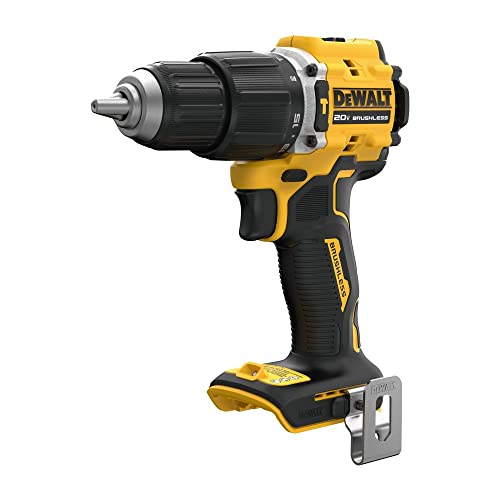
 DEWALT 20V MAX XR 1/2 Inch Brushless CordlessOne Size15.5 x 4 x 8.5 inches4.96 PoundsCheck on Amazon

What flagstone needs from a drill
Flagstone varies from relatively soft sandstone to dense slate and quartzite. That makes the stone itself a bigger factor than the drill’s advertised power. For a few small holes in softer stone, a capable cordless hammer drill can do the job. For repeated holes, larger diameters, or hard stone, a compact cordless rotary hammer is usually the better buy.
Use a masonry bit, start without hammer action to keep the tip from wandering, then switch hammer mode once the bit has a shallow seat. Keep the drill straight and apply steady pressure; leaning hard on it can overheat the bit, chip the stone, or stall the drill. Work in short bursts and withdraw the bit regularly to clear dust. If the bit is getting hot, stop and let it cool.
As an Amazon Associate we earn from qualifying purchases at no extra cost to you.


Hammer drill or rotary hammer?
A standard hammer drill makes small, rapid impacts while the bit rotates. It is lighter and handles ordinary drilling and fastening well, but it depends more on pressure from the user. A rotary hammer uses a piston mechanism to deliver stronger impacts, so it generally drills masonry faster with less effort. Most cordless rotary hammers also offer a rotation-only mode, but they are bulkier and cost more.
For occasional holes around 1/4 inch (6 mm) in softer flagstone, a standard hammer drill may be enough. For 3/8-inch holes, dense stone, or a run of many holes, a rotary hammer is a sensible step up. Check the tool’s stated maximum masonry capacity and chuck type: many rotary hammers use SDS-Plus bits rather than ordinary round-shank bits. A cheap adapter can add wobble, so use the correct bit for the tool.
| Tool type | Best fit for flagstone | Main trade-off |
|---|---|---|
| 18V/20V cordless hammer drill | A few small holes in softer stone; also useful for general drilling and driving | Slower in dense stone; more effort and heat during long drilling |
| Compact cordless SDS-Plus rotary hammer | Repeated holes, harder stone, or holes around 3/8 inch and up | Higher cost and weight; less convenient for screwdriving |
| Cordless drill without hammer mode | Wood, metal, and fastening; not a good choice for routine flagstone drilling | Slow masonry progress can burn bits or strain the tool |
What to look for when buying
For a hammer drill, prioritize a brushless motor, two speed ranges, a side handle, and a clutch you can use for driving screws. Brushless motors tend to run more efficiently under load, though a brushed drill can still be adequate for occasional jobs. A side handle is important: it gives you control if the bit binds, especially in thicker or uneven stone. A 1/2-inch chuck offers broad bit compatibility, but does not mean the drill is suitable for 1/2-inch holes in hard flagstone.
Battery capacity matters because hammer drilling draws power continuously. A 4.0Ah or 5.0Ah battery is more comfortable for a work session than a small 2.0Ah pack, but it adds weight. If you already own a battery platform, buying a bare tool can save money. Compare the tool’s actual drilling limits and weight rather than relying on voltage labels or torque figures alone. For an occasional small-hole job, a brushless cordless hammer drill with a side handle is often the practical choice.
If you have many holes to make, look for a compact SDS-Plus rotary hammer with a listed concrete capacity that comfortably covers your hole size. Stone is not concrete, but the capacity is a useful reference, not a guarantee of speed in every rock type. A cordless SDS-Plus rotary hammer costs more, but can turn a tiring series of holes into a much more controlled job.
Bits and setup matter as much as the drill
Use a carbide-tipped masonry bit for a hammer drill, or a quality SDS-Plus masonry bit for a rotary hammer. Match the bit diameter to the anchor instructions; drilling an oversized hole can leave an anchor loose. For a small plastic masonry plug, the required hole is often around 1/4 inch, but follow the specific plug’s packaging rather than guessing. Replace a bit that is blunt, bent, or badly chipped. A worn bit runs hot and can make even a strong drill seem weak.
Flagstone is often irregular, with cracks and softer layers. Avoid drilling close to an edge: a hole only an inch or two from the edge can split a thin piece, and the safe distance depends on the stone’s thickness and condition. Support loose flagstone on a stable surface. Mark the hole, keep the drill perpendicular, and do not force the bit through the far side. If the stone is thin or fragile, drilling from the exposed face with light pressure is safer than trying to rush.
Dust, anchors, and common failures
Stone dust is abrasive and can irritate lungs and eyes. Wear eye protection and a well-fitting particulate respirator, and use dust extraction or a helper holding a vacuum nozzle near the hole. Do not blow dust toward yourself. Keep the hole clear as you drill, then clean it before installing an anchor; dust left inside can prevent a masonry anchor from gripping properly.
Common problems have straightforward causes. A bit that skates usually needs a shallow starter mark or a better bit. A drill that slows sharply may be in low speed, using a dull bit, or pushing into harder stone; ease off, clear dust, and let the tool recover. If the stone cracks, stop and reassess the hole location, edge distance, and pressure. For a one-time job with a handful of small holes, renting a rotary hammer may cost less than buying one. For repeated work in hard flagstone, the faster tool and correct bit are worth the extra cost.
FAQ
Hammer drill or rotary hammer?
Related guides
More from Amazon
Programs that pair well with the guide above. Offers and eligibility are set by Amazon and may change.
A free business account with business pricing and bulk-buying tools for work, shop or home office.
Create a business accountFree shipping on eligible items, Prime Video and more. Eligible new members can start with a free trial.
Start a Prime free trialAudiobooks and podcasts to listen to on the go. Eligible new members can start with a free trial.
Try Audible freeAd-free music streaming. Eligible new subscribers can start with a free trial.
Try Music Unlimited freeAs an Amazon Associate we earn from qualifying purchases.