What's inside
As an Amazon Associate I earn from qualifying purchases. This post may contain affiliate links at no extra cost to you.
What we cover
Our Top Picks
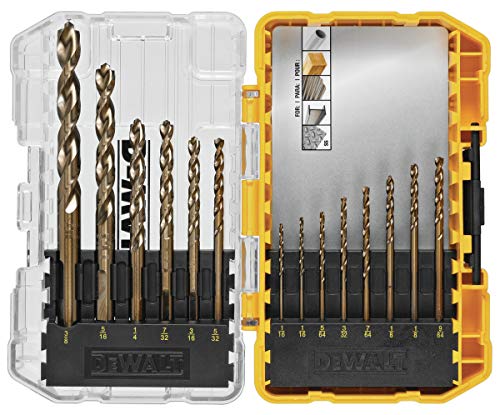 DEWALT Cobalt Alloy Steel Drill Bit Set withOne Size8.75 x 1.74 x 8.75 inches0.8 PoundsCheck on Amazon
 DEWALT DW1169 14-Piece Pilot-Point Twist Drill Bit Assortment14 Pieces8.75 x 8.75 x 1.75 inches1.2 PoundsCheck on Amazon
 Sinyeenglon Cobalt Drill Bits Set for Hardened Metal1/16-3/8 in (99 pcs)7.9 x 7.7 x 1.4 inchesCheck on Amazon

What makes a twist bit suitable for hand drilling steel?
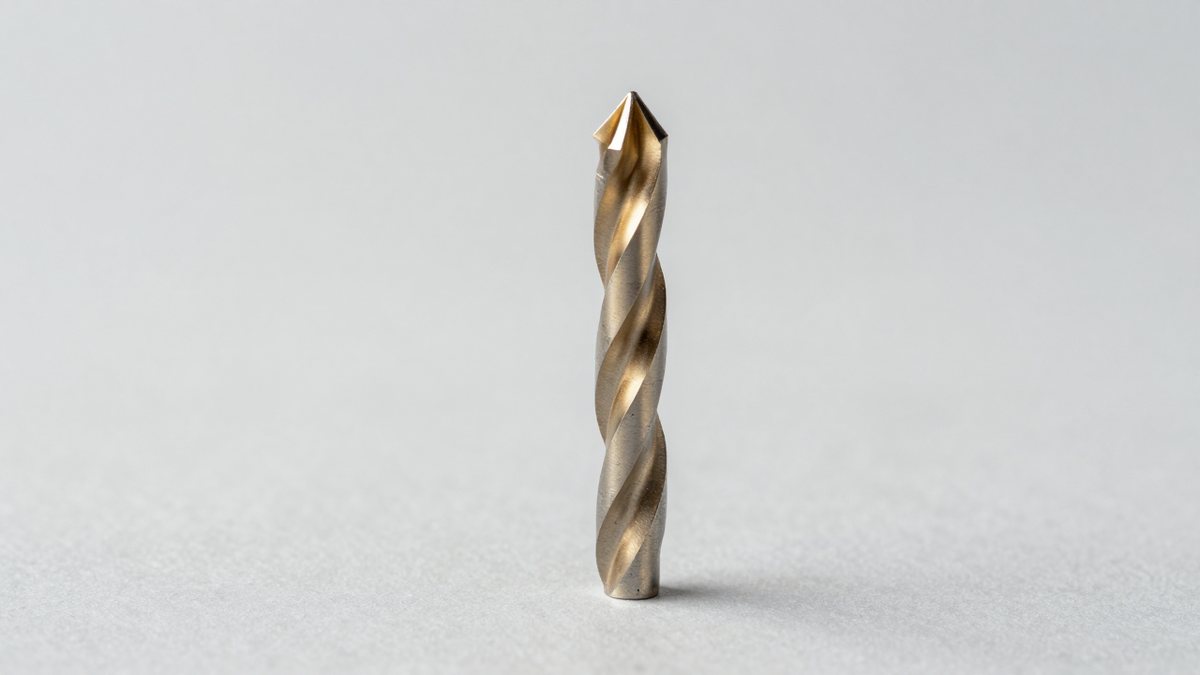
For mild steel, a sharp high-speed-steel (HSS) twist bit is usually the right starting point. It is affordable, widely available, and can cut mild steel without a specialty coating. The more important buying details are the bit’s material, point geometry, and size range—not a long list of marketing claims.
For occasional holes in sheet metal, a basic set of HSS bits is fine. For regular work, look for a set with clearly marked sizes and a 118-degree point, or buy individual bits in the sizes you use most. A 135-degree split point tends to start more easily with less wandering, which is useful when drilling by hand, but it is not essential if you can center-punch the work.
As an Amazon Associate we earn from qualifying purchases at no extra cost to you.


Consider a plain HSS twist-bit set for metal for general home-shop use. If you drill steel often, a cobalt HSS bit set costs more but tolerates heat better and can last longer. Cobalt bits are still HSS alloy, not solid cobalt; they can be resharpened, though careless grinding can ruin their point.
HSS, cobalt, and coated bits compared
| Bit type | Best use | Trade-off |
|---|---|---|
| Basic HSS | Occasional holes in mild steel, aluminum, and wood | Lowest cost; loses its edge sooner if overheated |
| Black-oxide HSS | General-purpose shop use and light steel drilling | Often marketed as tougher or more corrosion-resistant, but the finish does not make a poor bit a premium cutter |
| Titanium-coated HSS | Repeated drilling when the coating stays intact | Coating wears off, especially after sharpening; usually not worth a large premium for occasional DIY work |
| Cobalt HSS | Frequent steel drilling, thicker stock, or work where bits run hot | Higher upfront cost; still needs correct speed and pressure |
Coatings are not a substitute for technique. A coated bit can burn just as quickly as a plain HSS bit if it spins too fast, rubs without cutting, or runs dry through a long hole. For a few holes in mild steel, spend the difference on sharp bits and cutting fluid rather than assuming a coating will solve the problem.
Choose a drill you can control
A variable-speed cordless drill is adequate for most hand-drilled steel holes. A hammer drill is also usable, but switch the hammer action off; impact will not help a twist bit cut steel and can make the bit wander or break. An impact driver is a poor choice for ordinary round-shank twist bits unless the bit is specifically made for a hex impact holder. Its pulsing action gives less control and can snap small bits.
Use the drill’s low gear when available, particularly for larger bits. A 1/8-inch bit can run faster than a 1/2-inch bit; large bits need slower speed and more torque. As a practical starting point in mild steel, use roughly 1,500–2,500 rpm for a 1/8-inch bit, 700–1,200 rpm for 1/4-inch, and 300–600 rpm for 1/2-inch. These are ranges, not rules: reduce speed if the bit squeals, smokes, or turns the cuttings blue.
How to drill a clean hole by hand
Clamp the steel firmly. Do not hold small stock in your hand: a bit can catch as it breaks through and spin the work. Mark the hole, then make a dimple with a center punch. On thin sheet, a punch mark helps the point start in the right place, but avoid hitting so hard that you bend the panel.
For a hole larger than about 1/4 inch, drill a smaller pilot first—often 1/8 inch is a sensible start. A pilot reduces the load on the larger bit, though very small pilots can wander if the punch mark is shallow. Keep the drill square to the surface, use steady pressure, and apply cutting oil or another metal-cutting lubricant. The bit should make distinct chips; a polished spot with no chips means it is rubbing, not cutting.
Ease off the pressure as the bit nears the far side. Breakthrough is where bits commonly grab, enlarge the hole, or twist the work out of a clamp. If the bit binds, stop the drill and back it out rather than forcing it. For deep holes, withdraw the bit occasionally to clear chips and add lubricant.
Buying sizes and spotting poor bits
A compact set covering 1/16 to 1/2 inch in 1/64-inch steps is useful but can contain many sizes you rarely need. For common fastening and repair jobs, fractional sizes from 1/8 to 3/8 inch cover a lot of work. Buy individual replacements for the sizes you use most, and keep a spare of small bits: 1/8-inch and smaller bits are easy to snap by hand.
Check that the cutting lips are even and meet at the center. A blunt or uneven point tends to skate, cut slowly, and generate heat. Avoid bargain assortments with vague material descriptions if you need reliable results; a small, clearly labeled HSS set is often better than a large box of anonymous bits. A useful assortment of individual HSS metal bits can also make sense if you only need a few sizes.
Safety and common failure signs
Wear safety glasses: steel chips are sharp, and a broken bit can throw fragments. Secure the work, keep loose clothing away from the chuck, and remove chips with a brush rather than your fingers. Let the bit cool before handling it.
If the bit turns blue, its cutting edge has overheated and may be softened; sharpening may not restore it. If it squeals, reduce speed and check that the point is sharp. If it wanders, improve the punch mark or use a split-point bit. If it grabs, clamp the stock more firmly, reduce feed pressure near breakthrough, and consider a smaller pilot. Those corrections usually matter more than upgrading to an expensive bit.
FAQ
What makes a twist bit suitable for hand drilling steel?
Related guides
More from Amazon
Programs that pair well with the guide above. Offers and eligibility are set by Amazon and may change.
A free business account with business pricing and bulk-buying tools for work, shop or home office.
Create a business accountFree shipping on eligible items, Prime Video and more. Eligible new members can start with a free trial.
Start a Prime free trialAudiobooks and podcasts to listen to on the go. Eligible new members can start with a free trial.
Try Audible freeAd-free music streaming. Eligible new subscribers can start with a free trial.
Try Music Unlimited freeAs an Amazon Associate we earn from qualifying purchases.